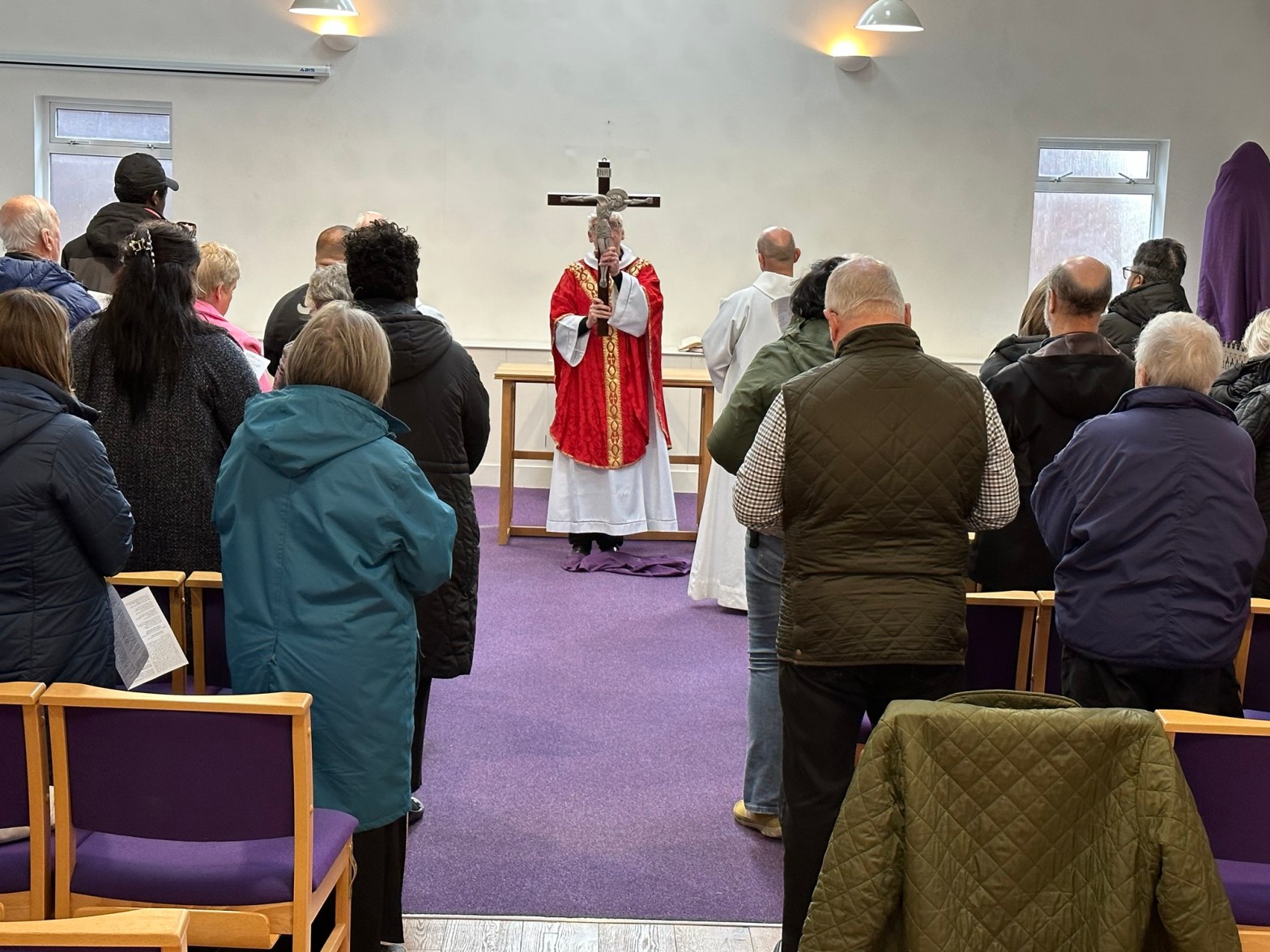
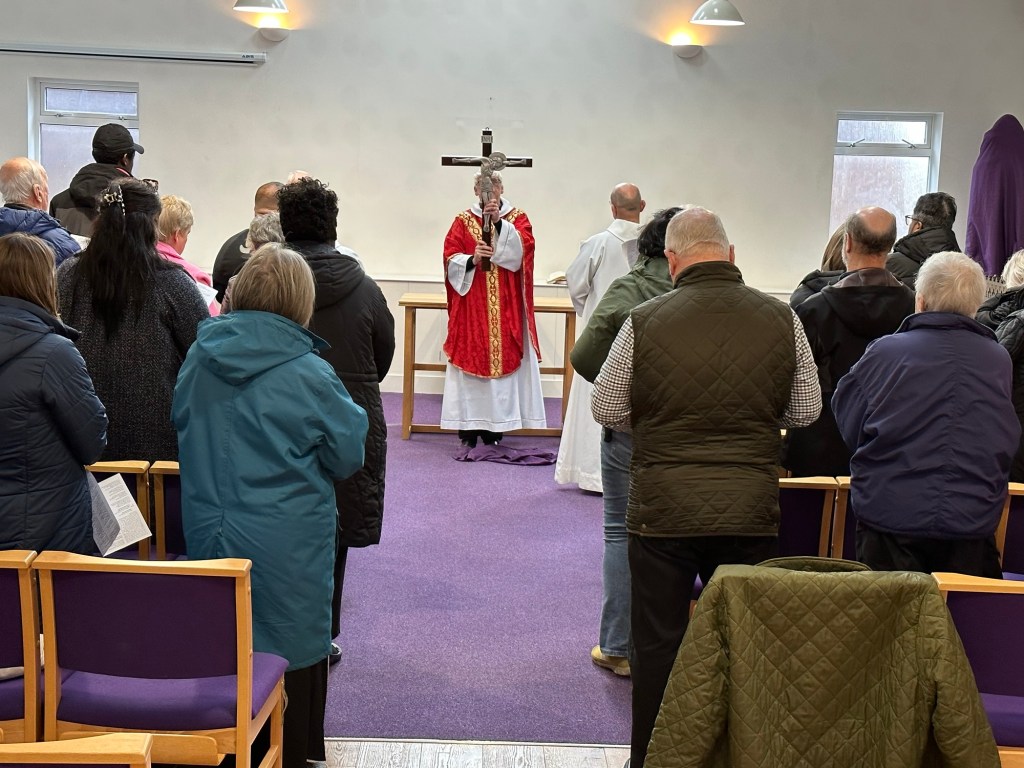
Homily by Fr Dean Atkins for the Liturgy of the Lord’s Passion on Good Friday 2024 at St Paul’s Church, Grangetown
Last night, at the Evening Mass of the Lord’s Supper, I shared something of the experiences of Darren McGarvey, also known as Loki, the writer, social commentator, and Rap artist as featured in his book, ‘Poverty Safari.’
Coming from a troubled family, with a mother whose life was turbulent and dependent on drugs, he writes of his own life as a means through which more widespread questions about poverty and inequality can be explored.
“By the age of ten I was well adjusted to the threat of violence,” he writes. In some ways, violence itself was preferable to the threat of violence. When you are being hit – or chased – part of you switches off. You become physically numb as the violent act is carried out. A disassociation occurs. You become detached from the violent act as it is being perpetuated against you. The disassociation can make you physically numb as well as emotionally unresponsive. Your body goes into self-preservation mode until the threat is over.
“In a home where violence, or the threat of violence, is regular, you learn how to negotiate it from a young age. On the one hand, you don’t want the violence to happen. On the other, you know it is inevitable and would rather just get it out the way.”
There is an inevitably to the violence inflicted upon Jesus. After all, it had been predicted by Jesus himself although, for his disciples, that thought was unbearable.
‘I will never let this happen,’ said Peter. ‘I will lay down my life you.”
“Lay down your life for me?’ asks Jesus. And then he pulls the rug from under Peter’s feet, and predicts that his bravado will dissolve. He’ll deny even knowing Jesus, not once or twice but three times.
How do we negotiate our way through a world of pain and suffering? None of us goes out of our way to seek pain, although so many of us, on so many different levels, experience self-harm. It comes in many guises and from so many different places within ourselves. Yes, so much of what we do harms ourselves and harms others.
Perhaps in our ideal world, there would be no pain or suffering, but then that would also appear to be a physically impossible world.
The experience of both physical and emotional pain warns us against certain dangers. Pain causes us to remove ourselves from further harm – to retract our hand from the flame, to run for our lives when our heart is racing, or to indicate that some thing isn’t right with us, so that, hopefully, we can seek some help, allow our wounds to heal.
Negotiating our way through all that inevitable pain can be enough, but what about the gratuitous pain inflicted upon so many people in so many different ways?
The pain of those who experience depravation and poverty, abuse and neglect. The traumas and terrors of war. The violence and aggression which seem to characterise our world and features so deeply in the human story.
The broken relationships caused by greed and selfishness. The walls and barriers we build around ourselves leaving us to peer over and wonder what that ‘enemy’ of ours is up to. The suspicion we cast upon those who seem different from us. The arrogant thought that all people should be ‘just like us.’ How do we negotiate our way through this violence, through this pain?
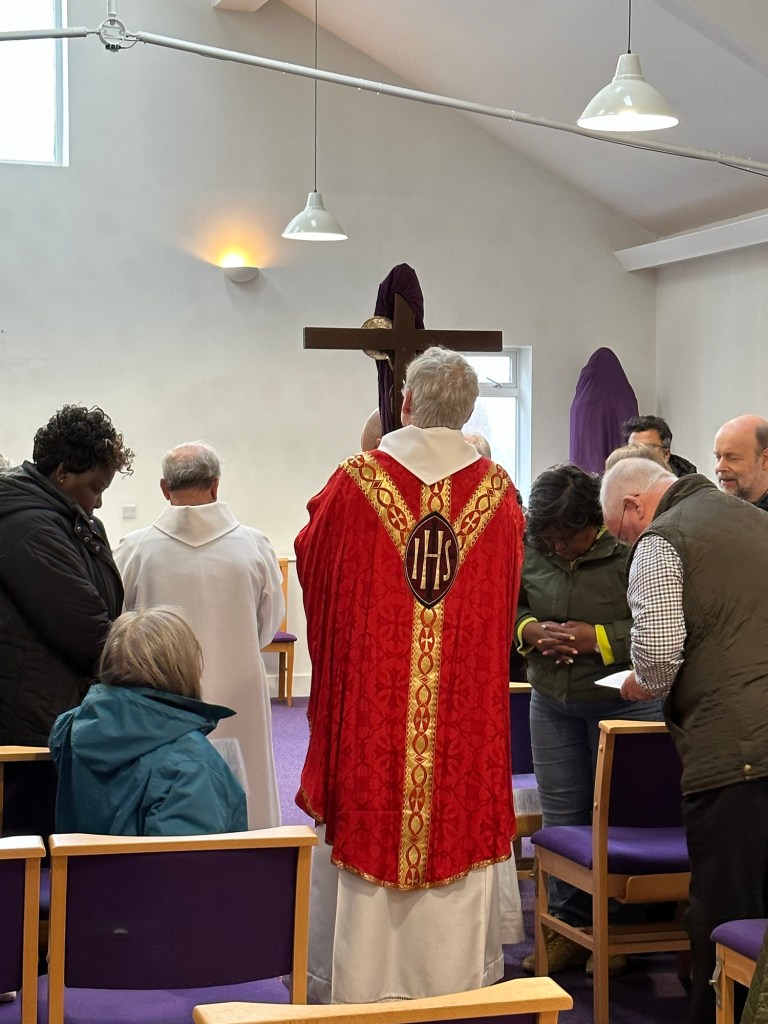
It’s no mistake that Golgotha lies outside the city walls. After all, we want to push the thought of our own hatred and aggression, our sundry sins and unjust ways, our pain and suffering – and the struggles of others – so far away from us.
We simply keep our heads down, hide our guilt, conceal our culpability. Perhaps we pretend that we are powerless, unable to do anything. That speaking peace, or seeking peace, is for the professional, the politician, the ones we push forward, and finally learn to push away.
It’s into this world that God sends his Son. After dragging his cross through the familiar streets, through the landscape of our lives which we have learned to love and loathe, Jesus arrives at that place of death which we have shunned, and there he dies.
The disciples, who had dispersed and abandoned him, begin to regroup. They try to find some comfort when all around them has been destroyed. As their lives fall apart, they try to create something else out of the remnants of everything they had known. How will they respond to this new life? How will they respond to what has happened to Jesus? How will they negotiate their way through the violence of grief, the pain of loss?
Henri Nouwen tells the story of a close friend of his who was dying of cancer. His friend had been such a great social activist and cared so deeply about people that he saw the value of his life as being able to do things for others. Now that he was unable to be active, he was finding his life impossible. He said, “Henri, help me to think about my not being able to do things anymore so I won’t be driven to despair.”
For someone who had been so active and did so much for others, he now experienced a different reality – having things done for him, having things done to him.
During our lives, whilst we fill them with action and doing, we are mostly ‘done to’. This is particularly the case for those whose lives are dictated by the decisions of others, those prisoners of inequality or greed. Those who live in state funded poverty of well-intentioned schemes that often fail. Those displaced from their homes as a result of a war they did not create.
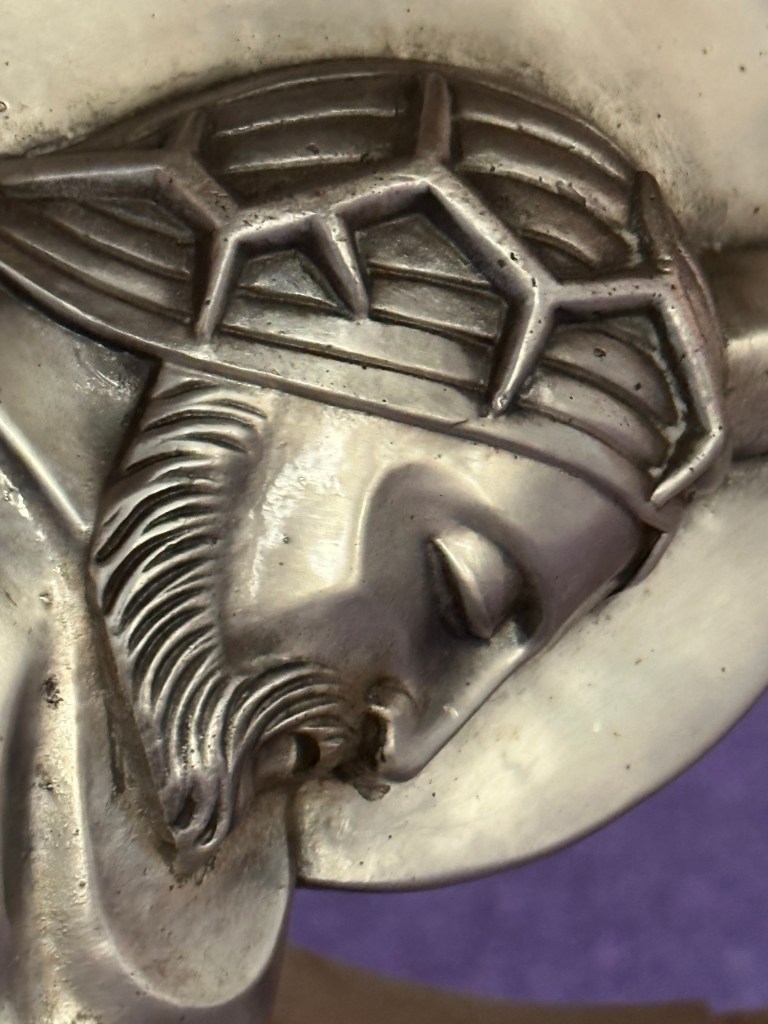
Throughout his ministry Jesus was busy doing so much. He taught and preached, he helped and healed, he travelled from town to town. But now, in these last days, he has been ‘handed over.’ Things are done to him – he is beaten and scourged, he is crowned with thorns. He is burdened with a weight which brings him tumbling to the ground. He is stripped and nailed to a cross.
He has vinegar pushed to his face to the numb the pain, by those who caused the pain – an image that so encapsulates our perverse human endeavours. We try to live green lives to remedy the harm we’ve done to the planet. We send aid to the places where we’ve played a part in their ruin. We show compassion to those who are poor or homeless, when all we have really done is priced them out of the market.
Yes, Jesus’ work and activity have now culminated in things being done to him. There is a shot of despair, “My God, my God why have you forsaken me?’
We can easily, like Henri Nouwen’s friend, be driven to despair, but in those moments of being done to, in those moments of powerlessness, in those times of waiting are met by God in a new way.
It can be an unfamiliar place, outside the landmarks of our lives, in that place of struggle and pain we know as Golgotha. It’s a place to which we bring our whole lives.
The times we have tried to do so much, the times when we have lost our way. The moments when we tried to redeem our own lives through being busy and preoccupied by such ‘important’ things. The times when we made excuses for ourselves, licked our wounds, sat in self-pity, or just felt bloody awful. The times when we questioned how influential we were or tried to be.
The times when life diagnosed us, when people poked us, cells were scraped from us, when we were dealt blows from out of the blue, and when blue seemed to be the colour of our life at times.
But Golgotha is a place where God waits to see if this thing he has done is enough to win back the world, and not drive him to despair. As we approach the cross today, we take this sense of Divine despair to our lips, as we sing: “My people tell me, what is my offence? What have I done to harm you? Answer me!’
I’ll begin to end as I started – with words from Darren McGarvey as he reflects on an early life of violence and aggression. As he shares an incident of violence he remembers from when he was five years old, he writes:
“After explosive incidents like this, whether they involve physical violence or non-physical aggression, there is always the hope that the perpetrator’s remorse will propel them towards better behaviour. Even when there’s no sense of that happening, there remains a perverse allure in their empty promises.
“In these moments, there is a vulnerability, tenderness and honesty, seen so rarely, that is so affecting that you struggle to resist the twisted logic of your abuser. All you want is for them to love you and this need persists at the expense of your own sanity and safety.”
Here, at the heart of this Passion of Jesus with the inevitable violence and sense of despair, as we seek to negotiate our way through the pain, he asks simply for love.
It was this love which Henri Nouwen’s friend had discovered in his own passion. It was a love which underpinned all the actions he had ever done for others throughout his life, but he had not then realised or experienced the fulness of this love, not now, not until his painful time of waiting.
“More than ever,” wrote a Jesuit priest, Pedro Arrupe, “I find myself in the hands of God. This is what I have wanted all my life from my youth. But now there is a difference; the initiative is entirely with God. It is indeed a profound spiritual experience to know and feel myself so totally in God’s hands.”
‘Father, into your hands I commend my Spirit,” cried Jesus. In this moment of vulnerability, tenderness and honesty, he looks to us for love and, like him, to place ourselves into God’s hands with total abandon.
The cross is a moment of waiting. It’s a place for us to wait and to work out who we are and what we’re for, as we negotiate our way through the pain.
And, there, God also waits for our response, wonders if we will love him, wonders if it’s been worth all the waiting.
“It is finished,” cried Jesus.
It is accomplished.
It is done.
I can do no more.
I have done everything I have been sent to do.
No more,
No less.
 South Cardiff Ministry Area