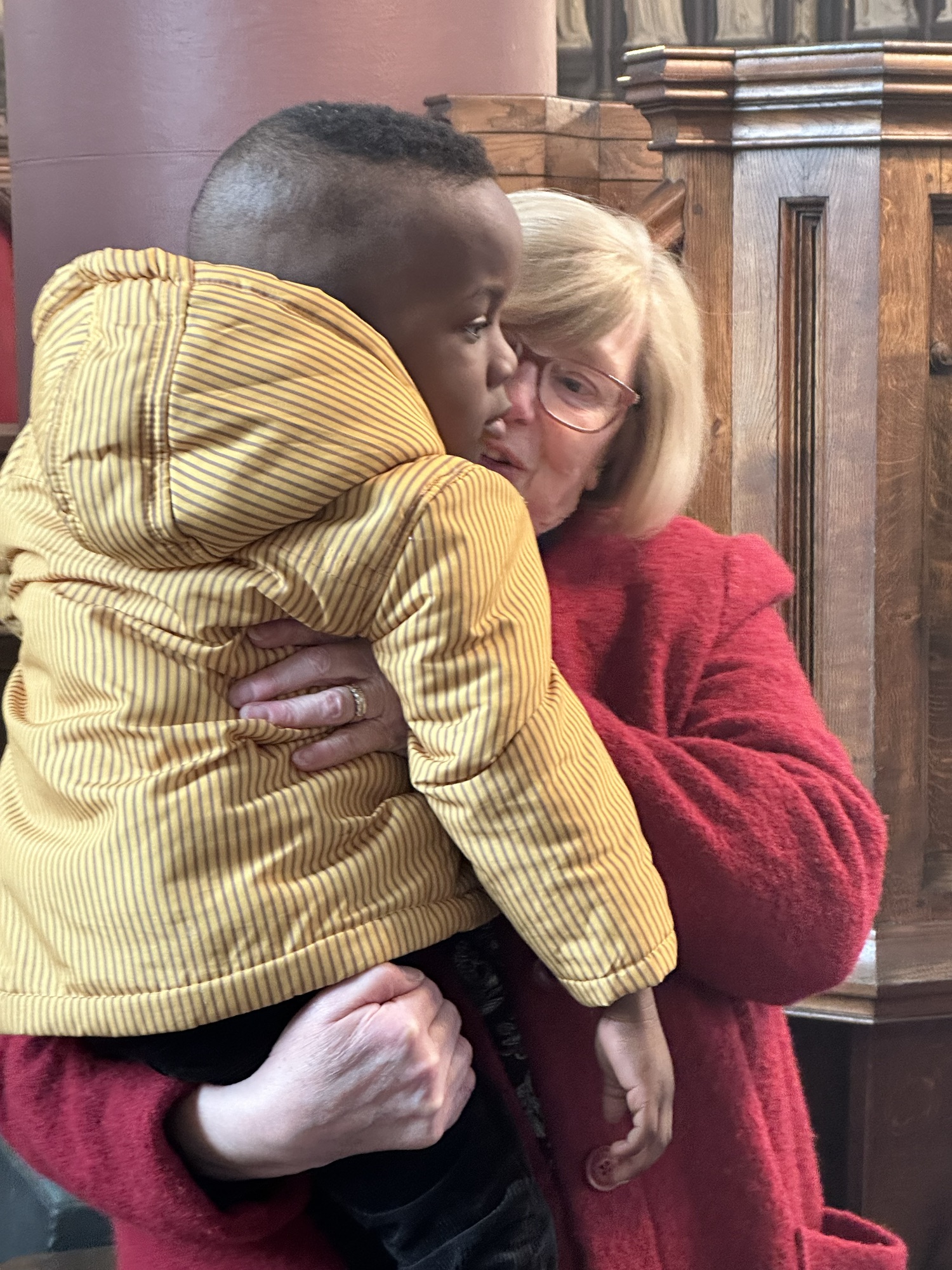
There are so many challenges placed upon local congregations these days, and statistics seem to take the starring role as we try to find our worth and our way. But how do we grow as a church? And what does this mean anyway? Fr Dean reflects on some things that may be of help. It works for him anyway!
It’s Saturday, and I’m doing one of my Saturday morning jobs. Feeding paper through the photocopier, and wondering how many Mass sheets and bulletins to print.
It’s one of the moments when I momentarily become fixated by numbers. How many people will be at Mass tomorrow? Will it be one of those days when we run out of Mass sheets, and should I print a few extra? Or will there be a sense of disappointment? Will it be one of those weeks when quite a few people and larger families will be away, leaving a space, and an excess of Mass sheets?
I’ve got used to the strange momentum of numbers that sometimes occurs between weeks. And I’ve also, in reality, stopped worrying about numbers. Yes, they’re a great indicator of growth in the church (numbers are referenced a number of times in the growing church of the Acts of the Apostles. Acts 2:41 or 4:5, for example). But taken on their own they don’t tell the full story because, for me, statistics are only of any use when they are accompanied by stories. And it’s the stories that often fascinate me more than the figures and facts.
What does it mean for a church to grow? In recent years, the church has become fascinated by the phrase ‘Church Growth’ – perhaps it distracts them away from the other fascination of talking about ‘Church decline.’ The Diocese of Llandaff has even employed ‘Growth Enablers.’
Perhaps, for some people, growth will mean achieving some kind of sustainability and making our congregations fit for the future. Perhaps, for others, it will mean the ability to pay the bills, and have more income than expenditure, as we look to finance as a measure of faith?
Or maybe it will be about effectiveness and fruitfulness – although what does it mean for a church to be fruitful, to make a difference, and to whom? For some, church growth will be measured in a growth in numbers, or a deepening of lay participation, or the tangible effect of God in the lives of individuals, in the number who have been added to our number, the people whose lives have been turned to Christ?
Each church will have its own answers which they will discover and disseminate in their own ways. Certainly, the constant message (intended or not) that we have failed, or the alternative narratives offered of what is actually means to ‘be’ the church can leave many clergy and congregations despondent, dismayed and disconnected from diocesan decisions. But it doesn’t have to be this way.
In whatever way we want to measure growth, we know that it is God who gives the growth. St Paul is quite clear on this in his letter to the Corinthians. “I planted, Apollos watered, but God gave the growth” (1 Cor 3:7). He is also equally clear that we are “God’s fellow workers” (1 Cor 3:9)
Who gives the growth? That question and St Paul’s succinct answer should always be before us. But, in whatever kind of ministry I’ve found myself, there are three aspects to our life together that stand out as the most important and so I offer these simply as observations, which you can take or leave.
Worship
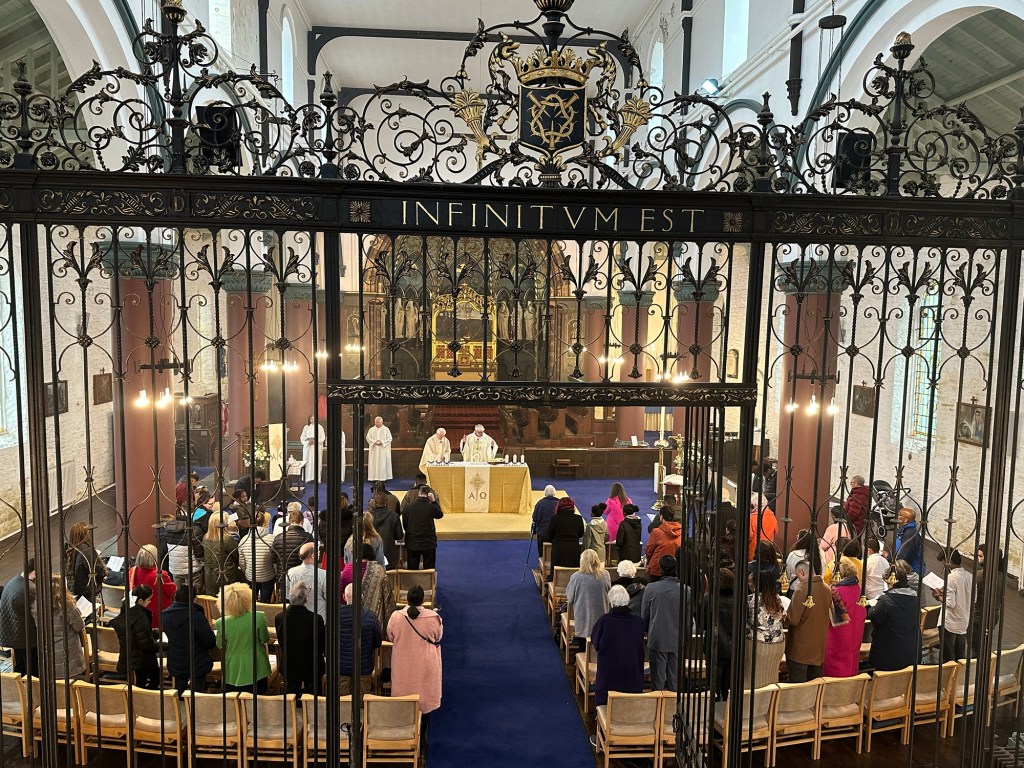
At a Diocesan Clergy gathering recently, one of those presenting a session said that “Some churches think it’s enough just to to say Mass and be faithful”. It was said in a rather critical way, perhaps to challenge us or undermine our priorities or to offer something different, something better.
However, if we had time to unpack that phrase, I’d have to say, “Yes – that’s us, that’s me!” Of course, it’s a gross oversimplification but if worship and faithfulness (in whatever way ‘faithfulness’ expresses itself) is at the heart of our life together then we’re set in a good place, and it’s certainly the first area of life together which contributes to growth.
Why? Because worship is at the heart of our life, and the Eucharist is its source and its summit. It is the beating heart and so cannot be separated from anything else we do. A body with no heart has no blood, no life, no purpose.
And so it’s a good place to start: to spend time and attention on our worship, to invest in our worship, to try to get it right, to make it better, to allow God’s Spirit to flow through and fashion what we do.
Here in South Cardiff, worship takes a liturgical shape. So here’s my own simple litmus test for liturgy.
Here, we never recycle the Paschal Candle. Or should I say, it never returns as another Paschal Candle the following year. That ‘once a year’ event of the Easter Vigil, the most important celebration of the year, surely deserves just a few pounds to see us through the whole year. For me, it’s a very small indication of how important worship is to our whole life. If you can’t invest (time, care and attention and a little money) on our Easter celebrations then what chance does any Sunday have?
However, I’m not in principle talking about money here. If you looked through our end of year accounts you won’t find a huge amount of money under the heading of ‘Maintenance of Worship’. The largest amount that belongs to that heading is hidden somewhere under ‘Maintenance of Buildings’ – sucked into the heating, maintenance and repair bills.
Worship, of course, varies from church to church and from one tradition to another. For those of is us who live and worship within the catholic tradition, the need to connect our liturgical celebrations to the lives and living of those who worship is essential. And it’s worth mentioning that our cultural expressions of worship here will feel very different from other churches in the Anglo-catholic tradition.
The way we worship contributes to our identity as Christians. Here, in these churches, we believe it’s important to have a strong identity. We live alongside others who have strong identities, whether Muslim, Hindu or other. And so our worship is certain and distinctive, confident and unapologetic. It’s built upon the tradition and heritage left to us by past worshippers and, in our time, turned to embrace a new generation.
Worship is nurturing, a means through which people grow and mature as Christians. It doesn’t necessarily need to be explained at every level and with every opportunity. Liturgical formation is as much about experience as it is about catechetics and teaching.
Placing the Eucharist at the heart of our life defines and inspires all that flows from it. It allows us to bring our lives to the Eucharist, and discover them wrapped up in the great Mystery of Christ’s saving work. To celebrate the Mass each Sunday (and, here, each day) is a living out of the gospel imperative to share the good news, and to discover lives that are intertwined, as we encounter God and one another.
Celebrating the Eucharist is not time away from the world. It is intrinsically related to how we try to live faithfully in the world. It calls us back to who we are. It is a commentary on our life, and the staple diet which gives us strength to work and make a difference.
When I was a Curate, someone wanted to explore priesthood with me. They said being a priest must be very peaceful and calming, a life that is free of stress and worry. It’s what attracted them to the possibility of being a priest themselves. Thinking about this years later, we as clergy must have been doing something wrong, and I was still learning. Perhaps as priests we had been skilled at prioritising the concerns of others and hiding away our own personal worries, but he had never glimpsed the struggle. Perhaps his experience of worship had offered, for the most part, time to forget about the struggles, and our worship had become disconnected from the world. There was something missing. Having such a narrow definition and experience of worship alone was not enough. He was looking for some happiness away from the worries of the world. I wanted the struggle.
Hospitality

“We’re quite happy as we are,” she said. She appeared as a kind of spokesperson for everyone else. They were, after all, able to pay their bills, repair the building, enjoy a good social life together. “We don’t really need any others,” she clarified.
That sense of contentment can, years later, take us by surprise. More than thirty years on from that comment, their church still exists but their congregation has been reduced by 80 per cent. Ah, I’m back on the numbers.
Time for a story.
He clutched his 20p coin in his hand. Peered over the Gopak table, looked up to the people serving tea and coffee after Mass, and handed over his 20p as he asked for a biscuit.
He was probably about seven years old, and had learned that hospitality comes at a price. The transaction was almost complete but fortunately for him I took the 20p coin and handed it back. “Biscuits are free,” I said. “Everything is free.”
Hospitality should be free. If you’re a church that has that bowl for donations at coffee time after Mass then please dispose of it. Put the kettle on, and let the tea and coffee flow for free, just like it does when you welcome visitors into your own home.
Neither am I a coffee snob. Whilst it’s great to provide good quality refreshments and a great time, I’m more than happy drinking cheap instant coffee if that is what works. It doesn’t mean we can’t up our game at times, or provide lovely occasions and resources for people (if we can afford it) but we shouldn’t disregard the simple acts of welcome, warmth and hospitality.
At a Foodbank session once, a recently graduated student waited for his bags of food and looked nervous and out of place. “Would you like a coffee whilst you wait,” I asked. “Oh I’d really love a coffee,” he said. “I can’t remember the last time I had a coffee.” And so we drank instant coffee and talked.
We simply need to create a culture that makes people feel comfortable, a means through which friendships can grow, and self-worth be discovered. To work for a welcome that is warm and sincere, not desperate or overbearing, but gentle, considerate and which nurtures a sense of being at home, a sense of belonging.
This sense of welcome and hospitality also has something to say about ‘participation’ and the fulfilling of roles within the church. A certain kind of welcome, nurtured over time, can bring an air and atmosphere of allowing and enabling people to do what they see others doing. This means not allowing individuals to stubbornly cling to a role or responsibility that is alone their own.
A few years ago in one of our churches, a young man came for the 11am Remembrance Sunday prayers which followed the earlier 9.30am Mass. No one had ever seen him before but, after the Setrvice, he had somehow found himself in the kitchen where he was happily washing the dishes alongside a few parishioners.
Whilst the formalising (and licensing) of certain Lay ministries has its benefit, it can also come at a cost if we’re not careful. IN some communities, such licensed and celebrated roles can stifle involvement and obstruct the free flow of allowing others to be involved.
The welcome and hospitality we offer flows through and influences our worship. Our worship should reflect something of the culture of hospitality that has been created, or that we are trying to create.
The welcome is as important as the farewell. The coming in as important as the going out. The encounter at the threshold of the church is more fragile than we may imagine. It is about humility and holiness. Hospitality is about generosity and exchange, giving and receiving, welcoming in and reaching out.
Outreach

In one parish, a local Methodist church closed down and one of the members of that congregation started attending ours. Months later she told me that she had intended to try out many different churches before she decided on which one she would call home. That church was her first Sunday ‘on tour’ and she stayed. She told me that what she liked about us was that we put our faith into action. She could see the outreach and ministry to the local community which was embedded in our life and worship, and took up so much of our concern.
Putting our faith into action and having a healthy and fruitful outreach to the wider community is the final area of life that, for me, not only helps create a healthy church but also attracts and inspires others. If can be where many people see our worth – and discover if this Christian life is worth it at all.
You won’t always find it represented in the church accounts under “Mission at Home” for, so often, the costs are hidden, wrapped up into the lives of those who lay down their lives.
Having a strong Eucharistic view of the world opens our eyes to the presence of God everywhere. Recently, I was challenged by one fellow priest who took exception to the particular kind of ministry I tried to live out. “Why don’t you just become a social worker?” he asked.
I could have replied with the words of a Victorian, Anglo-catholic priest who was challenged in exactly the same way. When he was asked why he was bothered by local sanitation issues and inadequate drains, he responded, “Because I believe in the Incarnation.” My response wasn’t as succinct as that, or as effective but it’s what I wished I’d said.
Evangelism means sharing the good news. When I typed that sentence, the auto correct and my bad typing, came up with “chatting” the good news.
I love that idea. Chatting the good news. The incidental words and time spent in passing, as we naturally participate in one another’s lives, form friendships, reach out and maybe help to make someone’s life a little bit better. It is a way which is less bold but also less confrontational. For me, it’s more engaging and subtle and, dare I say it, even unintentional. And why not? It is, after all, God who gives the growth.
In the Bible, how many times does Jesus change the life of some sick person accompanied by the order not to tell anyone? Sometimes, our actions do not need to be backed up or reaffirmed by bold words or counter claims. It is is simply in the doing, in the reaching out and raising up, that we may be able to accomplish what God is wanting us to do and, there, discover the life of his Kingdom which has love as its only rule.
“You could almost convert me if you carry on like this,” messaged one person I know. We had been engaging on a ‘Just Lent’ as we explored a gospel of social justice, connecting our worship with the needs and injustices experienced by so many different people, challenging us in so many different ways to be dissatisfied with some of the ways and means of our world.
It takes me back to that person exploring priesthood and the lack of struggle he had experienced in our worship, and in our lives as priests.
Having a strong and relevant outreach, putting our faith in to action flows from our worship, and makes our Mass more of what it is called to be: the consecration of all life, or the discovery of the sacredness of all life. It’s about discovering the presence of Christ in our daily lives and in the lives of others.
Living the gospel of social justice means embracing the struggle, and being distracted by the needs of others, allowing it to enrich and unsettle our worship, and to stretch the boundaries of our welcome and hospitality to breaking point. To walk that fine line between watching out for that unpredictable character who has walked into church and disturbed the Mass whilst embracing them as a child of God.
It works for me
All this may sound rather simplistic, and there is so much more that could be unpacked but this trinity of church life remains with me: the importance of Worship, Hospitality and Outreach, and trying to get them right, and trying to ensure they are intrinsically intertwined so that you can’t see where one ends and the other begins.
It’s not intended to be preachy or didactic but, over the last few decades, this outlook has naturally emerged and informed my ministry. It’s provided a useful reference point to what we’re doing. It works for me, anyway.
Anyway, back to the photocopying. I still haven’t decided how many I should print.
 South Cardiff Ministry Area
One thought on “Who gives the Growth?”