As we reintroduce a monthly celebration of the Mass of the Sick, which offers the Sacrament of Healing through prayer, laying on of hands and anointing, we reflect on this gentle and beautiful time of prayer.
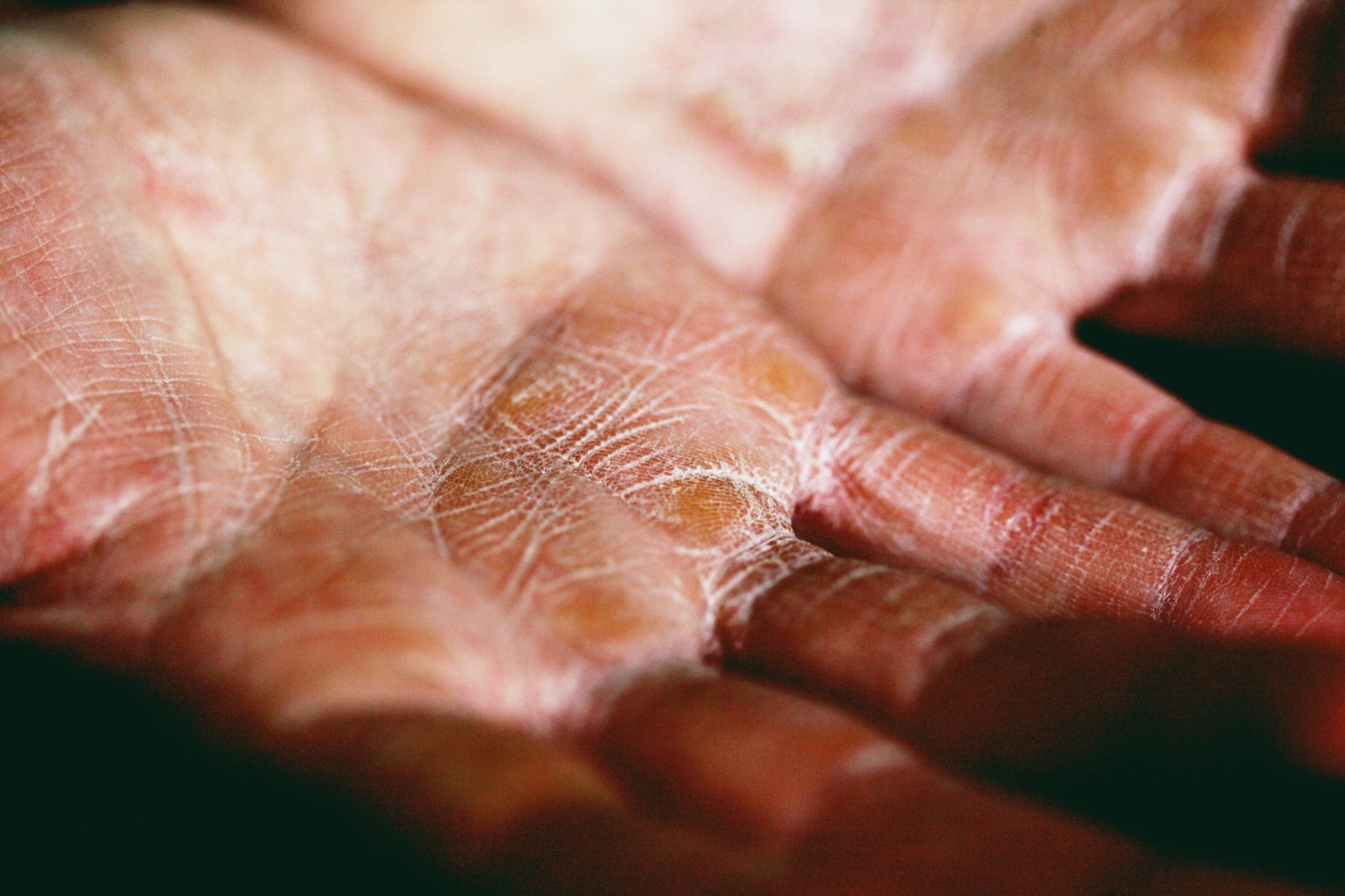
Each day, I am presented with open hands, stretched out in front at arms’ length, palms up, ready to receive.
I hold in my own hand something that people want, something that is offered and received. The gift is not mine to give.
Our hands reveal so much away about ourselves although in that brief moment, there is little time or inclination for me to study them.
The defining characteristic at that time, in that place, is that they are open, ready to receive that small piece of bread.
“The body of Christ.”
It is small, fragile.
“Amen.”
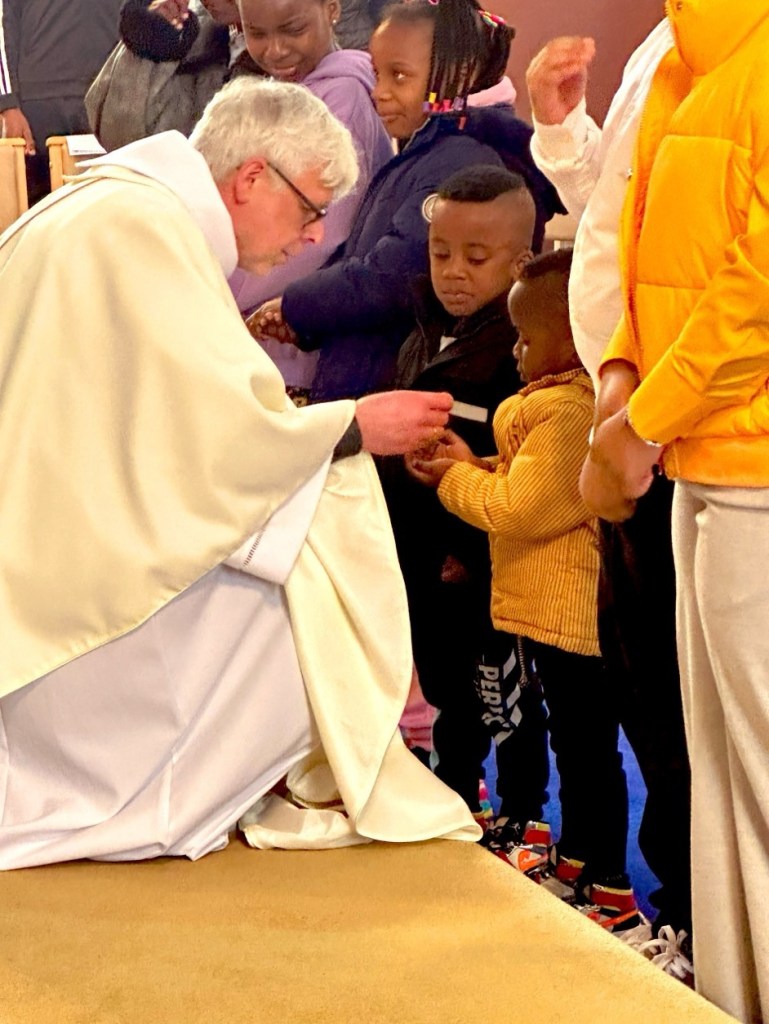
I place the gift into their hands.
Two Sundays ago I break it up into smaller pieces, place it into the much smaller hands of a child, three or four years old.
As a young child he is used to having open hands, receiving all he needs. He is too young, too little to do too much for himself.
And so I see everyone’s open hands as childlike, each waiting in turn to receive something which has to be given, too little are we to do too much for ourselves.
He looks at the tiny morsel with intent curiosity.
I gently raise his hands to his mouth, encourage him to eat.
“The Eucharist is so small,” said St Teresa of Calcutta.
He eats.
Then skips away.
“We must be faithful to that smallness of the Eucharist, that simple piece of bread which even a small child can take in. We have so much that we don’t care about the small things. If we do not care, we will lose our grip on the Eucharist – on our lives.” (St Teresa)
A sacramental life leans us towards the small things, helps us see the world as gift, to be received not ruined, given not grabbed, each waiting to receive what we need.
It is fragile too.
Sometimes, there are moments when we lose our grip, are stopped in our tracks by the fragility of life, when our bodies don’t do what we want them to do, when our minds seem to be dysfunctional, when our mood is lost in darkness, when grief and loss lie close.
Sickness and sadness, in all its shapes and forms, changes our bodies – whether we are totally weakened and weighed down by some debilitating illness or our head is bowed beneath the burden of worries and the weariness of life.
Perhaps our feet shuffle, the brightness of our eyes are dimmed or we can only force a smile to please others and so hide what’s really going on.
Our life is filled with rubrics, stage directions which help us act out how we feel although hiding our weakness is a skill we try to learn, a lifetime’s work of surviving with the fittest.
“Praying is no easy matter,” wrote Henri Nouwen. “It demands a relationship in which you allow the other to enter into the very centre of your person, to speak there, to touch the sensitive core of your being, and allow the other to see so much that you would rather leave in darkness.”
When someone seeks the gift of healing through the Sacrament of the Sick, prayer matters. It is an invitation to God to stir the darkness, to lean forward into the sensitive core of our being.
The priest’s hand are open, empty, palms down, laid upon a bowed head, a natural response of those who receive the laying on of hands, like an unspoken stage direction for silent prayer.
It’s a gesture which, for a moment, lowers the face, conceals it from others, nurtures a sense of humility which so often befriends us in our sickness.
But it also gives a sense of honour, as we become the focus of the community’s prayer, the gift that others bring.
But soon our head is raised, face up, open and honest as the holy oil is gently pressed upon the forehead, as though lifting our face to feel the warmth of the sun or the rain’s cooling balm.
“Through this holy anointing may the Lord in his love and mercy help you with the grace of the Holy Spirit,” says the priest.
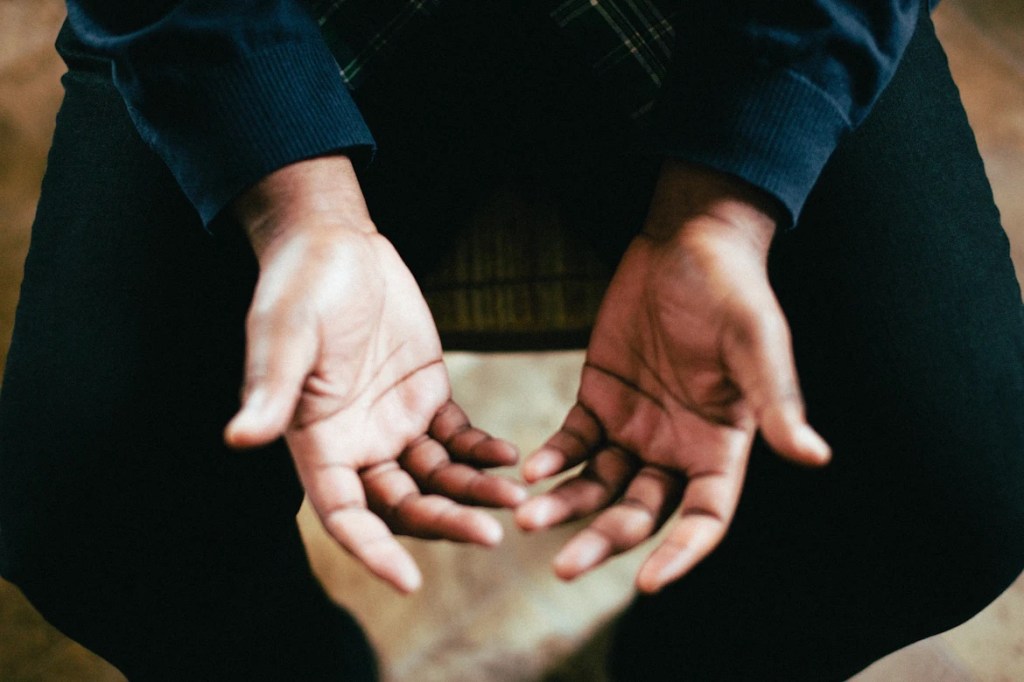
The hands are opened too, palms up, ready to receive the trace of a cross along the lines and the grains of life.
“May the Lord who frees you from sin, save you and raise you up.”
Another gift.
Small,
Subtle.
And so I see everyone’s open hands as childlike, each waiting in turn to receive something which has to be given, too little are we to do too much for ourselves
Prayer demands of us a childlike trust, an immature openness which has no filter. A need for God to touch the sensitive core of our being which we’d rather leave in darkness.
Perhaps, unlike a little three year old, there’ll be no skipping away. We may have to relearn the art of living for a while, and what it means to ask that we may receive, to seek that we may find, to knock and have the door opened to us.
Beyond the locked door of the upper room, the risen Jesus showed his disciples his own wounds, raised his hands for them to see the marks of pain which saves them. The Resurrection had not rubbed his wounds away. They remind us of the way in which we are saved. (cf John 20:19-32)
“But they also remind us that our own wounds are much more than roadblocks on our way to God,” said Henri Nouwen. “They show us the unique way to follow the suffering Christ. Just as Jesus was identified by his wounds, so are we.”
Jesus even invites Thomas to come closer and touch the wounds, a post mortem of love, so that he may believe what’s possible, that there is peace beyond the pain, life beyond the death, faith beyond the doubt.
Somewhere, within our need for healing, we see or sense Jesus, open handed, marked by love, wounded and glorified. He recognises our pain, sees us in the ways we suffer, breathes his peace upon us.
A sacramental life leans us towards the small things, helps us see the world as gift, to be received not ruined, given not grabbed, each waiting to receive what we need, the consecration of a fragile life with all its pains and passions.
‘If anyone among you is sick, call for the elders, and let them pray over them anointing them with oil in the name of the Lord. The prayer of faith will save the sick person.’ (James 5:14-15).
The Sacrament of the Sick is celebrated at Mass on Tuesday April 16 at 7pm at St Mary’s Church, Butetown and then each month as advertised. Requests for prayer for those who are sick can also be made. The sacrament is also available by request.
 South Cardiff Ministry Area
One thought on “All its pains and passions”