In today’s reflection on the daily mass readings, Fr Richard considers the extraordinary way in which Jesus, Lord and master of all that there is, stoops down to serve each one of us in love.
Readings for Tuesday of the 29th week of Ordinary Time: Romans 5.12, 15b, 17-19, 20b-21; Luke 12.35-38
Last month saw the release of the film Downton Abbey: The Grand Finale, the third and final film in the Downton Abbey series. The films came on the back of the hugely successful TV series, which ran for 6 series between 2010 and 2015. Downton Abbey was the latest period drama to feature the roles of masters and servants in a British stately home in the first part of the 20th century, others being Upstairs, Downstairs and You Rang, M’Lord? In all these dramas, the masters (those upstairs) are seen as the ruling elite, while the servants (downstairs), are very much on the lower rungs of society.
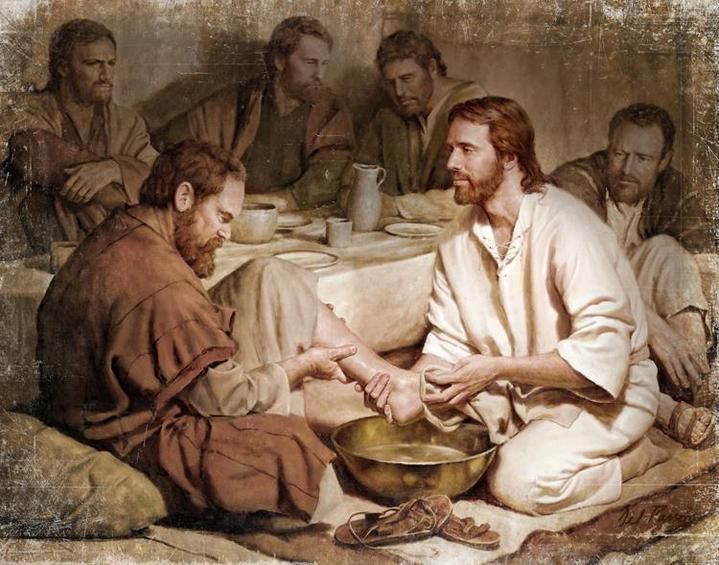
This was a social system well known in the time of Jesus. However, in today’s parable, Jesus reverses this social order in a surprising way. The master returns home late from a wedding feast, but instead of expecting to be waited on by his servants, he in fact ends up serving them, as a reward for them being ready for his arrival. This remarkable turn of events points us forward to the Last Supper, and the astonishing moment when Jesus, the Son of God on earth, adopts the role of a servant and begins washing the feet of his disciples. The boundary between master and servant, so clearly marked out in the world of Downton Abbey and the Roman society of Jesus’ day, has been completely erased. As contradictory as it may seem, Jesus is the master who serves.
That breaking down of the barrier between God and humanity is theme which Paul picks up in today’s reading from Romans. Here, the barrier is not the green baize door separating masters from servants in a stately home; rather it is sin and death, the result of humanity’s disobedience. This is what separates us from God. This barrier has been removed by what Paul calls Jesus’ “one act of righteousness” – his death on the Cross. This is the ultimate act of service, laying down his very life for us. The reward we receive from him is not simply being pampered, as the servants in the parable were. Our reward through Jesus’ supreme act of service is nothing less than eternal life. Let us rejoice that we have a master who serves, so that we might be free for ever.
 South Cardiff Ministry Area