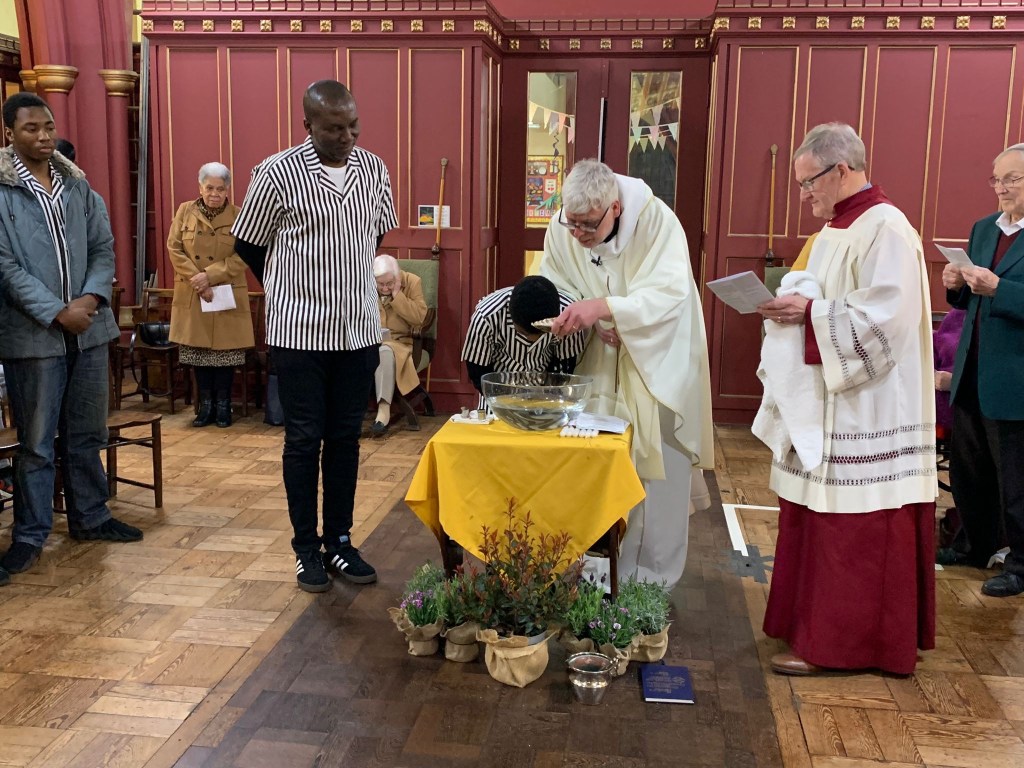
- Baptism: On a journey
- Moving On – time to prepare!
- Baptism of young children
- A child’s journey of faith
- Signs and Symbols
- Confirmation
Baptism: On a journey
Becoming a Christian is like being on a journey. It may begin with simply being curious about the Christian Faith. You may be asking big questions about God and the meaning of life.
Perhaps you are beginning to sense God’s presence in a new and different way or have attended Mass or some other service, and feel as though you want to be part of a community of faith.
However, there may come a time when you will want to go deeper, move a few more steps forward and decide that, yes, you want to become a Christian.
This may be the time when you will want to ask to celebrate the rites of Christian Initiation (Baptism, Confirmation and Holy Communion).
This may follow a time of deeper exploration of what Christians believe, and to finally decide that, yes, this is what you want for yourself. You’re ready to take the plunge!
Moving On – time to prepare!
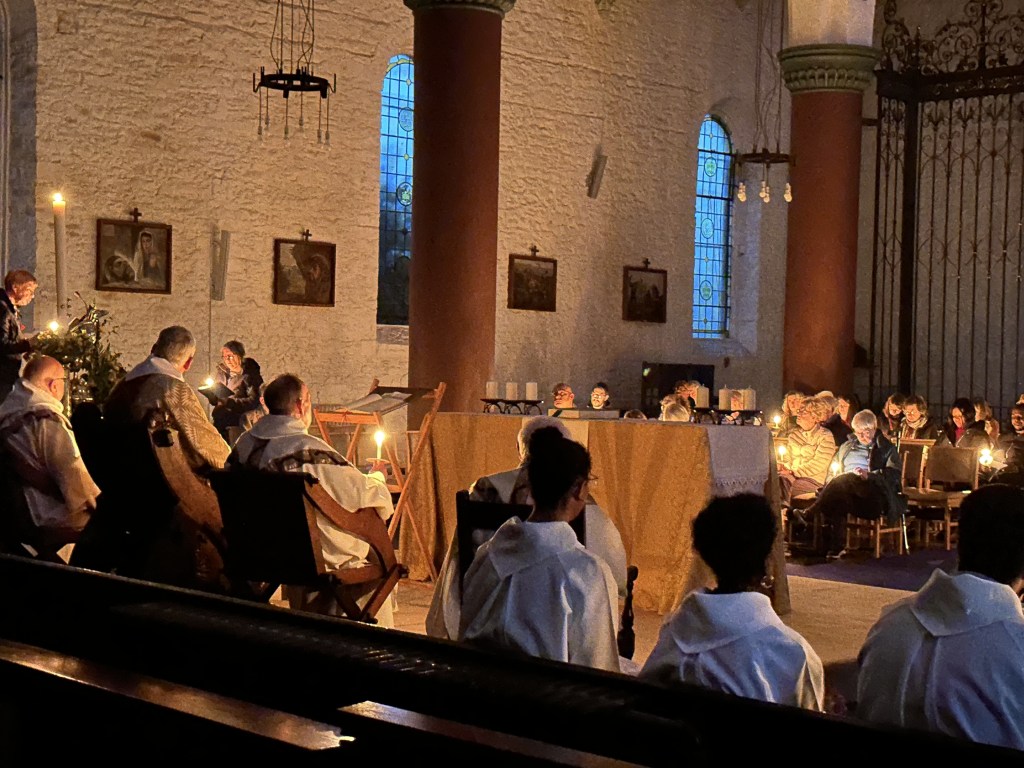
Our primary celebration of Holy Baptism is at Easter when you will also receive Holy Communion for the first time.
After this, some time during the Easter season, adults and older children and young people will be confirmed during the Easter Season.
Preparation for Baptism and Confirmation begins during Lent. We will generally meet each week for conversation and learning. There will also be three occasions when, during one of the Sunday Masses, we celebrate a particular moment in your journey towards Baptism.
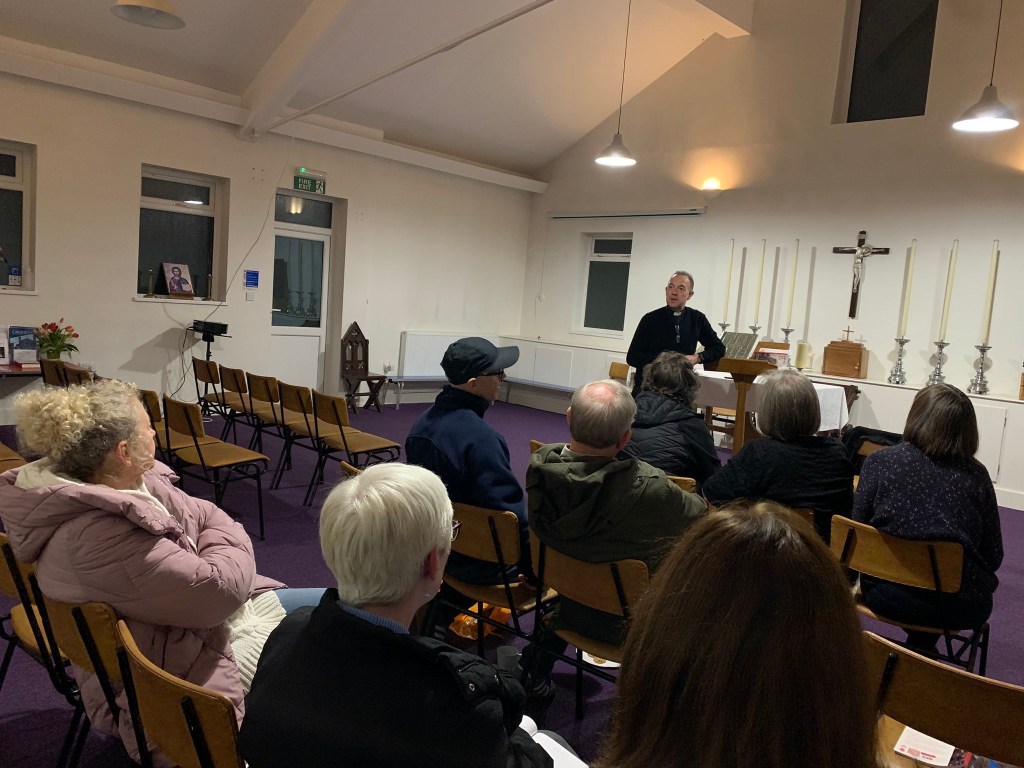
For Adult preparation, we use the Bread of Life course, which usually takes place one evening a week during Lent. (Cekc out the link below for more information and when the course is next being offered). For children and teenagers, there is a separate gathering called ‘On the Way’ which usually takes place early Sunday evening for an hour.
Baptism of young children
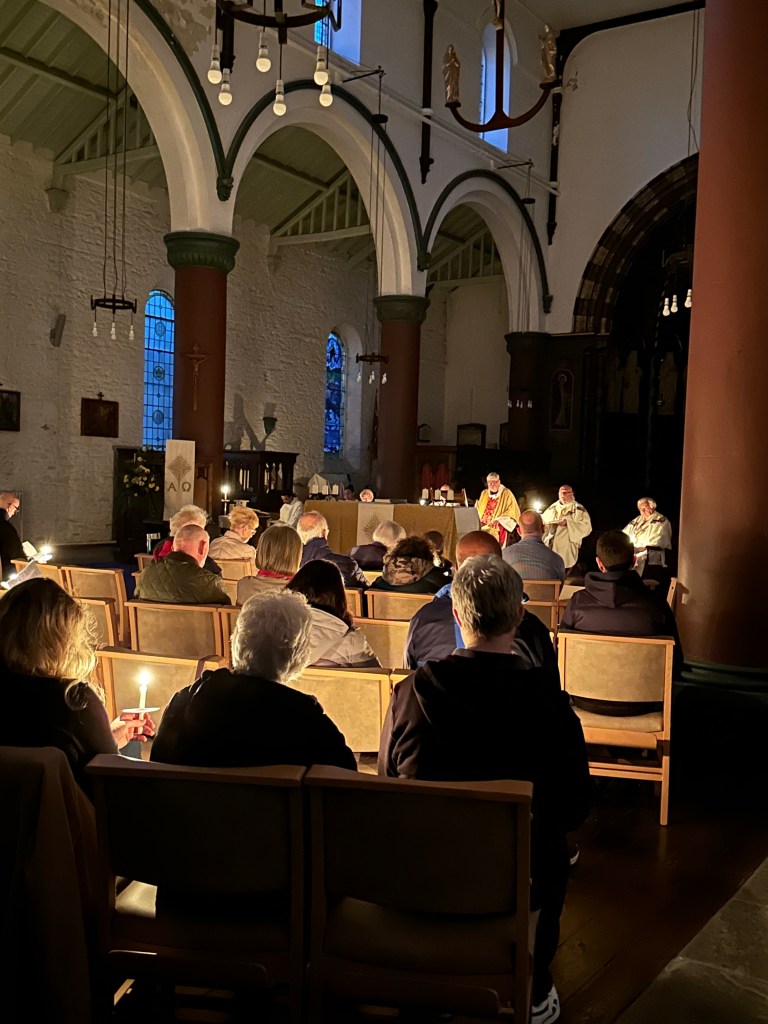
There may also be occasions when baptism is requested for babies or young children during the year.
Quite often this comes from families outside of the week by week celebrations on Sundays. If you would like to enquire about baptism for your child then simply come along to Mass one Sunday and speak to the priest afterwards when we can begin to explore what happens next, and what Baptism means to you and to us. We’d be delighted to meet you.
A child’s journey of faith

Children who are born into a Christian family will be naturally nurtured within the Christian Faith. They will be brought up within the family of the Church where they will experience what it means to pray and worship together. They will begin to have a growing awareness of God’s love for them.
Parents will ask for their child to be baptised so that their place within the family of God is assured and celebrated.
Belonging is important. As a child belongs to their own family so it’s natural for Christian parents to want their child to belong to God’s family, the Church. There, parents, godparents and the whole community provide a loving and faithful embrace.
Signs and Symbols
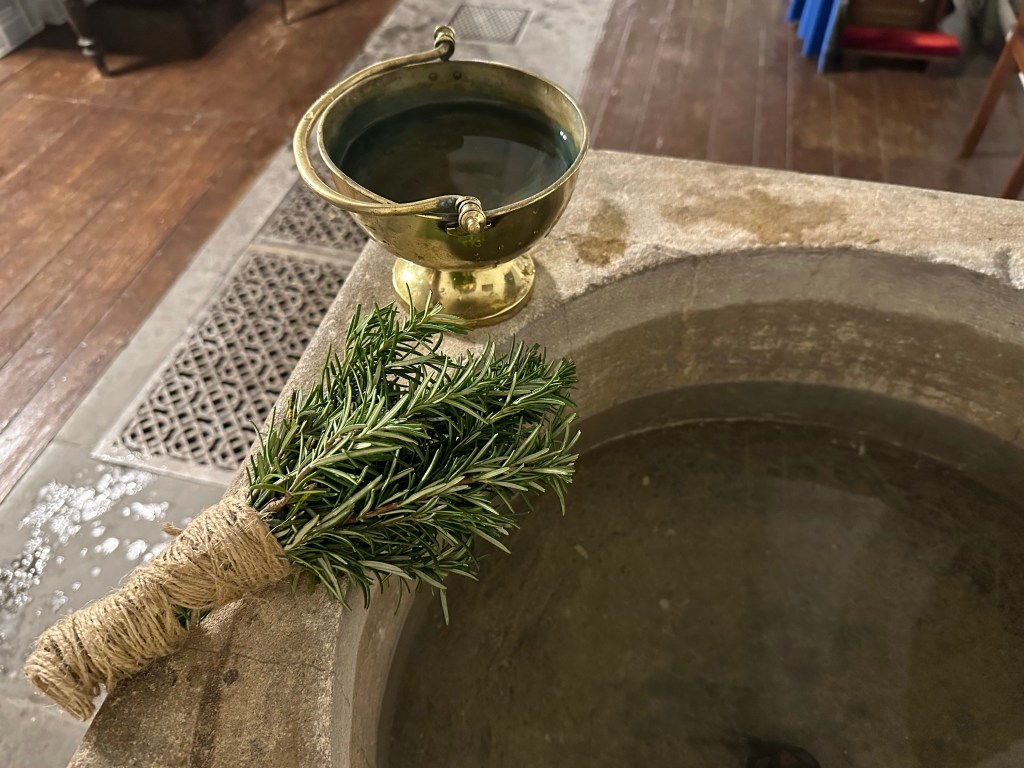
The Baptism Service is full of rich symbolism. So here’s a little explanation of some of the signs and symbols of baptism.
The Sign of the Cross
We often mark things we own. In Baptism, the priest makes the sign of the cross on the person’s forehead and invites the parents and godparents or sponsors to do the same.
‘I sign you with the sign of the cross,’ he says, ‘and claim you for our Saviour Jesus Christ.”
Water
In everyday life, we need and use water for so many things. Water is necessary for life, and so it is a powerful symbol of what happens in Baptism.
In Baptism we are washed clean of sin, born again and share in the new life of Christ.
Holy Oils
There are two different holy oils used at Baptism:
The Oil of Catechumens is olive oil that has been blessed and is used to give strength to the person being baptised.
The Oil of Chrism is a mixture of olive oil and balsam (perfume) and is rubbed on the crown of the person’s head after the Baptism. It shows that, through Baptism, we are members of God’s holy people, filled with the gifts of the Holy Spirit, and sharing in Christ.
White Garment
In the early days of the Church, new Christians used to wear white clothes after their baptism as a sign that they had been washed clean from sin and had begun a new life with Christ.
In the Bible, St Paul also talks of ‘putting on Christ.’ The white garment placed on the child is a sign of being clothed in Christ. It symbolises a new life with Jesus, of being wrapped up in Jesus’ love and sharing in his risen life.
This is why, today, many children who are being baptised arrive at church already dressed in white baptismal gowns. You may be asked to provide a white garment, such as a blanket or shawl, for your child’s baptism.
Lighted Candle
‘I am the Light of the world,’ said Jesus. The baptismal candle is lit from the Paschal (Easter) candle as a sign that in baptism we pass from darkness to light and share in the Risen life of Christ.
Perhaps, each year, on the anniversary of your or your child’s baptism you could light the candle and say a prayer of thanksgiving.
Confirmation
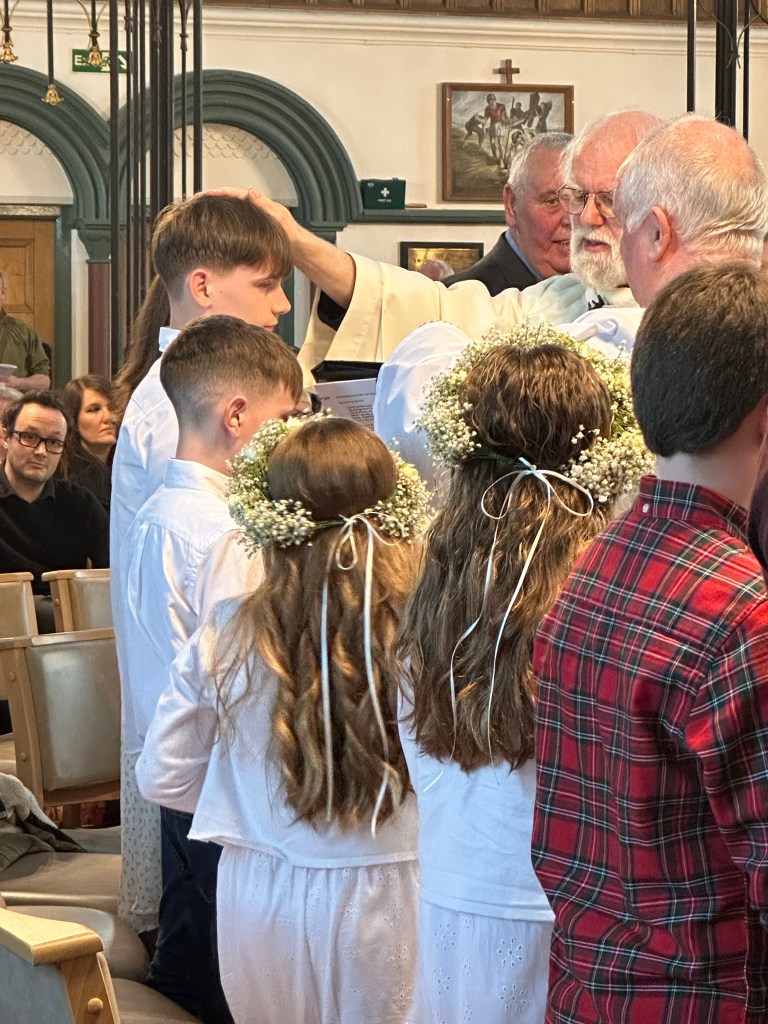
In the early centuries of the Church’s life, Christian Initiation could be quite an elaborate process. There was a long period of instruction, and many associated rites of prayers, blessings, exorcisms, anointings, washings and other gestures – all presided over by the bishop. In the eyes of unbelievers or even the casual observer, the Christian Initiation rite could have seemed quite ‘a carry on!’
Sometimes, the bishop was unable to be present at this ‘carry on’ and so adjustments had to be made which gave rise to a separate rite of Baptism and Confirmation.
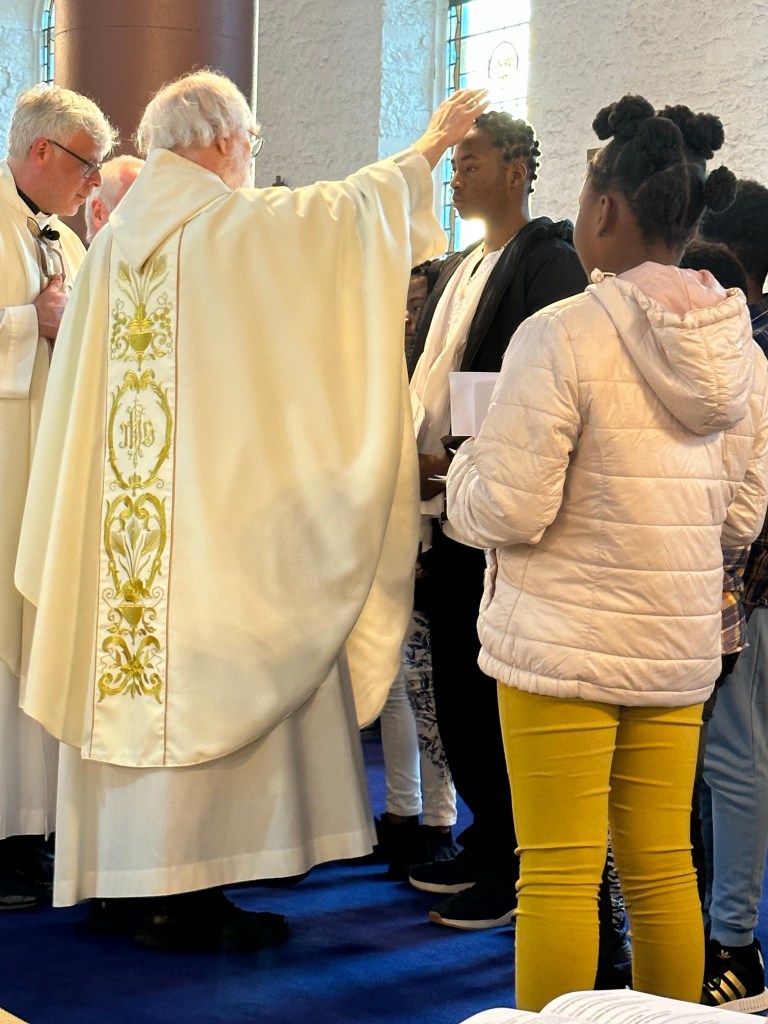
The sacramental gesture of Confirmation is the Laying on of Hands and Anointing with the Oil of Chrism. This goes back to New Testament times where baptism in water was often accompanied by a symbolic gesture to convey the giving of the Holy Spirit.
In Confirmation, then, we receive the gift of the Holy Spirit in a new way.
Confirmation, although often separated in time from baptism, is a continuance of what was begun in Baptism. Confirmation is, in many respects and in the best possible sense of the word, a right carry on!
It is a carry on of that life in the Spirit, as we grow in spirutal maturity.
A carry on of that life long process of perfection.
A carry on of that ‘Yes’ of baptism. A carry on of our faith and the presence of the Spirit in our lives.
The gift of the Holy Spirit gives us the strength to carry on in the Christian Way.
‘Confirm, Lord, your servant with your heavenly grace, that he/she may continue yours for ever,’ prays the Bishop.
We hope this information has provided useful. Please do speak to the clergy to explore things further, or to others in the congregation. Each of us is there for you along the way.
 South Cardiff Ministry Area