From Llan to Llan
The best way to find your way around the Llans is by using the Google Maps Trail below but here are some quick links to some of the places to visit, arranged by Local Authority
RHONDDA CYNON TAFF
Gwynno’s Ground
Llanwonno is a small hamlet nestled in the woods, a few miles from Pontypridd. It’s where St Gwynno settled in the sixth century.
It gave rise to the present church of Medieval origin, which stands alongide a pub, and which also contains the grave of Guto Nyth Bran. (Rhondda Cynon Taff)
A Song from the Hill Country
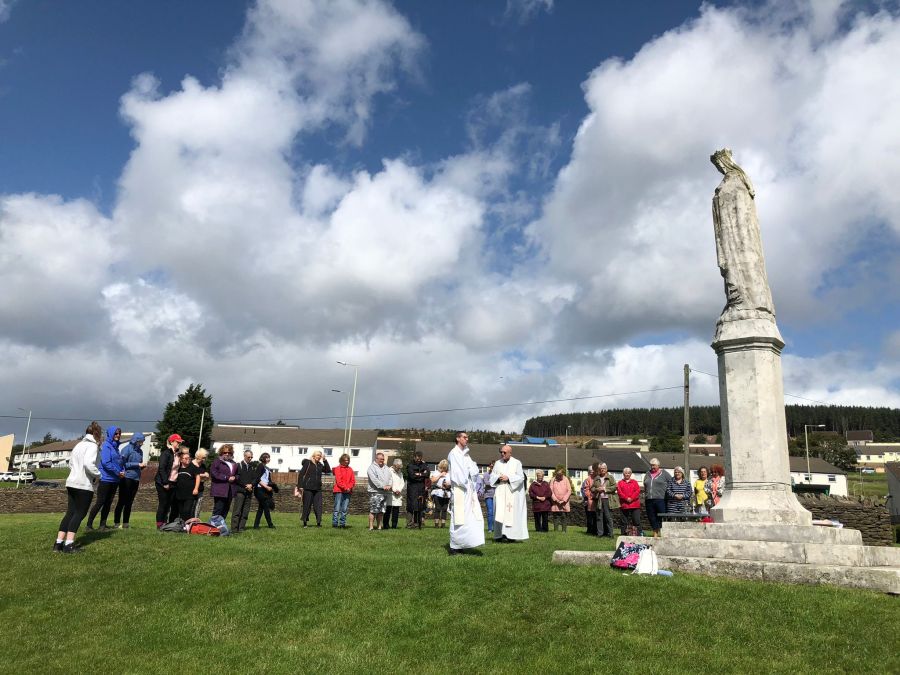
The Medieval Shrine of Our Lady of Penrhys stands on the mountain which divides the Rhondda Fawr and Rhondda Fach.
At one time it was one of the most famous shrines in Wales. Its image was taken during the 16th century Reformation, and burned in the same fire as the image of Our Lady of Walsingham (Rhondda Cynon Taff)
The Three Lights of Llantrisant
The triple sainted town of Llantrisant introduces us to Saints Illtud, Gwynno and Dyfodwg, to whom the church here is dedicated on an ancient hilltop settlement.
Now, overlooking the busy roads and roundabouts below, it was once a satellite settlement of the great monastery of Illtud in Llantwit Major. (Rhondda Cynon Taff)

CARDIFF
An Island Retreat
A few miles out into the Bristol Channel, just off the Coast of Cardiff, is the island of Flat Holm (Ynys Echni) which provided a Lenten home for St Cadoc and his companions.
It is where St Baruc and St Gwalches lost their lives to the sea, and is an island steeped in natural beauty, history and heritage. (Cardiff)
Doing the Llandaff Walk
Here is the Llan of Dyfrig, Teilo and Euddogwy, successive bishops, leaders of the Church along the way of the banks of the River Taff.
Whilst Epstein’s Majestas seems to take the centre stage of the modern Cathedral, we can also learn so much from the days of Dyfrig and his friends as we walk the way of Faith. (Cardiff)
In a Roundabout Way
A mile from St Isan’s Church in Llanishen is a small roundabout Oasis of wooded parkland. Here St Isan settled in his Llan in the sixth century. The only associations now present of his settlement is the stream which still flows, and which was reputed to have healing properties.
St Isan was one of two saints who extended the work of St Teilo in this part of Wales, including St Edeyrn whose Llan lies in East Cardiff (Cardiff)
Raise a glass to Piran
Here, in Cardiff city centre, across from the Castle, is a very different kind of Llan. St Piran – of Cornish fame – may have had a past here. The Church of St Pyran once stood here, its foundations now buried beneath Duke Street Arcade. It was certainly here from the end of the eleventh century until at least 1790, and even predated the ancient Priory Church of St Mary.
Whilst Piran’s past is uncertain and confused and misidentified with others saints, there is every possibility that he could have been from Wales, and founded a church here in the 5th or 6th century.
VALE OF GLAMORGAN
Buried in the Sand
Barry Island may be more well known for its fairground, leisure, pleasure and sit-com fame but, once, this place was locked by the sea, and upon its shores the body of St Baruc’s was washed up and laid to rest here.
There are remains of a church dedicated to St Baruc on Friar’s Road on the Island, and in the other area of Barry, known as Cadoxton, is the ancient parish church which carries the patronage and the name of Cadoc. (Vale of Glamorgan)
Determined Dyfan
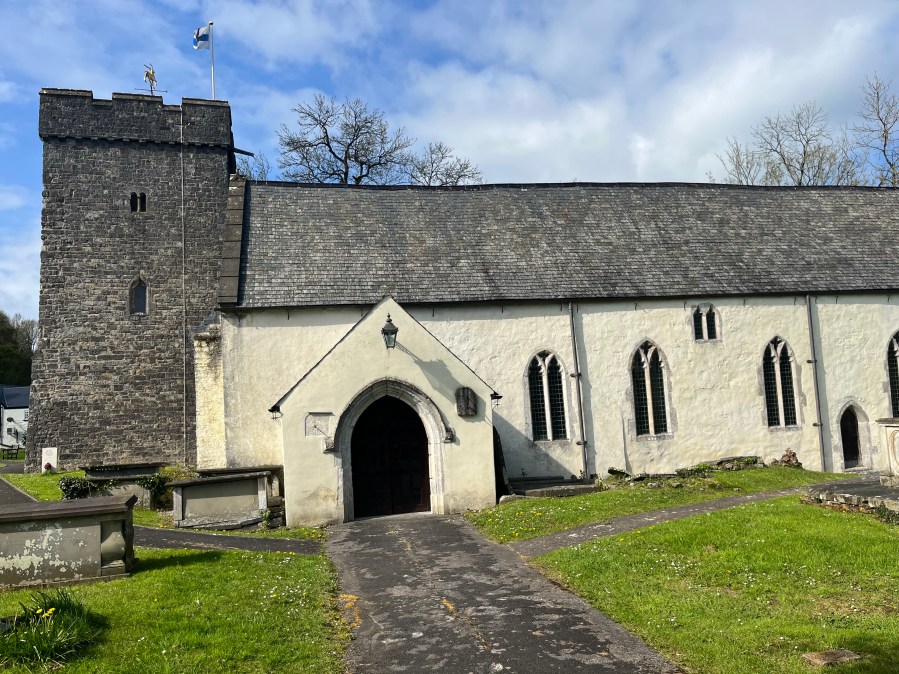
St Dyfan’s name clings to this Norman Church in Barry, and even takes precedence over the more famous St Teilo with whom this place is shared.
Much mystery surrounds Dyfrig’s name and identity but could this place really lay claim to being the oldest Christian settlement in Wales? (Vale of Glamorgan)
For whom the bell tolls
Nestled in Llancarfan is the old church of St Cadoc who settled in his monastery here. Known as Catwg the Wise, he also travelled widely, whilst always returning here.
The present church stands on the original site of his 6th century monastery and contains Medieval wall paintings. (Vale of Glamorgan)
Dochdwy’s Dwelling
On a hill overlooking Cardiff is Llandough, the Llan of Dochdwy who dwelt here and who created a significant monastic settlement which gave way to the fame St Illtyd’s Llan in Llantwit Major.
The Irbic cross which stands in the graveyard dates from the 10th – 11th century but the Llan here goes back deeper to the 5th or 6th century. (Vale of Glamorgan)
CAERPHILLY
A Fortress of Faith
The give away name of Gelligaer reveals a Roman hilltop fort. The word ‘Gaer’ means ‘fort.’ Its remains lie a few miles North of St Catwg’s Church, the reputed birth place of St Cadoc to his mother, St Gwladys.
The remains of a chapel in her name is just two miles away on open moorland. It’s where Cadoc resided for a while around the year 530. Perhaps, by this time, his parents had separated to live in solitude, with his father Gwynllyw finding such silence at the site of St Woolo’s Cathedral in Newport which carries his name. (Caerphilly)
NEATH PORT TALBOT
The Stones of Margam
The Stones of Margam are a collection of Celtic crosses and other monuments used as markers and gravestones over a number of generations.
They illustrate a Christian presence in Margam from the sixth century, and upon which the 12th century Margam Abbey was built. (Neath Port Talbot)
Fire in his Belly
The old Medieval church of St Baglan, in the graveyard of the more recent church of St Catharine in Baglan, was destroyed by fire in the fifties. Its remains still stand, nestled among the trees.
St Baglan arrived here in the the sixth century, equipped with the crozier given to him by St Illtud with strict instructions of where to build his Llan. (Neath Port Talbot)
BRIDGEND
High on a Hill
On the hilltop of Llangeinor with splendid views of the valleys stands the Medieval Church of St Ceinwyr, Cein the Fair.
Called back from Cornwall to her home of Wales she settled here in the sixth century and very likely died here, buried here by her nephew, Cadoc
Along the Pilgrim Way
Whilst St Dyfodwg gave his name to the ancient Parish of Ystradyfodwg in the Rhondda Valley, it is here in the Ogwr Valley that he made his home.
Here we find a monument to a 12th or 13th century fallen pilgrim, perhaps making his way between Penrhys and St David’s / or could this be the Saint himself? (Bridgend)
Blood runs thick
Widely known by its English name Coychurch, this is the Llan of Grallo, the reputed son of St Canna and St Sadwrn in the sixth century.
The present day Church was part of St Crallo’s College in the thirteenth century which continued to carry his name. He is also thought to be a nephew of St Illtud.
MERTHYR TYDFIL
Iron Lady
Once the largest town in Wales thanks to its rich treasure of iron ore, Merthyr Tydfil’s past runs deeper, taking its name from a daughter of Brychan. Passing through this place, she died here, either martyred or murdered.
The Church which stands here is the reputed spot of her burial, and although the details of her life may be confused or lost in time, her name and heritage remains.
Coming Soon:
PILGRIM is continually being developed and updated. The ‘Llans’ we explore are by no means exhaustive, so please do return to discover more additions soon, such as:
A School of Faith
The monastery of Llaniltud Fawr (Llantwit Major) established by St Illtud lays claim to being a school of excellence in the Christian faith.
It boasted up to two thousand students at any time, and it was here that the likes of Saints David, Dyfrig and Samson trained. (Vale of Glamorgan)
A Piece of Patrick
Every nation appears to want a piece of St Patrick. Scotland, England and Wales all lay a claim to his birthplace but Ireland was his own possession, and where he returned as a young man.
The solitary Roman Road runs straight through the small village of Banwen in the Upper Dulais Valley, and this village is one such place that makes such a claim. Could it be true?
Google Maps Trail
Some of the Llanscapes of Wales are mapped out on our Google Maps Trail to help you plan your journey. Click on each Llan for an introduction and a link to the page on our website.
 South Cardiff Ministry Area