I say to you arise

Today is the Commemoration of all the Faithful Departed, also known as All Souls. Here is our daily reflection


You can find the readings for All Souls here


In the prophecy of Isaiah, Christians see the image of the suffering servant as referring to Jesus, where the prophet described him as “Acquainted with grief.”

Each of us, in our own way, is acquainted with grief. Not just the grief of bereavement when a loved one dies, but so many other griefs which puncture our lives. Break ups and farewells, leaving behind our good health, our past—through all the changes we experience in life.

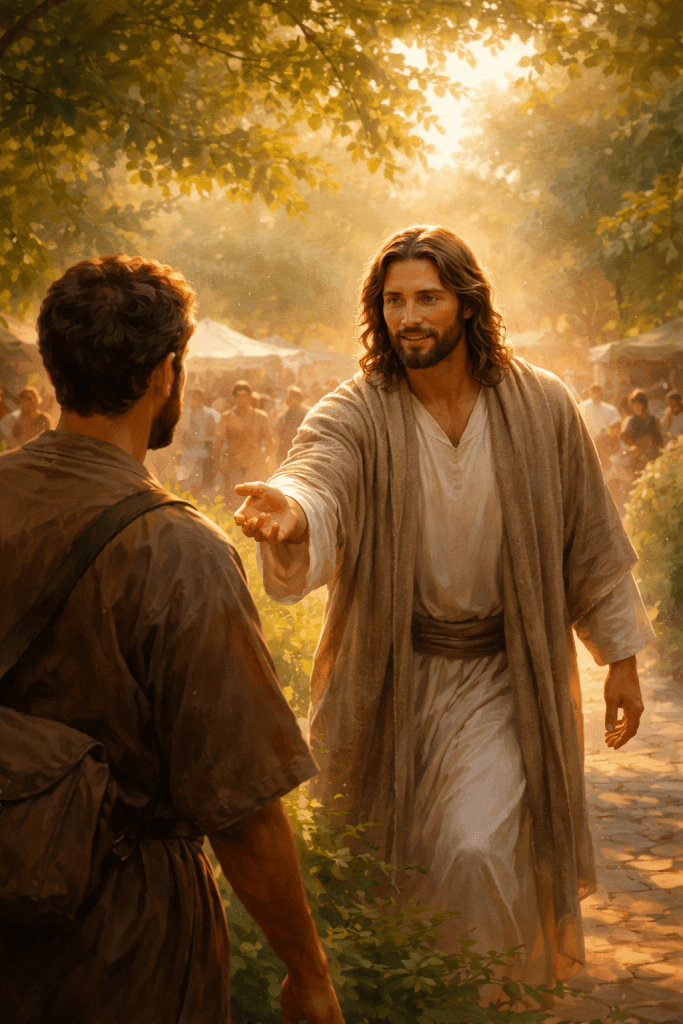
In the village of Nain, Jesus meets a woman who has already experienced the grief from the death of her husband. And now she is grieving for her only son. She is more than acquainted with grief—and Jesus is filled with compassion for her, doing the unimaginable by raising him from the dead.

We do not experience the same miracles in our lives—except that, through Christ’s own grief-stricken life and death, and his resurrection from the dead, the possibilities of our life has now changed: the gates of heaven are flung open, and the life of heaven is within reach.

It’s with this confident hope, that we commemorate all our faithful departed brothers and sisters. We pray that they (and one day so will we) hear the voice of Jesus as he reaches out to them and us, and says—as he did the young man in Nain—“I say to you arise.”


Mass today on Monday 3 November is at Ss Dyfrig and Samson, Grangetown at 630pm


Every saint has a past

“He has exalted the lowly,” sang Mary of her own life and all that God is doing in the world. In today’s reflection from the Daily Mass Readings we explore what it means for the humble to be exalted.


The readings for Saturday of Week Thirty can be found here


Every river, no matter  its length, width or depth begins somewhere—maybe a small spring or a lake, slowly gathering momentum, washing through the earth until it becomes the size it is and then out to sea to even great depths.

Great rivers like the Amazon and Nile, the Tiber and the Thames all have its source, even though the source of some of them are disputed.

There may be no mention of a river in the gospel reading today—Jesus is dining at the home of a ruler of the Pharisees. Whilst they are watching him, he is observing them, and sees how they assume great privilege by taking the seats of honour. They have such a high opinion of themselves. However, he advises them to do the opposite. Humble yourselves so that you may be raised higher— which is less shameful than being asked to give up your seat for someone more important than you are.

As a small spring can become a surging river, so too can those who consider themselves little become exalted. God can make a mountain out of a molehill. We only have to looks to Mary, whose memory we venerate today, to see how God regards the humble. In her Magnificat song in the hill country of a Judah that’s what she sings. “He has exalted the lowly and pulled down princes from their thrones.”

One old proverb says, “No river can return to its source but every river has its beginnings.” Tomorrow, we celebrate the feast of All Saints—how God’s grace has triumphed in the lives of so many and exalted them to the life of Heaven. It may be worth remembering, to quote Oscar Wilde in his play, A Woman of No Importance, that “Every saint a has a past and every sinner a future.


Mass today is at S Mary’s Church, Butetown at 1130am


Watching the world go by

How do we view others who pass through our lives, those people we see from a distance? Do we make snap judgements about them? It’s what we explore in today’s reflection from the Daily Mass Readings.


The readings for Friday of Week Thirty can be found here


 Some people enjoy being people watchers. They may spend time sitting outside cafes or waiting for a train, watching the world go by, taking delight in the snapshots of people’s lives, observing them and how they relate to one another.

In the gospel reading, Jesus is being watched carefully. The intention, though, is more serious and intense than simply watching passers by as they glide through life. His watchers are trying to catch him out. Once again, they are waiting to see if he will break the rules of the Sabbath. When Jesus throws it back on them as to whether it is lawful to heal on the sabbath, they remain silent.

It is easy to make quick judgements about people who pass through our lives. It could be something about the way they dress, behave or talk, and yet we have no idea what is happening deep within. We can tut at a badly behaved child screaming in the supermarket without realising that he or she is autistic. We can complain about the homeless man and not know that as a child he constantly lived in care because his mother was an alcoholic. We can beep impatiently at a car in front of us and not realise it is an elderly man driving away from the hospice where his wife is dying.

Perhaps at times—as we observe the world around us—we can pause and consider the passing acquaintances. Can we show less judgment and more patience? Who knows—we could be a blessing to them. And they, in turn, could be a blessing to us.


Mass today is at S Saviour’s Splott at 10am


Like a mother hen

Each of us has longings and desires. Jesus longs for us. He desires to gather us in, like a mother hen, so that we can be close to him.


The readings for Thursday of Week Thirty can be found here


You can lead a horse to water, but you cannot make it drink.” There have been many different versions of this proverb dating back to the twelfth century. Its meaning is obvious. You can’t always force someone to do what they don’t want to do, particularly a stubborn mule.

Perhaps Jesus’ version of this proverb, would be, “The mother hen can gather her chicks, but she can’t make them stay.” That is what he’s saying of those people who reject his invitation and his loving embrace. The imagery is powerful. Jesus has a longing, a deep desire, to gather all beneath his protecting wings. But many choose not to come or stay. Then he provides a prophecy to his Palm Sunday entrance into Jerusalem. ‘You will not see me until you say, “Blessed is he who comes in the name of the Lord!”  Days after that welcome they call for his death.

As he walks on the edge of danger, with Herod’s bounty on his head, he continues to long for the children he has come to save.  He navigates his way through the dangers presented by that old fox Herod, and the Pharisees who warn him away. His way is not the easy path.

Whilst much may be asked of us, and life may sometimes be difficult, the first calling comes with Jesus gathering us. All we must do is listen to his voice and be warmed by his desire for us. To know that he longs for us for it is to him that we belong. As St Paul’s says, “Nothing can separate us from the love of shod in Christ Jesus our Lord.”


Mass today is at Ss Dyfrig and Samson, Grangetown at 10am


The table is set

Our lives are already filled with so many of God’s gifts and blessings but we can easily take them for granted.


The readings for Wednesday of Week Thirty can be found here


Earlier this month, the famed American Restaurant chain, Popeyes opened a new outlet in Swansea for the first time, with many people queuing overnight, some waiting for up to 18 hours to be the first to try their iconic Chicken sandwich.

Long queues have become synonymous with the chain’s brand name. How long would you queue to get your teeth into a Chicken meal?

In the gospel reading today, Jesus reverts to one of his favourite images of eating and drinking. He says, “People will come from east and west, and from north and south, and recline at table in the Kingdom of God.” It’s a powerful image of the lengths that some people will go, to be in God’s presence and to be part of God’s Kingdom, and it is a reminder that God’s call is to the whole world, and to people of all nationalities and cultures.

It is so easy for us to take for granted the gifts that God has given us – for us to ignore his invitation, to turn our back on his call.  Every Mass is an open invitation for us to feast in God’s presence, to listen to his word, and be nourished by food from heaven. There may be times when we feel a little lacklustre, when we can all too easily find something else to do, or be somewhere different. But the table is set, the doors are open, the food and drink has been prepared and Jesus calls us forward. Come, sit and eat.


Mass today is at St Paul’s Church, Grangetown at 10am and St Mary’s Church, Butetown at 11am


Known by our names

As we celebrate the life and witness of the apostles, Simon and Jude, we are reminded that each of us is known by God by name.


The readings for the feast day of SS Simon and Jude (October 28th) can be found here


Some people seem to have a great gift for remembering names whilst others, like me, can so easily let a name slip especially if it’s not a name I use very often.

Having said that, there are probably many other things I forget. Getting someone’s name wrong can be embarrassing , whilst having our names remembered by someone we may consider to be more important than us, makes us feel a little more important too.


The list of twelve names given in the gospel reading today may be well known to us although it can be confusing when different gospel writers give alternative names for the same person. Whilst Simon and Jude are listed, we know very little about them. For centuries, Jude himself became so confused with Judas Iscariot that he became more overlooked.


Despite the lack of detail, Simon and Jude were —and remain—significant individuals, called by Jesus as apostles and sent out with the good news of God’s Kingdom. At St Paul reminds us we are citizens with the saints, part of the church built upon the back of the apostles. Because of them, we can stand tall, being built with Jesus into a dwelling place for the Holy Spirit. There is one thing for certain—God knows each of us by name, and like Simon and Jude, has a design for our lives.


Mass today is at St Mary’s Church, Butetown at 630pm


What to do?

In today’s homily, Fr Dean explores what it means to do the right thing, even when others think the opposite!


You can find the readings for the Monday of the Thirtieth Week in Ordinary Time here


Many years ago, some priests and their parishioners provided a free Christmas Day lunch for some families on the local council estate. They were assisted by an industrious nun who came scuttling into the kitchen in quite a panic.

“I don’t know what to do,” she said. “We haven’t even served the soup, and they’ve already eaten the after-dinner mints!” Dining etiquette did not feature on their menu that day!

Knowing the right thing to do at the right time can often save us from embarrassment. But, sometimes we can get so hooked up on what we think will be acceptable that our wings get clipped. Hesitation and a lack of faith and confidence to do what we think is right, can mean we end up doing nothing at all.

Whilst Jesus was more than aware of all the laws of Moses, and the many rules and regulations of living a religious life, he knew the right thing to do on the Sabbath was to heal that faithful woman. She had suffered for eighteen years. He didn’t allow fear of what others may think, to stand in the way of doing good. In the end, the disgruntled synagogue official is the one who walks away with his head bowed, whilst the unnamed woman is the one who stands tall in more ways than one.


Mass today on Monday 27October is at Ss Dyfrig and Samson, Grangetown at 630pm


The witness of the martyrs

In today’s reflection on the daily mass readings, Fr Richard considers how the martyrs from church history can inspire and encourage us today.

Readings for the Feast of the Six Welsh Martyrs and their Companions: Hebrews 11.32-40; John 12.24-26

It is either deeply ironic or very appropriate that, two days after the head of the Catholic Church and the Supreme Governor of the Church of England prayed together in the Sistine Chapel, we celebrate the feast of the Six Welsh Martyrs and their Companions. These were a group of Roman Catholics – six Welsh, and 34 English – who lost their lives during the religious upheaval in England and Wales in the years following Henry VIII’s split with Rome. Happily relations between the two churches have improved somewhat since then!

The feast of any saint, and especially a martyr or group of martyrs, encourages us to think about the nature of Christian discipleship, and our readings today help us to do this. The reading from Hebrews comes at the end of a section of that letter in which the author reflects on the faith of various characters from the Old Testament. He starts with Abel and talks about Enoch, Noah, Abraham, Isaac, Jacob, Joseph, Moses, the people of Israel and Rahab the prostitute. By the time he gets to today’s passage he has run out of time to mention another series of heroes. His point is that they all endured much, but remained faithful to God, even though they did not have the promise of resurrection in Christ.

This promise is spelled out in today’s Gospel. Losing one’s life, as Jesus puts it, can be interpreted in two days. We can see it literally, as was the case with the martyrs; or we can see it as losing our identity when we allow our life to become totally united with Jesus. Either way, Jesus says, once we let go of worldly things we will never be far from the Lord. On this feast of the Six Welsh Martyrs and their Companions, let us be inspired by their faithfulness and also be ready to sacrifice everything for the sake of the Gospel.

Seize the moment

In today’s reflection on the daily mass readings, Fr Richard considers the importance of seizing the opportune moments that God provides to serve him, rather than wasting time on things that don’t really matter.

Readings for Friday of Week 29 of Ordinary Time: Romans 7.18-25a; Luke 12.54-59

Whenever the conversation dries up and we are not sure what to say next, we can always turn to discussing the weather. “Isn’t it mild for the time of year?” “What a miserable day!” “Cold out today, don’t you think?” “Looks like it’s going to rain!” These are all things we might say; the weather in Britain is so changeable that there is always something to comment upon. The same, it seems, was true of first century Israel, if Jesus’ words in today’s Gospel are anything to go by. People, he says, were expert at predicting the weather by recognising what was going on in the atmosphere. Jesus contrasts this with people’s inability to “interpret the present time”.

To understand what Jesus means, we need to remember that there were two words for “time” in the original Greek of the New Testament. The word “chronos” was used to refer to the general passage of time. The word “kairos”, however, which is used in this passage, means something more significant. “Kairos” refers to an opportune time, a key moment when God is doing something important in the midst of human history. It is this “kairos” moment that people are failing to recognise and respond to, instead wasting their time talking about the weather.

Sometimes we fall into the same trap as Christians today. We spend our time arguing about internal church matters, or worrying about structures, rather than seeing what God wants us to do to advance his kingdom and seize that “kairos” moment. Like Paul in today’s passage from Romans, we know what we ought to be doing, but somehow fail to actually do it. Paul, however, does not despair at this state of affairs. “Who will deliver me from this body of death?”, he asks, then gives the answer: “Thanks be to God through Jesus Christ our Lord”. May Jesus lead us from the blindness and sloth of inaction to the joy of serving him at the opportune time.

Jesus: meek and mild?

In today’s reflection on the daily mass readings, Fr Richard considers whether the popular image of Jesus as meek and mild is really an accurate one

Readings for Thursday of Week 29 of Ordinary Time: Romans 6.19-23; Luke 12.49-53

Way back in 1999 the Churches Advertising Network in the UK caused a stir with its poster encouraging people to attend church at Easter that year. It featured an image of Jesus modelled on a famous picture of the Marxist revolutionary leader Che Guevara. The slogan on the advert was “Meek. Mild. As if. Discover the real Jesus”. It caused much controversy at the time, which of course delighted the creators – at least people were talking about it. The message of the advert was surely that the popular image of Jesus is indeed one who is meek and mild, the figure who preached love and forgiveness while blessing children and being nice to animals. The real Jesus, the message went, was more hard hitting than this.

We see that “other” side to Jesus in today’s Gospel. He says “Do you think that I have come to give peace on earth? No, I tell you, but rather division”. He then goes on to talk about how families and households will be divided because of his message. There’s not a lot of meekness or mildness here! Jesus is surely trying to underline just how important the Christian faith is in the life of the believer. It is not a hobby or spare time interest; in the words of the great hymn it “demands my soul, my life, my all”. There can be no compromise, and others may find this hard to accept.

Paul uses equally stark language in today’s passage from Romans; he writes that Christians have become “slaves of God”, again emphasising total commitment. And yet we are not subservient, like the followers of an earthly revolutionary leader. As a result of becoming God’s slaves, we have received the “free gift of God … eternal life in Christ Jesus our Lord”. Let us rejoice in that!