
Just Lent | March 31

‘From his temple he heard my voice; my cry came to his ears.’

(see Psalm  17:2-7)

The voice of the psalms is filled with both joy and heartache, misery and relief.  There is a sense of relief in the verse chosen, for God has recognised the psalmist’s voice’  God has heard his cry.

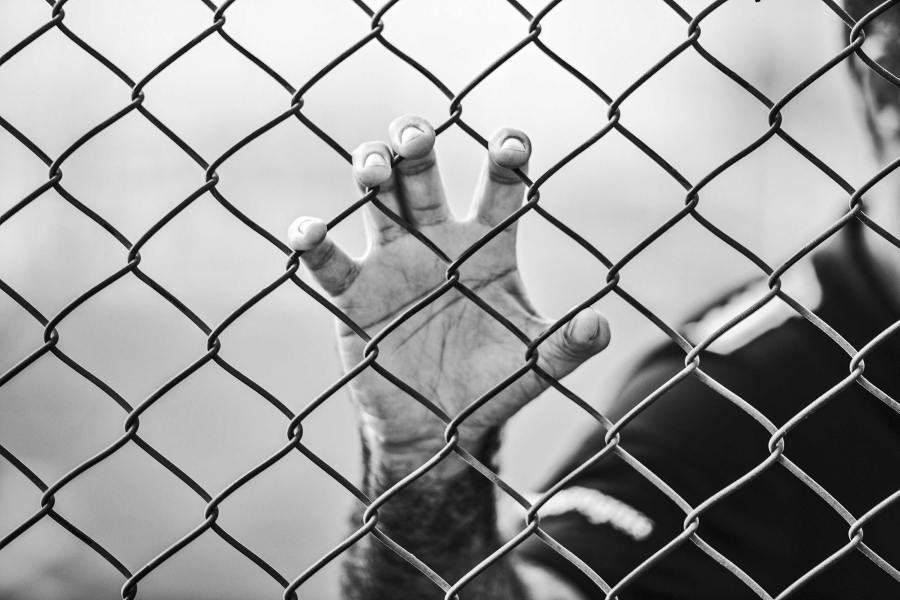
At the age of 18, Hashi Mohamed, who would become the UK’s first black barrister, experienced homelessness for a year. He ended up at Centrepoint in Soho, the hostel for young homeless people.  In trying to gain accommodation he recognised the difficulties which the system created, and realised many of his fellow young people were also struggling.  In his book, People Like Us, he writes, “I learned an important lesson about the importance of language, the often random advantages that dictate who gets listened to and who gets ignored—and the power of knowing how to use your voice effectively.”  Once he had managed to arrange his own accommodation, he set about helping others.

This sound of one’s voice can create a prejudicial response from the listener because of the speaker’s lack of language, vocabulary, education or confidence, or simply having a certain accent.   “Language skills are not shared out equally in our society,” wrote Mohamed as he speaks about he ’language gap’ which exists between the most deprived people and communities and the most affluent. How do we respond to the ’sound’ of others? 

PRAY FOR teachers and others working with children and young people deprived areas, and for self-awareness of our own prejudices.


Our daily reflections for Lent focus on the many injustices which exist in our world, as we seek to connect our life of prayer to social justice, the Justice of God which Christ proclaimed. More resources are available at www.southcardiffministryarea.co.uk/just-lent

Just Lent | March 30

‘I will make you father of a multitude of nations. I will make you most fruitful.’

(see Genesis 17:3-9)

In his book, ‘The Boy with Two Hearts,’ Hamed Amiri tells of his family’s struggles as they escape war torn Afghanistan to seek refuge in the UK, eventually settling in Cardiff as their home.  Their journey was made all the more difficult by the heart condition of his older brother, Hussein. In his book, after describing his brother’s death some years later, he writes ‘Love is a strange thing, especially when it’s felt between total strangers.  In my life with Hussein and through writing this book, I can now see that love crosses borders.  It crosses religions and families and can occur between people who’ll never see each other again.  It brings hope, even in the darkest moments you face.” 

We are part of the same human family and although there are many differences between us we have so much in common.  When the MP Jo Cox was murdered, her words that “We have more in common than that which drives us apart” fuelled a new campaign in her name to bring people together, rejoicing in what we have in common.

The promise of God to Abraham that he would make him father of a multitude of nations, not only reminds the three Abrahamic faiths of Judaism, Christianity and Islam, that we all have something in common as children of Abraham, it is a reminder and a call to us that we can and should be able to live alongside people who are different from us.  We are part of the same human family, walking the same earth and breathing the same air.  As Hamed Amiri reminds us, ‘Love crosses borders.’

PRAY FOR those who build friendships between people of different faiths and beliefs, and for those who seek  to create friendship rather walls.


Our daily reflections for Lent focus on the many injustices which exist in our world, as we seek to connect our life of prayer to social justice, the Justice of God which Christ proclaimed. More resources are available at www.southcardiffministryarea.co.uk/just-lent

Peace until the moon is no more

It was reported some years ago that, in the 1950s, a plan was explored by the US to ‘nuke’ the moon to demonstrate their power to the Soviet Union. It is this which forms the basis of the following meditation, following the words of Psalm 72, as our JUST LENT course comes to an end this evening.

May he live while the sun endures,
and as long as the moon, throughout all generations.
May he be like rain that falls on the mown grass,
like showers that water the earth.
In his days may righteousness flourish
and peace abound, until the moon is no more. (Psalm 72)


Can you believe
there was a plan to blow up the moon,
to send it to oblivion,
a cold war gesture to the Soviets
that the American arm was strong,
as the lunar light went out
and dust exploded across space,
announcing to the world that ‘the moon is no more’?

Can you believe
this night there is a child hiding,
with her father who covers her like a bomb shelter,
as they wait for the sounds of war to cease,
as buildings are blown to oblivion around them,
as homes are reduced to rubble?

Can you believe
this night there is an inflatable boat
fighting with the flow of the sea,
filled with those who have paid the fee to safety,
lined the pockets of human traffickers
who offer no money back guarantee
if death comes their way,
as they fly away from war?

Can you believe
this night there is a troop of soldiers
hiding behind a wall,
sent with instructions to take a land
that is not their own?

Can you believe
this night there is the endless promise of peace,
breathed by Christ upon his Apostles
and every day and night
since that moment in the upper room,
which provides an echo of the angel’s song
above the shepherds’ heads
on Bethlehem’s moonlit hills?

Can you believe
this night that peace is possible?
That Trident Missiles could disappear
as deep into the past
as they are in the sea this night?

Can you believe
this night that peace is possible?
Where does it start?

May he live while the sun endures,
and as long as the moon, throughout all generations.
May he be like rain that falls on the mown grass,
like showers that water the earth.
In his days may righteousness flourish
and peace abound, until the moon is no more.

‘Peace I give you’

As our JUST LENT course reaches the final session this evening (March 29), we’re exploring PEACE!

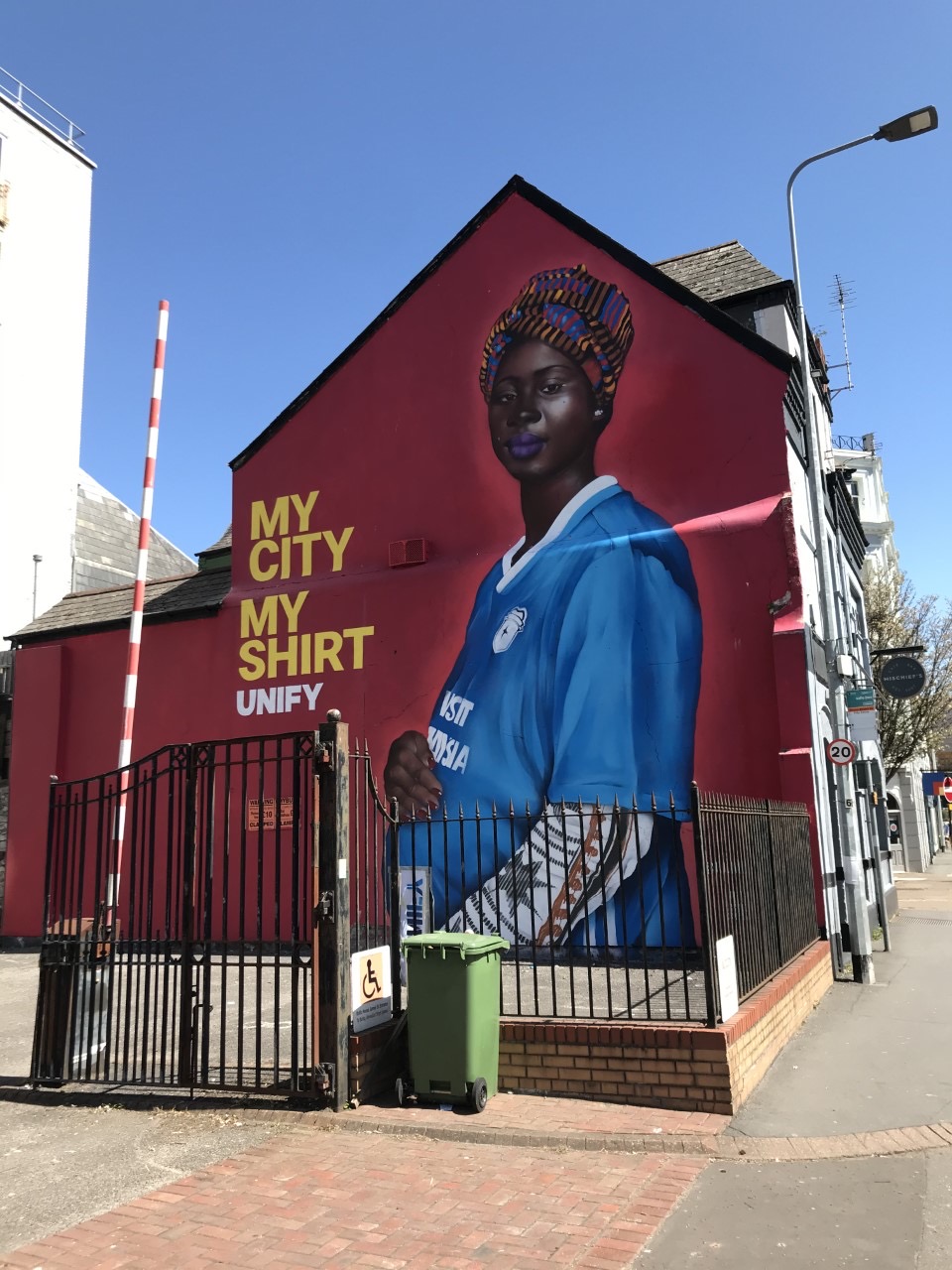
There’s a gentle smile from the face of this painting, a mural which celebrates the multicultural and inclusive Cardiff. Perhaps, in gazing at the smiling face, we smile too. St Teresa of Calcutta said that ‘Peace begins with a smile.’ Really, is that possible? Is that the seed of peace? Can a smile silence gunfire, can it render rockets and missiles speechless, can it disengage tanks and disarm soldiers? Can a smile do all that?

Peace is the cornerstone of our faith. Jesus is the Prince of Peace (Isaiah 9:6) Jesus was the one who said, ‘Peace I leave you, my own peace I give, a peace the world cannot give, this is my gift to you’ (John 14:27). It is God’s desire, as shown in the life of Jesus, for there to be peace. Scripture tells us that he ‘brought peace by his blood on the cross’ (Colossians 1:20). And so peace, the reality of peace, the need for peace is at the heart of the Christian Faith. So, how does a smile get elbowed into all of that?

Perhaps the same emotions and motives which begin war within and between nations are the emotions and motives which exist in every human heart. Jealousy, greed, anger, hatred, cynicism, the need to retaliate, to take what is not ours, to feel more powerful in the face of someone weaker than us, insecurities, the inability of being able to sit down and talk about disagreement. And yet the antidote to
war also exists in the hearts of all – the capacity to love, to empathise and sympathise, to be compassionate and forgiving, to know what is right, to want peace.


A smile, a true smile, rather than a shallow and fake smile, comes from the heart. It begins to break down barriers, brings delight to others, causes others to smile too, begins to create friendships, veers us away from anger. A smile can so easily reflect a smile in the face of another. Yes, there are challenges in the world – there is war and violence and division and so many atrocities, but how can we begin to extend that peace if it doesn’t exist in our own hearts and in our own lives? Where is the need for peace today – in the world, in our own country, in our communities, in our family, amongst our friends, in our street, in our home, in our own lives? Where do we start?

Just Lent | March 29

‘If you make my word your home you will indeed be my disciples, you will learn the truth and the truth will make you free.”’

(see John 8:31-42)

Martin Luther King Jr said “’Injustice anywhere is a threat to justice everywhere.  We are caught in an inescapable network of mutuality.’  The civil  rights leader Frannie Lou Hamer also said that ‘Nobody’s free until everybody’s free.’

The debate which Jesus had with the religious leaders in John’s gospel is about freedom of a specific kind—one of slavery to sin, rather than the freedom which comes from living as children of God.  In recent years, we have been more alert to the terrible issue of human trafficking and slavery throughout the world—and in our own country too.  Today, there are still many people enslaved by wicked regimes or abusive relationships.  People are moved across borders like a product and a commodity to be used and exploited.  They may be put to work in abusive conditions in forced labour to make a profit for those who enslave them.  Some of these people may live in our own communities or even next door to us.  As a hidden crime it often goes unnoticed.  In 2018, the Global Slavery Index estimated there were 136,000 victims of human slavery in the UK.

We believe that each person is made in the image of God, and no one should be treated with disregard for their own rights or freedom to live and flourish as God intended them.  How alert are we to the living conditions of others?

PRAY FOR victims of human trafficking and slavery, and for more alertness to the issue in our own communities.


Our daily reflections for Lent focus on the many injustices which exist in our world, as we seek to connect our life of prayer to social justice, the Justice of God which Christ proclaimed. More resources are available at www.southcardiffministryarea.co.uk/just-lent

Just Lent | March 28

‘Why did you bring us out of Egypt to die in the wilderness? We are sick of the unsatisfying food’

(see Numbers 21:4-9)

In a report commissioned by the Trussell trust in 2021 (the largest study in hunger in the UK) it was reported that almost two in three of the people of working age who were referred to a food bank in early 2020 were disabled while single parent families were more likely to be forced to a food bank. Almost 19% of households referred during the pandemic were lone parents – more than twice the rate in the general population.

One main reason people had such low income which brought them to a Foodbank was due to social security payments failing to cover the cost of living.  This was often due to weaknesses in the system, including the five-week wait for a first Universal Credit payment and low levels of payments.

Whilst in the wilderness and on the run—as people on a journey seeking asylum from slavery, and with the promise of a new land—the people of Israel suffered hunger and unsatisfying food.  They grumbled against God who responded by providing them with ‘Manna from Heaven.’  Today, in the UK, there are many grumbles as people struggle to put food on the table.  An immediate response to this is the growth of Foodbanks throughout the country but this just responds to the presenting need, as important as that is.  There is a further need to prevent this from happening in the first place.

PRAY FOR those who work in our food banks, and for a  situation that prevents people from slipping into poverty and need.


Our daily reflections for Lent focus on the many injustices which exist in our world, as we seek to connect our life of prayer to social justice, the Justice of God which Christ proclaimed. More resources are available at www.southcardiffministryarea.co.uk/just-lent

Just Lent | March 27

‘Has no one condemned you? Neither do I condemn you.’

(see John 8:1-11)

Although played out in a different place and in a different time, the incident of the woman caught in adultery in the gospel according to John, has much to say to us today.  We can focus on the compassion of Jesus and the power of his forgiveness.  Or how Jesus treats this unnamed woman with dignity, or we can learn the lesson of not pointing the finger when we are less than squeaky clean.  But we can also explore how women have been portrayed and regarded in many different cultures, including our own, even to our own day.

There is, of course, no mention of the man who was also involved in an adulterous relationship.  He seems to have avoided the scrutiny and stones of the crowds even though they have been caught in the very act of adultery.  Perhaps she is even half clothed or even naked.  We can only imagine the scene.  But it’s the woman who is portrayed as the villain and to whom violence and death is threatened. Her dignity has gone.

From 2021, police forces in Wales and England are now required by the UK government to record misogyny as a hate crime. It was announced just days after an outpouring of grief at a vigil following the murder of Sarah Everard.  For many, the new requirement was hailed as a victory in the campaign to tackle violence against women. What can we do to challenge and bring change?

PRAY FOR an end to violence against women, and that all women be treated with dignity, respect and equality.


Our daily reflections for Lent focus on the many injustices which exist in our world, as we seek to connect our life of prayer to social justice, the Justice of God which Christ proclaimed. More resources are available at www.southcardiffministryarea.co.uk/just-lent

Just Lent | March 25

Nicodemus said, “Surely the Law does not allow us to pass judgement on a man without giving him a hearing and discovering what he is about.”

(see John 7:40-52)

On September 3, 1952, father of three, Mahmood Hussein Mattan was taken from his cell at Cardiff prison and executed for a murder he did not commit. He was the last person to ever be hanged in Cardiff and the final innocent person to be hanged in Wales. Born in Somalia in 1923, Mahmood Mattan was a sailor which brought him to Wales.  He was convicted for the murder of Lily Volpert, a local shopkeeper. He was told by officers at the time that he would die for Miss Volpert’s murder “whether he did it or not”, and was described in court as a ‘semi-civilised savage.’

Sadly, this miscarriage of justice and discrimination is not uncommon in the UK, and there have been a number of significant cases where people have been wrongly convicted after unfair investigations by the Police.  In John’s Gospel, Nicodemus stands up for Jesus who is being treated unjustly, and reminds others that they must give him a fair hearing before passing judgement.

Whilst it is difficult for institutions to accept that they may be institutionally racist or, for example, misogynistic, it is important that there is proper scrutiny acceptance and transparency, and to listen to the voices of those who have been discriminated again.  This applies not just to secular organisations but also to the Church.  How much do we really value and stand up for justice?

PRAY FOR a Justice system which is fair for all and free from discrimination, and for all who support both victims and the accused.


Our daily reflections for Lent focus on the many injustices which exist in our world, as we seek to connect our life of prayer to social justice, the Justice of God which Christ proclaimed. More resources are available at www.southcardiffministryarea.co.uk/just-lent

Just Lent | March 24

‘They say, with misguided reasoning, “Let us lie in wait for the virtuous man, since he annoys us and opposes our way of life, reproaches us for our breaches of the law.”’

(see Wisdom 2:1,12-22)

The ‘News International’ phone hacking scandal was a controversy involving the now-defunct News of the World and other British newspapers owned by Rupert Murdoch. Employees of the newspaper were accused of engaging in phone hacking, police bribery, and exercising improper influence in the pursuit of stories. They targeted celebrities, politicians, members of the Royal Family but also the phones of murdered schoolgirl Milly Dowler, relatives of deceased British soldiers, and victims of the 7 July 2005 London bombings. The public outcry led to several high-profile resignations.

The media has a significant and responsible role to play in society which means that, whilst it has a duty to report news, it also needs to act in a moral and sensitive way.  If the search for stories means unfairly encroaching on people’s privacy and their difficult situations, and treating them without respect and dignity then it is failing.

We too, in any narrative that we tell, and any news we pass on to others must be mindful of the effects of our words.  It can be very easy to delight in the  downfall of others.  How can we  contribute to a narrative that is good and fair, and share news that is honest?

PRAY FOR those who work in the media, and for a considered reporting, a careful use of words, and  for our own responsibility in being gentle with our words.


Our daily reflections for Lent focus on the many injustices which exist in our world, as we seek to connect our life of prayer to social justice, the Justice of God which Christ proclaimed. More resources are available at www.southcardiffministryarea.co.uk/just-lent

Just Lent | March 23

‘They have made themselves a calf of molten gold and have worshipped it and offered it sacrifice.’

(see Exodus 32:7-14)

In an article published on The Guardian website (31 December 2022), addressing the Cost of Living, Rowan Williams writes:  “The cost of living crisis is in fact an example of costs being transferred from the powerful to the powerless – from ambitious speculators, market fundamentalists (in and out of government), naked profiteers and, in the past horrendous 10 months of war in Ukraine, foreign dictators, to a population pushed with increasing aggressiveness into debt, housing, food and energy poverty, and insecure working conditions.”

It is so easy for human beings to be treated as commodities, and where profit is more important than people, when riches are more relevant than lives.  Rowan Williams continues, “It is a sign that we have once again forgotten the “covenantal” character of community. It was repeated often enough during the pandemic that no one is safe unless everyone is safe: have we really not noticed that this applies to our economic as much as to our medical wellbeing?”

Through Moses, God entered into a covenant with his people which they quickly forgot, as they turned to a calf of molten gold.  For Christians, Jesus established a new covenant for all, created through his death.  To recognise the dignity and importance of community is important in caring for all, and ensuring that those who are poor and powerless do not pay the price for the challenges and difficulties we face.

PRAY FOR strong and resourceful communities, and for a fair distribution of wealth.


Our daily reflections for Lent focus on the many injustices which exist in our world, as we seek to connect our life of prayer to social justice, the Justice of God which Christ proclaimed. More resources are available at www.southcardiffministryarea.co.uk/just-lent