At St Mary’s, towards the end of Black History Month, we’ll be blessing an icon of St Martin de Porres who, amongst many other things is patron saint of those who seek and work for social justice and racial harmony.
There is, at present, just a small representation of black people in the art work at St Mary’s. This can be found in one of the Stations of the Cross, with Simon of Cyrene and his two sons, Alexander and Rufus.
The icon of St Martin will be a place to pray and light candles, and will also go a little way to better reflect our community and the lives of those who worship here.
Who was St Martin?
St Martin was born in the city of Lima, Peru on 9 December, 1579. He was the illegitimate son of a Spanish nobleman, Don Juan de Porras y de la Peña, and Ana Velázquez, a freed slave of African and Native descent. After the birth of his sister, the father abandoned the family, and his mother supported her children by taking in laundry. He grew up in poverty and was sent to a primary school for two years, and then placed with a barber surgeon as an apprentice.
He spent much time in prayer and was drawn to the Religious Life. However, under Peruvian law, descendants of Africans and Native Americans were barred from becoming full members of religious orders, so he asked the Dominicans of Holy Rosary Priory in Lima to accept him as a volunteer to perform menial tasks in the monastery in return for being able to wear the habit and live with the religious community. He was received at the age of 15, first as a servant boy and then as an almoner. He also took on kitchen work, laundry, and cleaning, as well as continuing his trade of barbering, and performed many miraculous cures.
After eight years at the Priory, the Prior decided to ignore the law, and permitted St Martin to take his vows as a member of the Third Order of Saint Dominic, although he was mocked by some fellow brothers as being illegitimate and descended from slaves. In 1603, when he was 24 years old, he was allowed to profess religious vows as a Dominican lay brother.
St Martin was noted for his work on behalf of the poor, established an orphanage and a children’s hospital, and had a deep devotion to the Blessed Sacrament where he spent many hours in prayer. He is the patron saint of black people, people with a mixed ethnic background, barbers, innkeepers, public health workers, and all those seeking racial harmony and social justice as well as animals, schools and public health.
The icon of St Martin will be blessed at St Mary’s Church, Butetown on Sunday 29 October at the 11am Mass. All are welcome.
St Martin de Porres, born: 9 December, 1579; died: 3 November, 1639; Beatified, 1837 by Pope Gregory XVI; Canonized, 1962 by Pope John XXIII
On Homelessness Sunday (October 8th) the Ministry Area of South Cardiff will adopt a Homelessness Charter.
Some years ago, before the Ministry Area of South Cardiff existed, St Mary’s Church adopted a Homelessness Charter. Its purpose was to set out our commitment and response to those who are homeless in our city.
Now, as part of our life together across the communities of Butetown, Grangetown and Splott, we have reviewed and will adapt this charter for the whole of the Ministry Area.
The charter doesn’t claim to solve problems. It’s simply the beginning of a process which attempts to establish a culture in which we can work together.
Not only does the Homelessness Charter aim to offer a consistent and realistic response to all experiencing homelessness, it also commits us to working with others on issues of Housing Justice, and to respond effectively to some of the related issues.
We will regularly review the charter. So that we can do more and do better!
Photo: Liam Riby, Unsplash
Homelessness Charter
We welcome people who are homeless and will treat you with dignity and respect.
We offer friendship and accept you as you are. We will talk with you and listen to you, and will try to understand your situation. You are welcome to join us for worship but all people regardless of religion, race, gender, sexuality or disability are welcome here. (We may also host external organisations, so please ask about the accessibility of these).
We will guide you to services which can help you with your specific needs.
If necessary and appropriate, we will liaise with them for you. Our pastoral leaders and other individuals in our congregation commit to having an up to date knowledge of Homeless Services across our city and issues which may affect you so that you will receive a consistent, fair and honest response. However, we recognise there are limitations to the help we can give. Our community consists of all kinds of people, some of whom have their own vulnerabilities but we seek to equip our whole congregation so that they will be understanding and supportive.
We aim to offer a safe environment for all.
All staff, volunteers and members of our community of faith and all who visit and use our church premises (including those who are homeless) can expect to be treated with respect and to be safe from harm so that we can offer a welcoming and friendly environment, free from violence, aggression, bullying and fear. We will report aggression, violence, anti-social and criminal behaviour and damage to our property to the police. Drugs are not to be used or dealt on our premises, neither is begging. We work to the Safeguarding Policy of the Church in Wales.
We will support you financially through donations to homeless charities and other projects in our city.
We are unable to give you money or pay for services directly. We value and will promote the work of those charities and organisations, and are committed to supporting them regularly and in appropriate ways.
We have a concern for your physical, spiritual and emotional needs.
Each church has different resources available to them in terms of being able to provide food. However, we recognise that some external projects which offer food also provide parallel services which can help you even further. We can guide you to these services and to the abundance of free food available across Cardiff but we will always attempt to help you at your point of need. We are unable to provide accommodation. On occasions when people are rough sleeping on our premises, we will assess the risk to both you and others, and explore with you the possibilities available by liaising with various services and authorities.
We will be actively involved in Housing Justice and issues which affect those who are homeless.
This also means being informed about the issues which lead to homelessness, and the experiences of those who are homeless.
Homelessness Sunday
Why not join us on Sunday 8th with celebrations across the Ministry Area?
St Paul’s Church, Grangetown at 8am and 1030am
St Dyfrig and St Samson’s Church, Grangetown at 9.15am
St Saviour’s Church, Splott at 9.30am
St Mary’s Church, Butetown at 11am
On Sunday 15th, our Guest Preacher at St Mary’s at 11am is John Stark, chaplain to the Salvation Army’s Ty Gobaith
This charter sets out how, as a whole church community, we will respond to, welcome, care for and support those who are homeless across the churches of South Cardiff Ministry Area, as well as how we will respond to the situation of homelessness and Housing Justice. Adopted on Homelessness Sunday, October 8, 2023. We willcontinue to review and adapt as appropriate.
And so, I have to type and retype, use the spell check, copy and paste, to get the bloody ‘‘b’ into my text.
It’s 8.30pm on Thursday evening.
Some people are beginning to gather outside Ty Gobaith, the Salvation Army Hostel right at the top of Bute Street, and which borders (literally) St Mary’s Primary School. It’s a successful and valuable resource for those who find themselves homeless. They do amazing work.
Those who gather, though, are not one of the sixty or so residents there.
They carry their bags across Callaghan Square. Their heads are lowered, determined, they move on. They know where they are going.
I don’t know where they have been, what their story is, what has brought them to this place, at this time. So many traumas and tragedies. There are so many vulnerabilities, but an apparent Police Order* means they are dispersed from the area around the Huggard Centre (and the many businesses and the brand new apartments there) and so they arrive closer here, closer to the Primary School.
Many of their lives are so complex and so chaotic. There are so many issues, so many problems, so many unknown stories waiting to be heard.
Tonight, they stand and crouch and sit.
They look for a vein to inject, and then inject.
I stand for while and watch. And then turn away. Leave them to find their escape from the shit they have found themselves in.
They have been gathering here for some days now, maybe weeks.
This morning, I cleaned up needles from the steps of St Mary’s Church, a child’s stone’s throw away from St Mary’s School which begins its new term in a few days’ time.
My CCTV tells me that two males were here yesterday at 3.30pm, the same time as children will be spilling out from school in less than a week’s time. They leave their needles and mess behind, move on.
I clean up. Place their needles into a box. Dispose of the litter. Move on.
There has been an increase of commotion and arguments at the top of Bute Street over the last few weeks. More activity, more gathering, more chaos.
It’s beginning to get awful, often violent.
“What are you looking at? Fuck off?” said someone the other day as I passed by as they did their own thing in the street where I live, a yard or two from the school.
How do we respond to both the needs of those who are homeless and vulnerable and, at the same time, respond to the needs of children – in a “Child Friendly City?” My current experience in Butetown at the moment is that this isn’t being considered and isn’t being addressed as a pressing need, despite so many concerns.
Some years ago, when I began my time as parish priest in Butetown, after living here for much longer, many of us noticed a change. There was flagrant dealing and use of drugs which devastated and disturbed the community. It continued until it became commonplace.
I remember speaking to a young mother walking her child to school. We had just passed a drugs deal on the street.
“How does that make you feel?” I asked.
“It is what it is,” she said, “we just get used to it.”
It had become the new normal. Something to put up with and not question. A problem pushed into our path, not of our own making.
However, things soon changed. People responded. Life seemed to become better. Lockdown improved some things too. But lately things have become worse.
This afternoon, as I walked around, I saw more discarded needles, here and there. The underpass at Letton’s Way between Lloyd George Avenue and Bute Street was littered with needles and, outside Cargo House – another facility for those who are homeless and run by Cardiff Council – more discarded needles, just a few yards from the Primary School’s entrance.
On my way home, I pass by two people sat on the kerbside in North Church Street. Two more skirt down North Church Street, wander into the Church Car Park, see that I am there ahead of them, decide to move on. Perhaps, it’s two less needles for me to dispose of. The least of my worries, and certainly of theirs.
Things are beginning to regress. It’s a return to how things were, some years ago, a slip back in time. Instead, this time, there is a new aggressiveness, a new anger.
Around me, within just a few hundred yards, there are millions of pounds of investment being made, ploughed into new buildings and shiny new developments like the new Cardiff Arena, and many Apartment buildings that rise up but do not include any social or affordable housing. Butetown gets squeezed out until it just becomes “the Bay.”
The city build up, builds out, brags and bulges but sometimes, like tonight, this just seems like it’s another case (thanks to copy and paste) of Bugger Butetown.
*since this was first published, the South Wales Police has confirmed there is no dispersal order in place. . Ty Gobaith had suggested this was the case from the information they had been given, but it seems it’s just the security measures employed by local businesses around the Huggard Centre which has moved people away from the area and so into ours
In September, we’re serving up an exciting Course which explores the Christian Life through the Lens of the Holy Eucharist. So, if you’re hungry to find out more, read on!
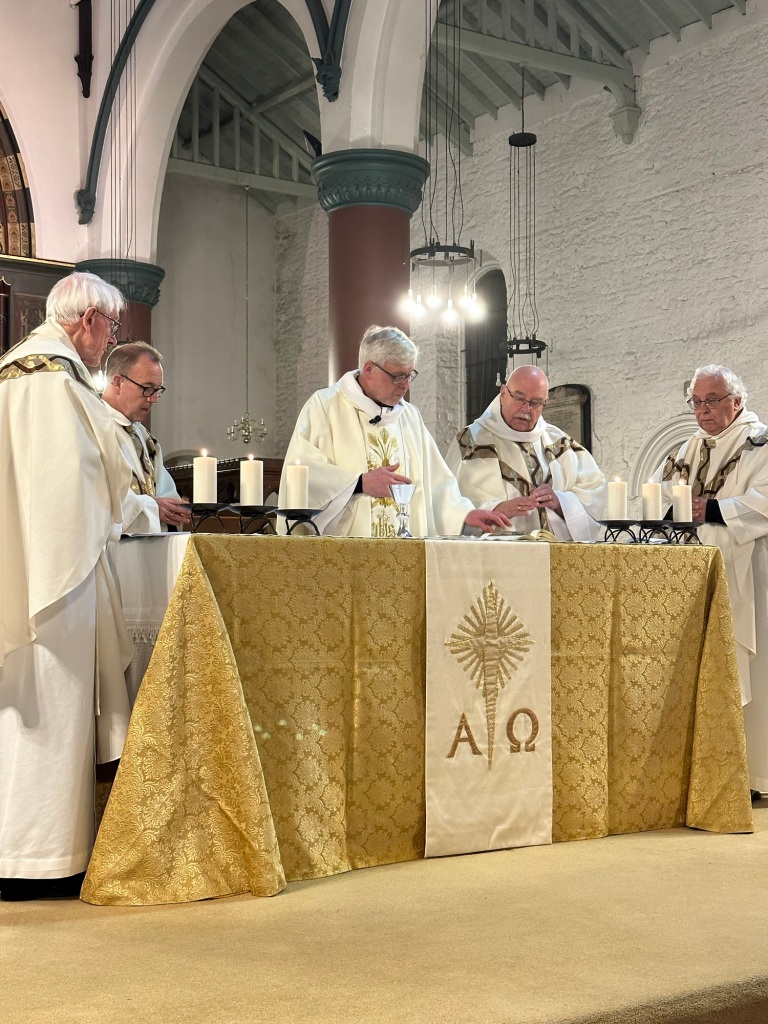
Each Sunday and through the week, we gather to celebrate the Holy Eucharist. It’s at the heart of our life together. But why is it so important, and what does it teach about the Christian Life?
Well, that’s where ‘Bread of Life’ comes in. It’s the start of an amazing journey in getting to know Jesus Christ with a new and deeper understanding.
The course has received considerable investment from The Confraternity of the Blessed Sacrament (CBS) and across the Church. This is reflected in the quality of the videos which accompany the course. They have been specially commissioned and filmed in biblical locations such as Jerusalem and across the UK.
There is also an attractive Guest Book, designed to accompany participants through their involvement with Bread of Life (published by SPCK) and on their ongoing faith journey, as well as podcasts and other resources.
The Eucharist is at the heart of our life together
A Slice of Life
The course consists of six modules. The first module introduces the Eucharist as the central sacrament of the Christian life by looking at its history, its meaning and its importance to today’s Church. The second module looks at what it means to be reconciled to God, and why we participate in repentance and absolution as preparation for receiving the Eucharist.
As we move through the weeks, the third module explores the importance of Scripture, and we look in detail at the biblical passages that inform our understanding of the Eucharist.
In the last three modules, we appreciate the role of prayer in the Christian life. We will focus on the Lord’s Prayer as the prayer of the Eucharist and as a beautiful pattern of prayer. We will explore what it means to receive Christ in the Eucharist, and finally (as we move on from the course) see why the eucharistic life is missional and outward looking.
Want to find out more?
If you’re interested why not join us on Wednesday September 20 at 7pm at St Paul’s Church, Grangetown for a gentle introduction to the Course, all served up with light bites and refreshments! You can learn more about the course and decide if you’d like to make the journey with us!
You don’t have to travel far and wide to make a pilgrimage. Our new ‘Urban Pilgrimage’ experience in the Celtic tradition makes discoveries on our doorstep in the heart of the city of Cardiff.
“You may have a highly polished shoe but your footsteps are no grander than those made by a barefoot man.”
So goes an ancient Christian Celtic proverb. The Celtic Saints travelled well, pushing out across land and sea, often in search of solitude, sharing the good news of Christ as they went.
But they also knew how to be still, rooted in the landscape, creating community, discovering God in their surroundings, in their daily activities, and in the beauty of Creation.
They worked with the landscape of which they were a part, labouring with love. They embraced the terrain. They were part of the scenery whether it was mountain or meadow, a woodland or an island retreat.
Each piece of ground for them was holy ground.
So many of those Celtic saints left their mark on the land. For some, their names were defined the place that they – and we – have called home.
Familiar features
Whilst many of us make pilgrimage to places far away, the place we call home is calling out to be discovered. The familiar features of our landscape can often hide secret treasures. Hidden away and out of place, we can make pilgrimage through the parks and streets, between the buildings and high rise flats, and encounter God in the everyday sights and sounds.
As soon as we cross our doorstep, a pilgrimage has begun.
“Whilst many of us make pilgrimage to places far away, the place we call home is calling out to be discovered”
This year, we launched our pilgrimages to the island of Flat Holm, a place sought out by St Cadoc, fifteen hundred years ago. Whilst the island is situated within the ancient parish boundaries of St Mary’s it is often elusive, and remains just a distant sight for many. It takes an hour’s crossing by boat – which may put off some potential pilgrims!
This year, we launched our pilgrimages to the island of Flat Holm in the Bristol Channel
However, as well as offering this Island pilgrimage opportunity, we are planning pilgrimages closer to home, right here on our doorstep in the heart of Cardiff, the capital city of Wales.
Everyday demands
Whilst the post-industrial landscape of a former docklands may not necessarily cry out with the opportunity for pilgrimage, like the Celtic saints before us we can find God rooted in the landscape, and present in our everyday demands and activities.
Even within the urban landscape, nature can thrive – if given a chance – and it’s within God’s creation (and as part of this creation) that Cadoc and all the Celtic Saints experienced so intensely the presence of God.
Our “on shore” pilgrimages in the Celtic and catholic tradition will begin at St Mary’s Church in Butetown for Mass and the Blessing of Pilgrims. We will stop along the way for particular times of prayer and ministry – as well as for well earned refreshments!
You can bring your own drinks and food or make the most of the many cafes, shops and restaurants along the route.
To make the most of the pilgrimage it’s suggested you purchase our Celtic pilgrimage manual (£5 each) which is filled with specially written prayers and liturgies in the Celtic tradition, and which we will use along the way.
As part of the pilgrimage, we may also make a crossing across the flat water of Cardiff Bay from Penarth to Mermaid Quay (which costs £6.20 – card payments only – paid direct to the company)
Walking across Cardiff Barrage we will be able to see Flat Holm (on a fine day!) and will be the closest on land that we can get to the island!
A Great Equaliser
Someone recently described their pilgrimage to the Shrine of Our Lady of Walsingham as “a great equaliser.” He went on to say that each pilgrim was so different “but we all have this one thing in common.”
It’s the same with any pilgrimage. A community is created, and our diverse and varied lives, for a little while, become intertwined like Celtic knot-work.
When we make pilgrimage together, each of our footsteps, whether we wear well polished shoes or tread barefoot, is no grander or poorer than anyone else’s.
So why not join us?
You too can discover a pilgrimage experience with a difference. Here, on our doorstep, we can encounter God. Here, through the streets, each step can be a prayer, each movement a miracle or a moment of meaning.
Each Urban Pilgrimage will begin with Mass at St Mary’s Church (Butetown, Cardiff) and we will be publishing details of dates soon.
We can also organise bespoke pilgrimages for particular groups – so please get in touch if you’d like to explore this.
The walking distance is approximately 3.5 – 4 miles on the flat and, depending on stops, takes approximately 2- 3 hours (although this time can vary depending on the particular pilgrims taking part, and each pilgrimage will also take a slightly different route. We move as slow as the slowest pilgrim!
Sometimes we will take in the Cardiff Wetlands, at other times we will wind our way through the nature filled canals of Atlantic Wharf. Each pilgrimage will walk the pavements and the built environment and also explore the beauty of God’s creation.
The first Urban Pilgrimage takes place on Saturday 16 September 2023 beginning at St Mary’s Church at 1130am
To book your place or for more details, contact Fr Dean Atkins (mobile: 07368176300 or email: deanjatkins@outlook.com)
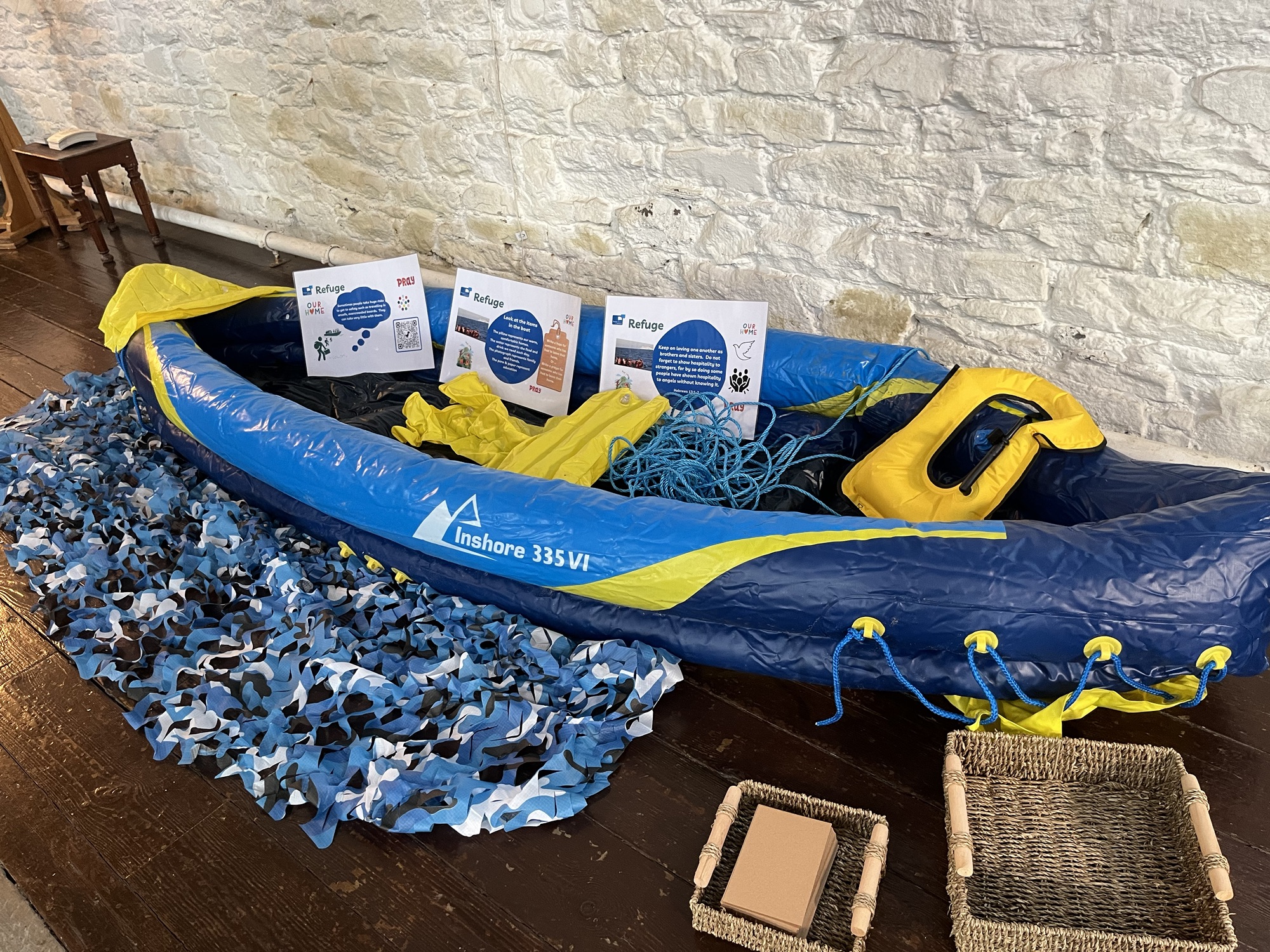
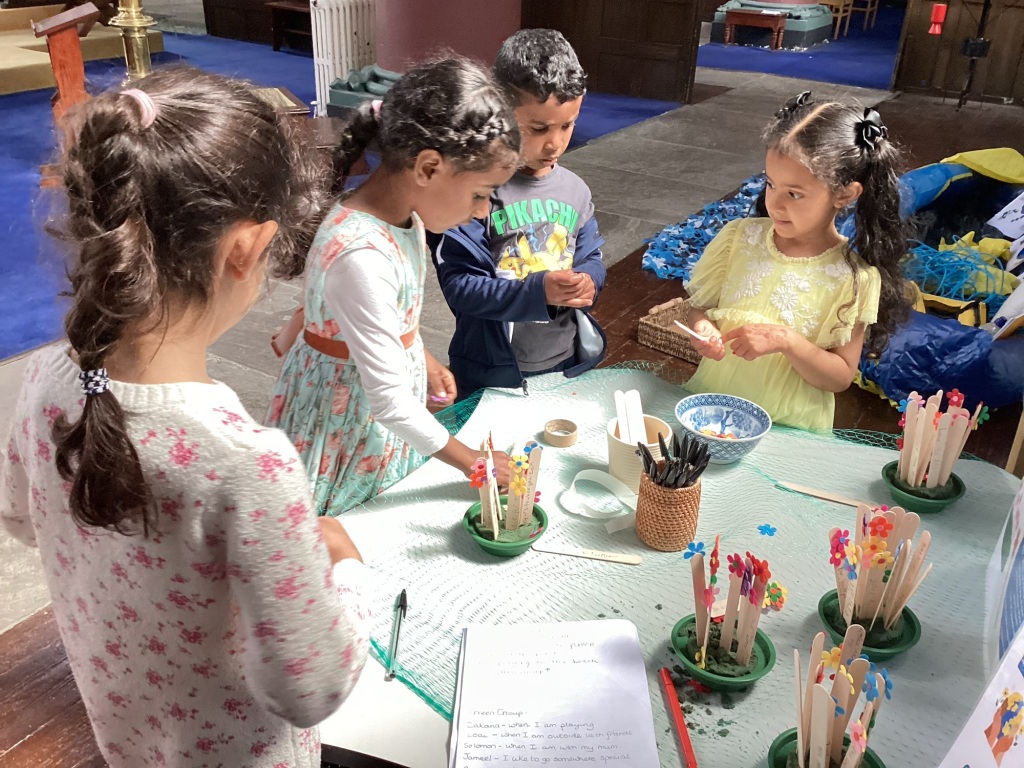
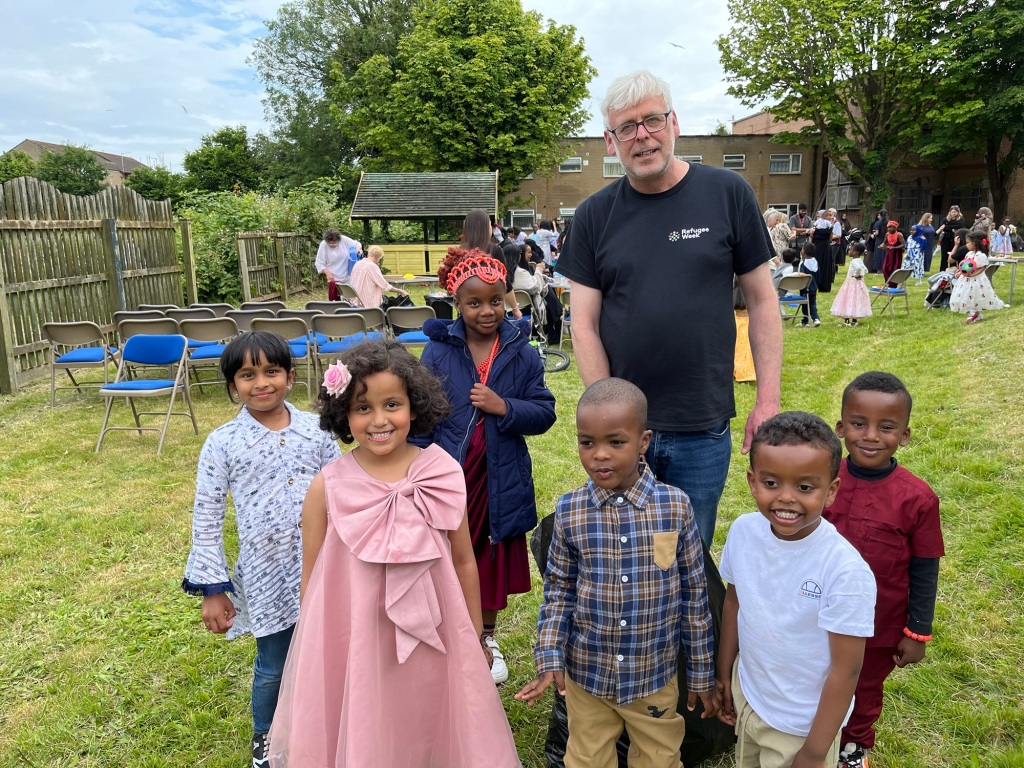
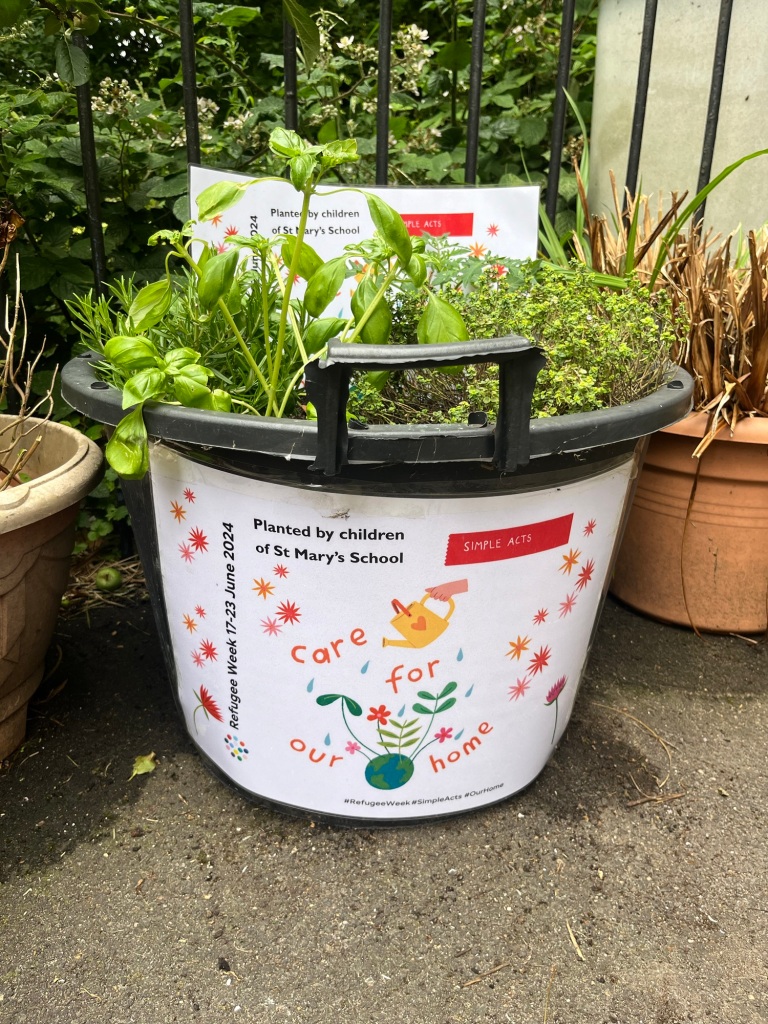
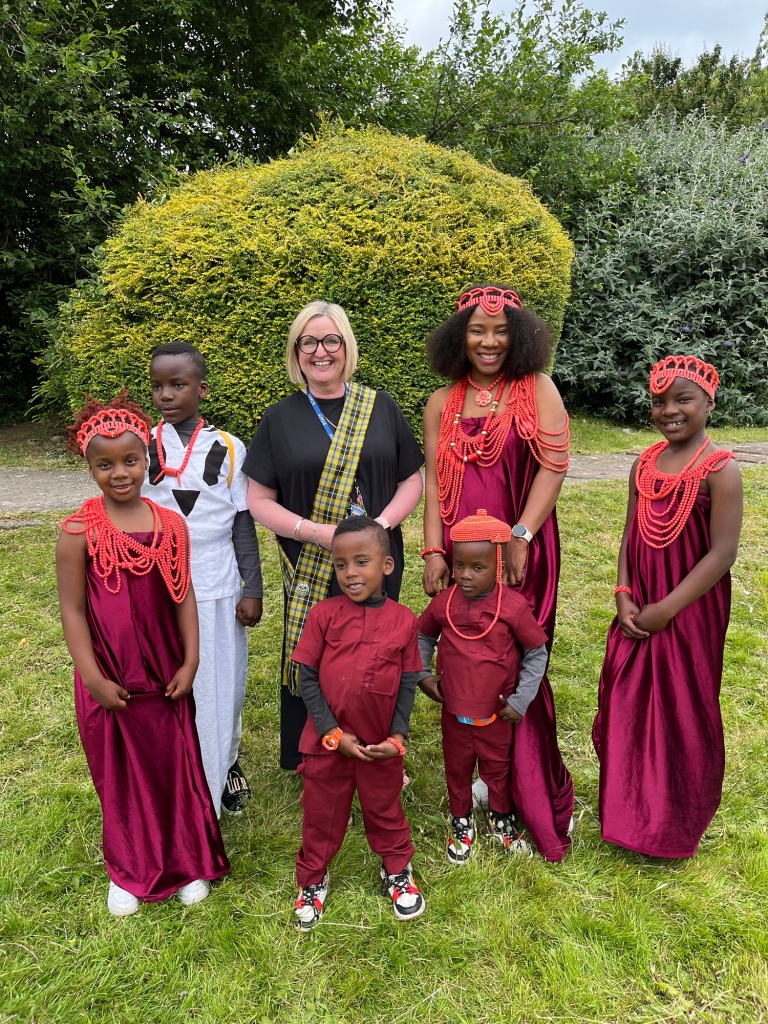
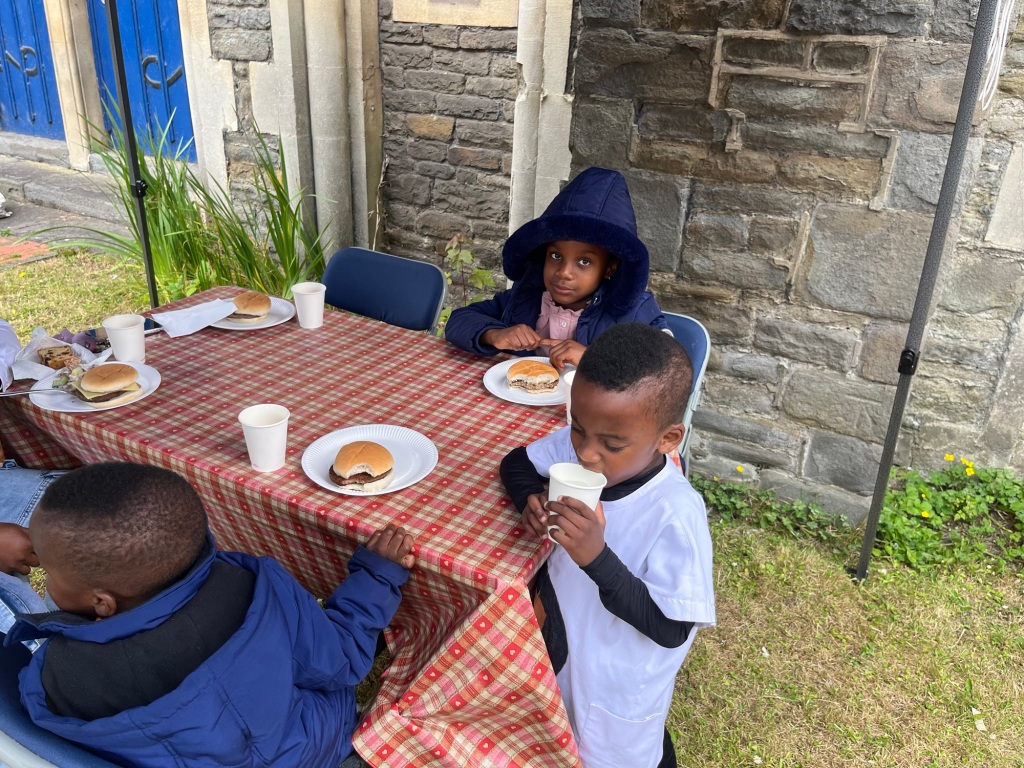
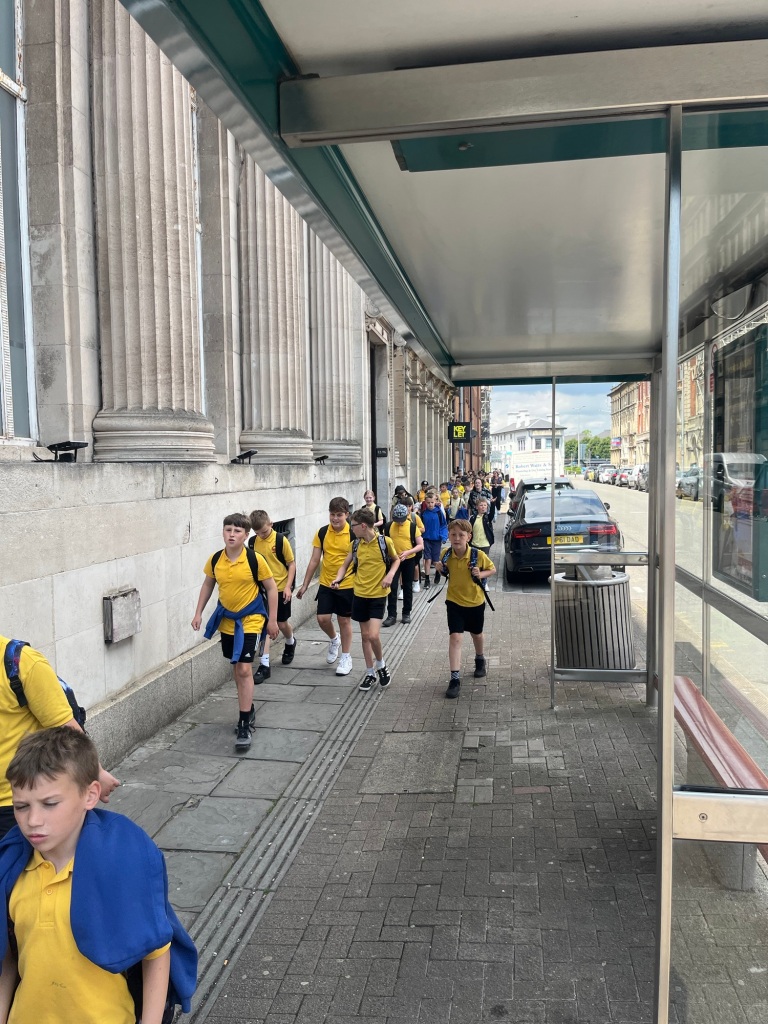
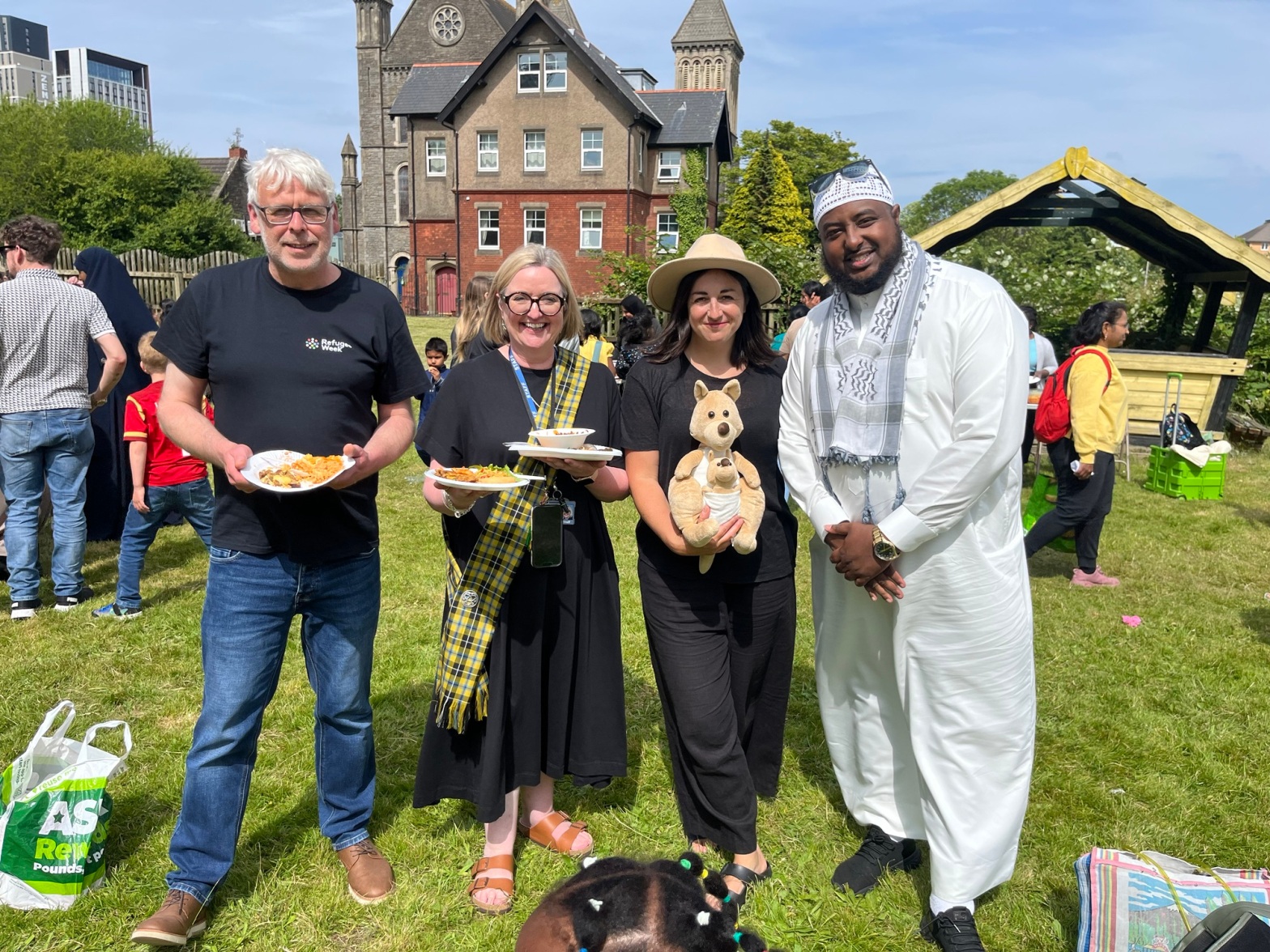
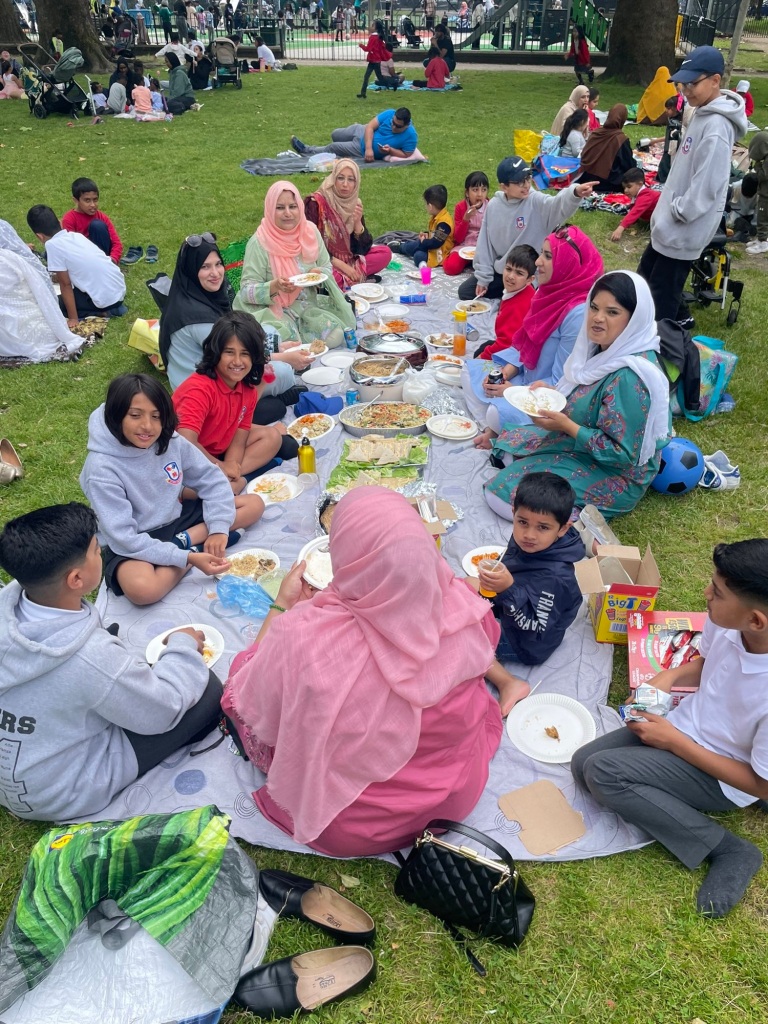
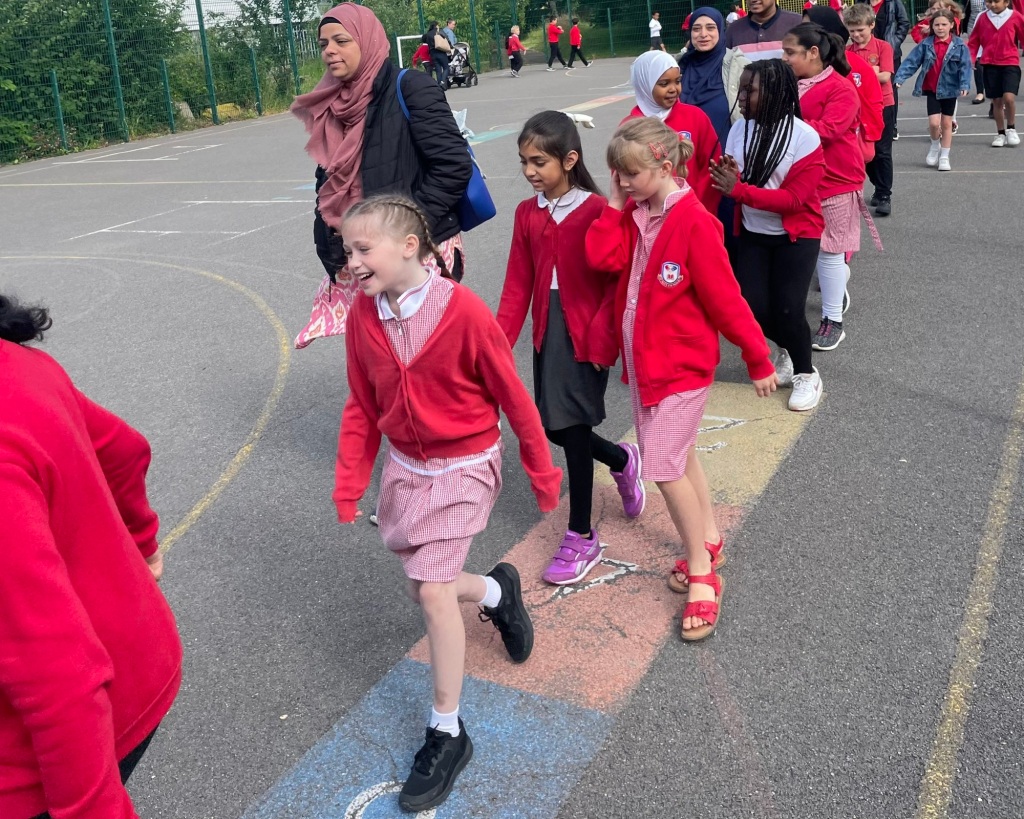
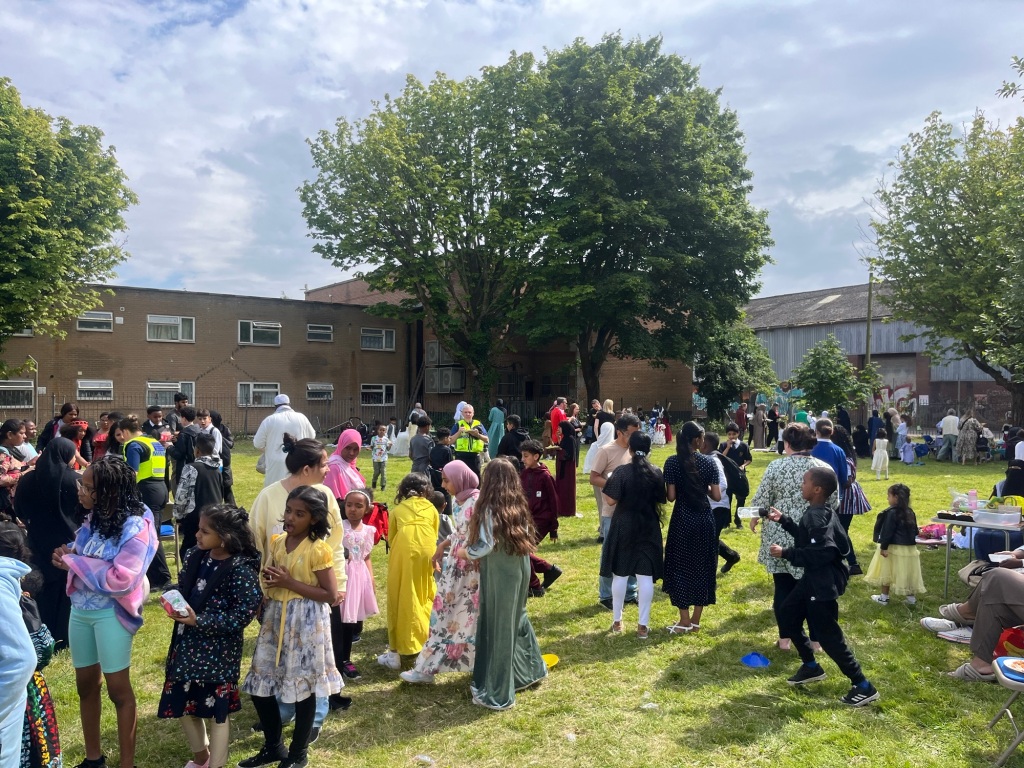
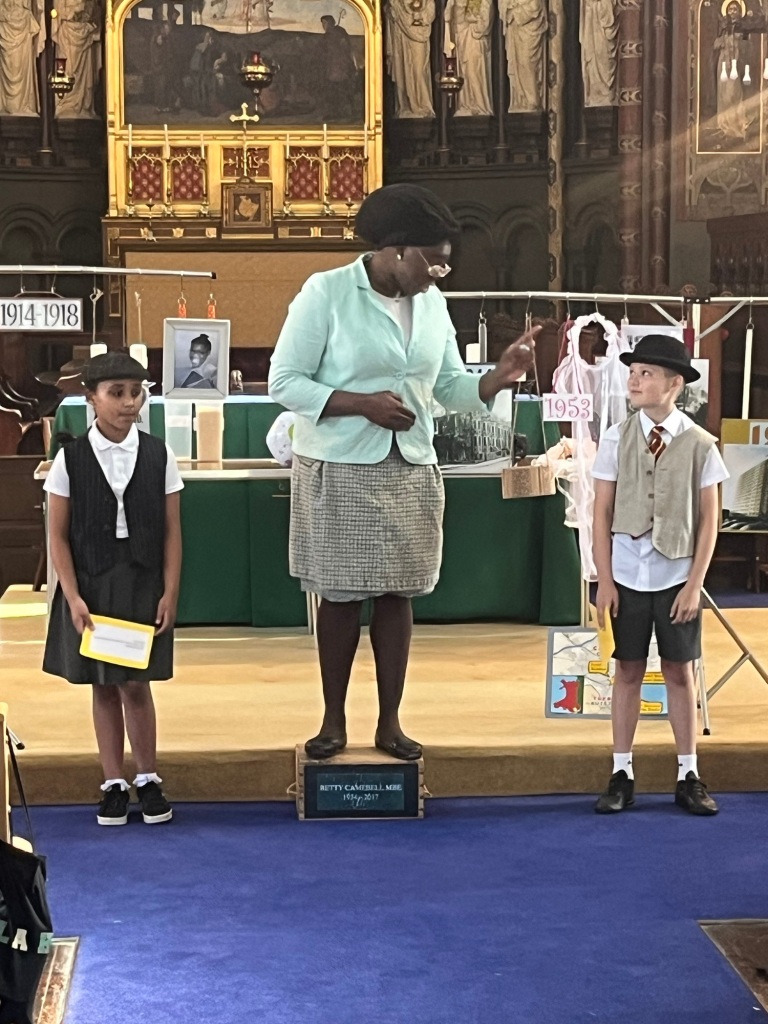
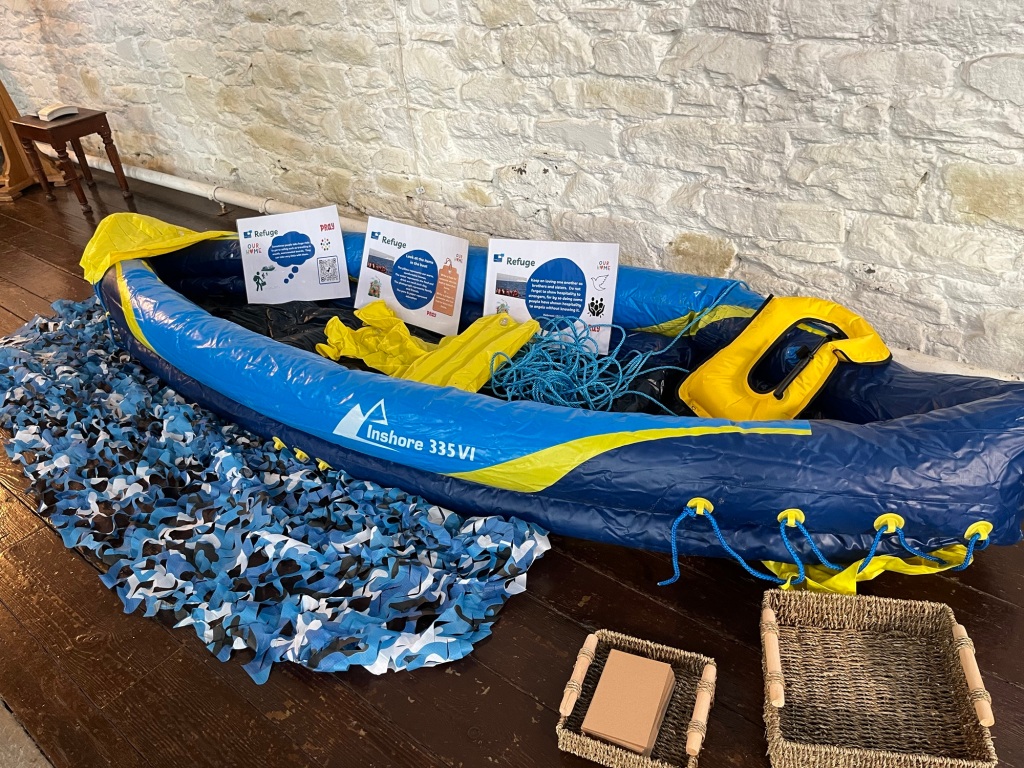
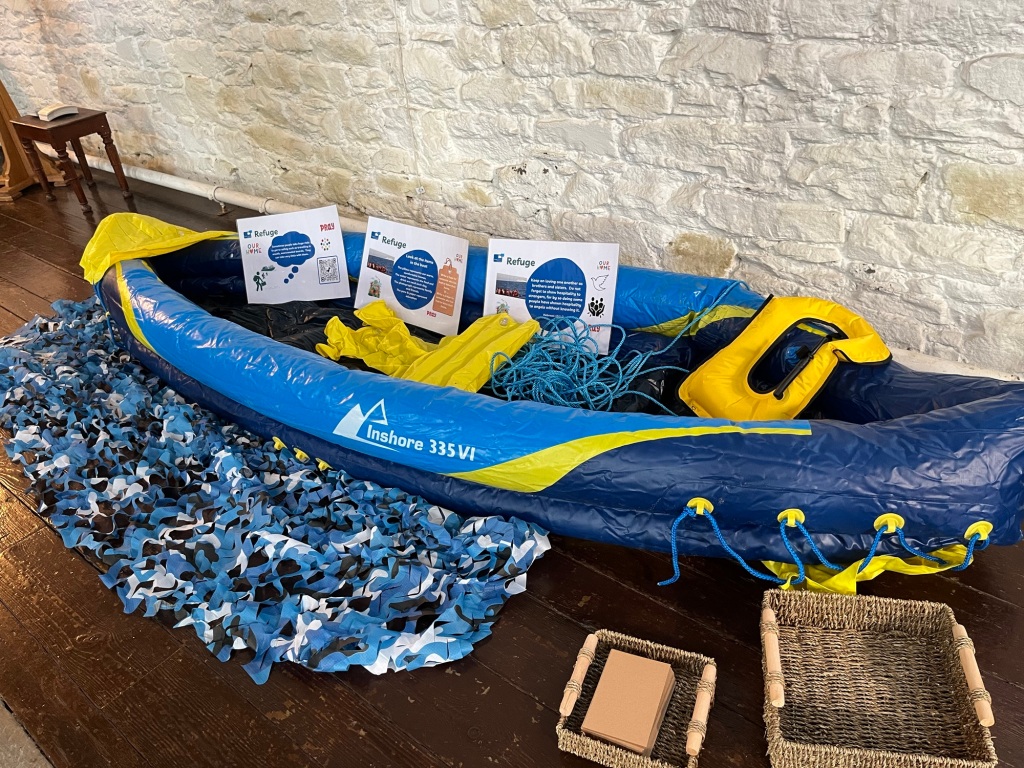
Last week (19 -25 June) we celebrated Refugee Week with a full programme of events and activities, working closely as a community with St Mary’ School. Here, Fr Dean offers a brief reflection on just one or two high-flying moments
I’ll call him Hamed.
In typical style, that’s not his real name.
He’s eleven years old and, so he tells me, he arrived in the UK a year ago.
He’s trying to thread a cord through a hole he has made in a kite. The thread doesn’t fit, despite licking the end to make it finer, to make it fit. And so, he reaches for a tool, bores again through the plastic, makes the hole bigger, leans in closer, his eye on the thread and the hole. This time he succeeds, and he quickly ties the thread.
For Hamed, this is a moment in which he shines. The kite making workshop in which the children of Year 6 are engaged may just be another arts and crafts activity, with pieces of the Curriculum creatively drawn in by Miss Fry, their teacher. Science, numeracy, design and technology and so much more is gathered in to this all-day activity during Refugee Week at St Mary’s School.
But, for Hamed, this is a personal moment, a memory, from home.
He has made the journey from Afghanistan. I know nothing of his journey. This is not the moment, and it’s not my place to pry or press. Who knows what traumas would emerge. I simply talk to him and listen to what kite flying means to him.
He speaks in his broken and growing English but what he doesn’t say is expressed by his face which glows. His eyes are wide.
Kite Flying is a national sport and pastime in his home country of Afghanistan and so, for Hamed, this is a taste of home.
Like many things, kite flying was banned by the Taliban in his home country. The Kite making workshop was intentional for us. It formed part of our Refugee Week celebrations for St Mary’s Community, as Church and School worked so closely together. It was one activity which, we thought, would help express our connections with those who are refugees.
One of the kites from Refugee Week on display at St Mary’s
At the time of planning, we didn’t think it would connect so profoundly with a child in our school. We thought this would be a learning exercise, a simple celebration that raised and explored some issues. But now our school has 1 in 10 children who are refugees. And Hamed is one of those children.
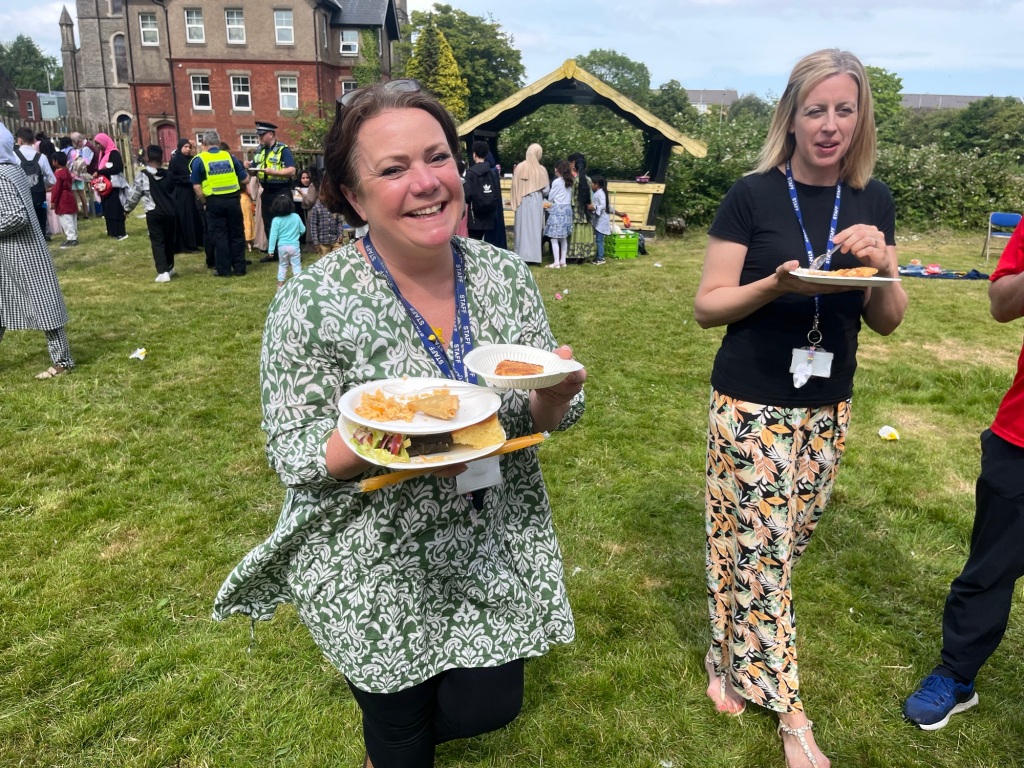
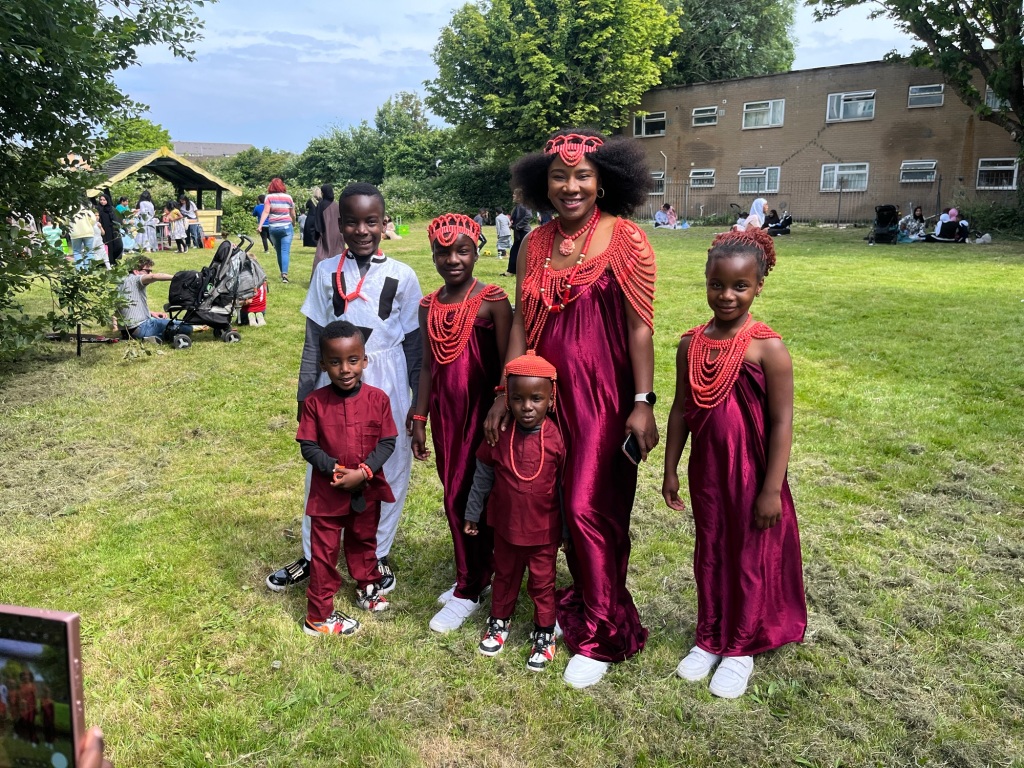
During the Global Picnic on Friday which rounded up the school week, with children dressed in clothing that was important to their cultures, Hamed sided up to me. His kite had been on display in St Mary’s Church. ‘Can I get my kite now?’ he politely asked.
We walked across the fields of St Mary’s School, sliding through the football mad boys and girls. I pointed him to the open doors of the Church. He ran in and emerged with his bright red kite.
A message written by a pupil at one of the prayer and reflection spaces at St Mary’s Church during Refugee Week
In the days before, the Welsh Parliament had voted against the UK Government’s Illegal Migration Bill. The announcement had received an applause at our event on Wednesday when we premiered the School Sanctuary’s Committee’s video, ‘A Sanctuary Alphabet.’ It was simply an indicative vote with no veto.
In the days after, the Court of Appeal stated that Rwanda was not a safe third county for migrants to be deported. They ruled the Government’s plans as unlawful.
After a busy Refugee Week with so many activities and events, I sped my way to London on Monday morning for the Parliamentary Prayer Breakfast on Tuesday as a guest of Stephen Doughty MP. After the event, Stephen gave me a generous whistlestop tour of Parliament and then, as I left the building, I encountered Citizens UK who were organising an action on the Green outside, overlooked by statues of Gandhi and Mandela and so many others.
Part of the Action of Citizens UK at Parliament
The action was against the detention of refugee children. “Two classrooms of children could be locked in prison like conditions every day under the Governments proposed bill,” they said.
Two classrooms of children.
I stayed there for some time, became a part of the action, and I thought of Hamed.
I know nothing of his journey – how he got here, how he arrived.
He’s eleven years old and, so he tells me, he arrived in the UK a year ago.
And he loves flying kites.
Watch the Sanctuary Alphabet from St Mary’s School Sanctuary committee
Welcome to a new edition of our newsletter, featuring news and updates from the churches of South Cardiff Ministry Area.
We’re all set for REFUGEE WEEK which starts on Monday, as well as The Great Get Together and Windrush celebrations.
There’s also news about the next CHARITY COFFEE MORNING at St Paul’s. Oh, and there’s not one but TWO STRAWBERRY TEAS coming up!
There’s so much going on! Why not get involved?!
Refugee Week
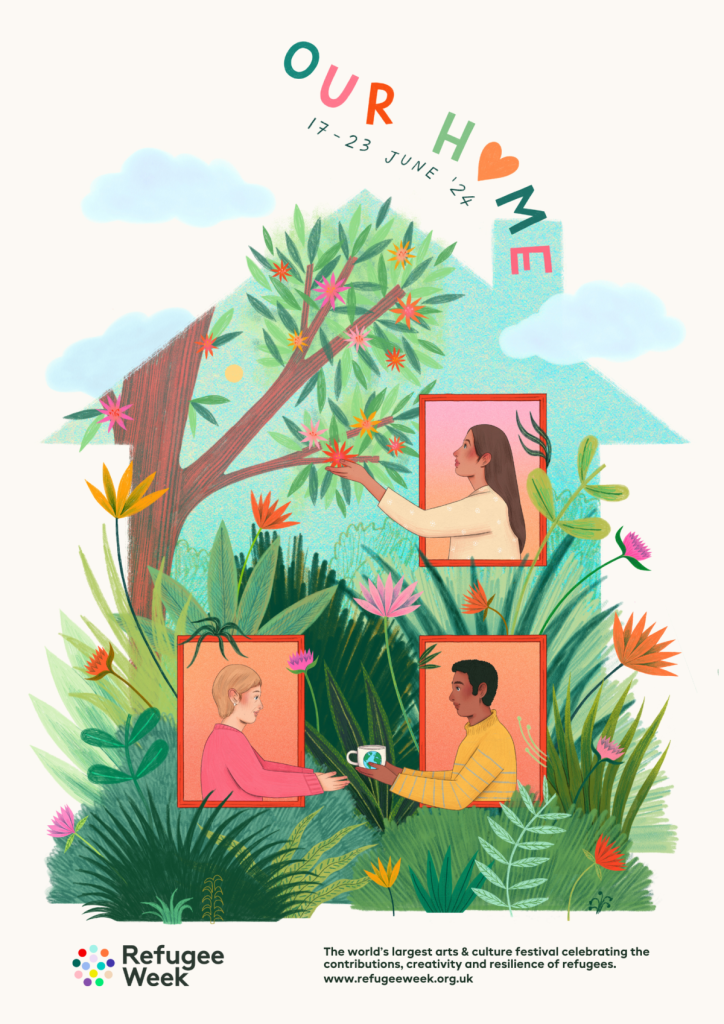
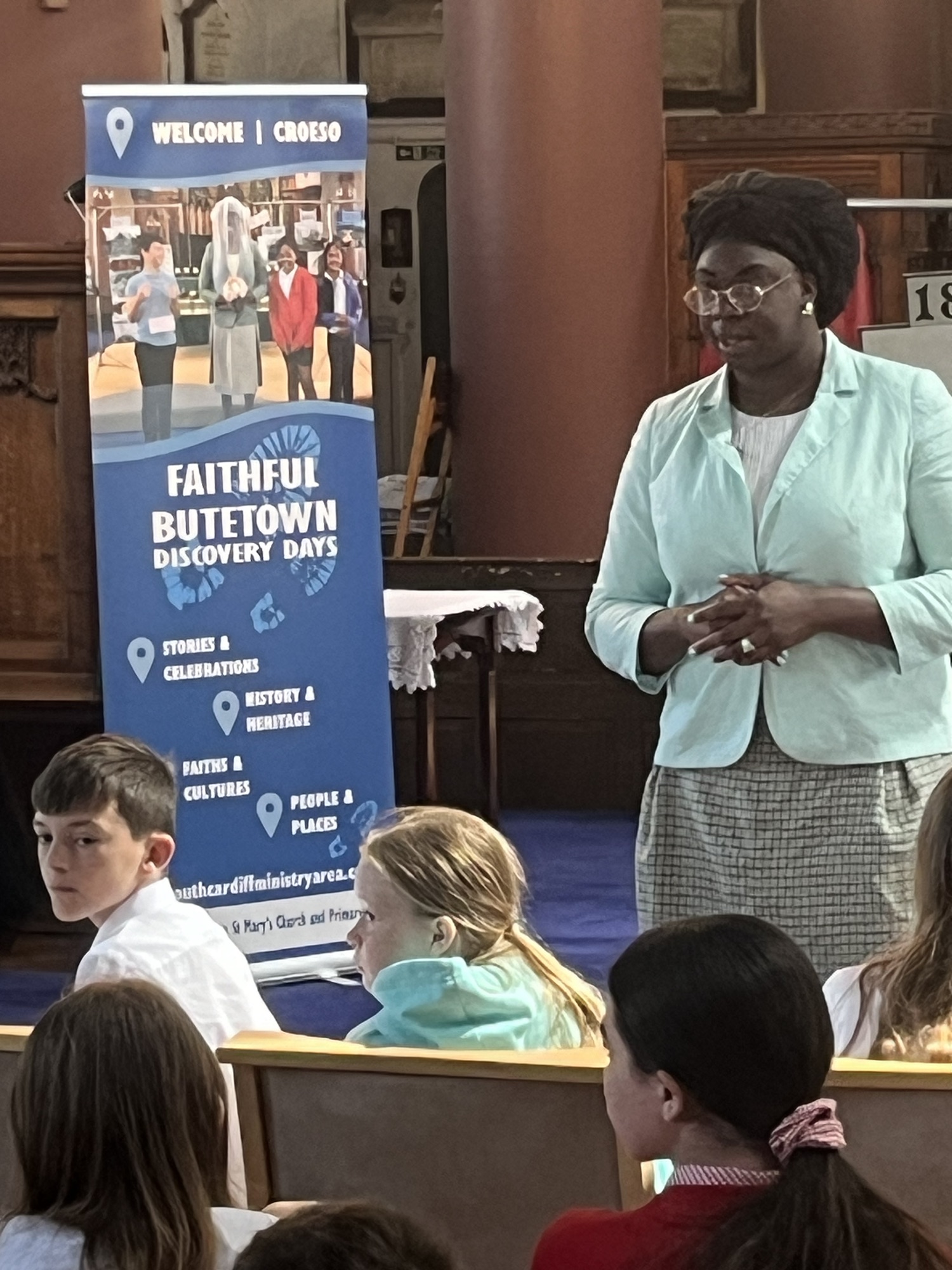
Refugee Week officially begins on Monday 19 June but we couldn’t wait to get started. There is so much going on across the city, including here in South Cardiff Ministry Area and the Communities of Butetown, Splott andf Grangetown
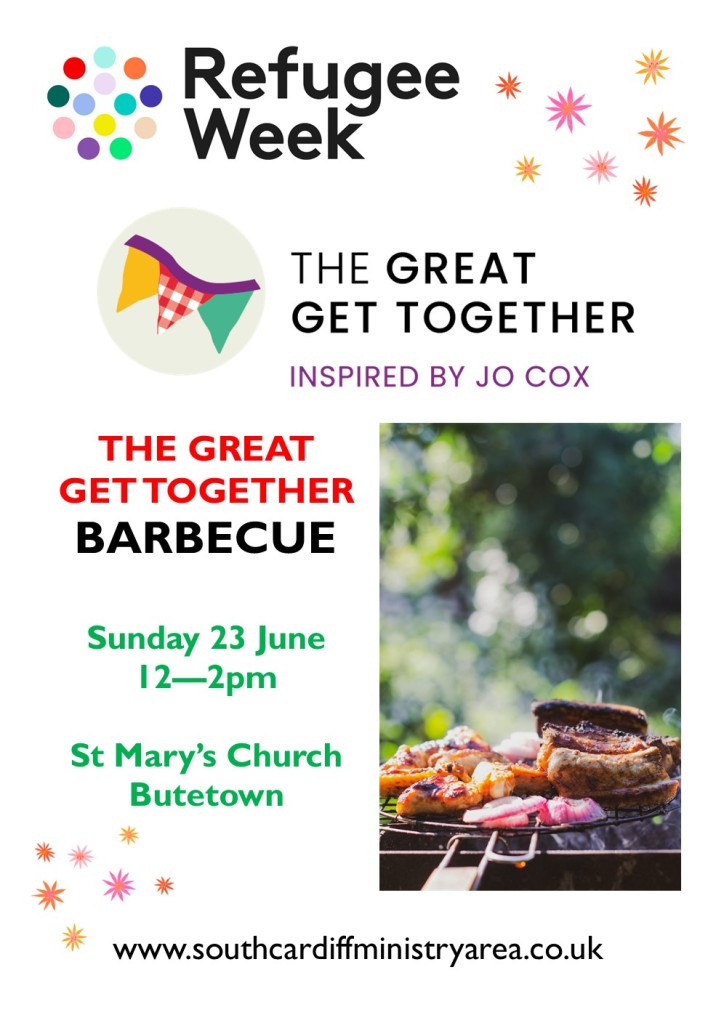
During the week, we’ll also be celebrating Windrush Day and The Great Get Together inspired by the Jo Cox Foundation and the More in Common Partnership
As well as the events across Butetown, there are some amazing activites across Splott from Storytelling and Community Suppers, from Circus events to food and fun at the Oasis Centre on Splott Road!
Justice Cafe
Its free food for a hunger for Justice as our first ever Justice Cafe takes place on Tueday at 12.30pm
You can read more about our Justice Cafe in a former blog post.
The Great Get Together
We are pleased to be part of the More in Common network across Cardiff. You may remember, back in the winter, the bubbling Day of the Soup.
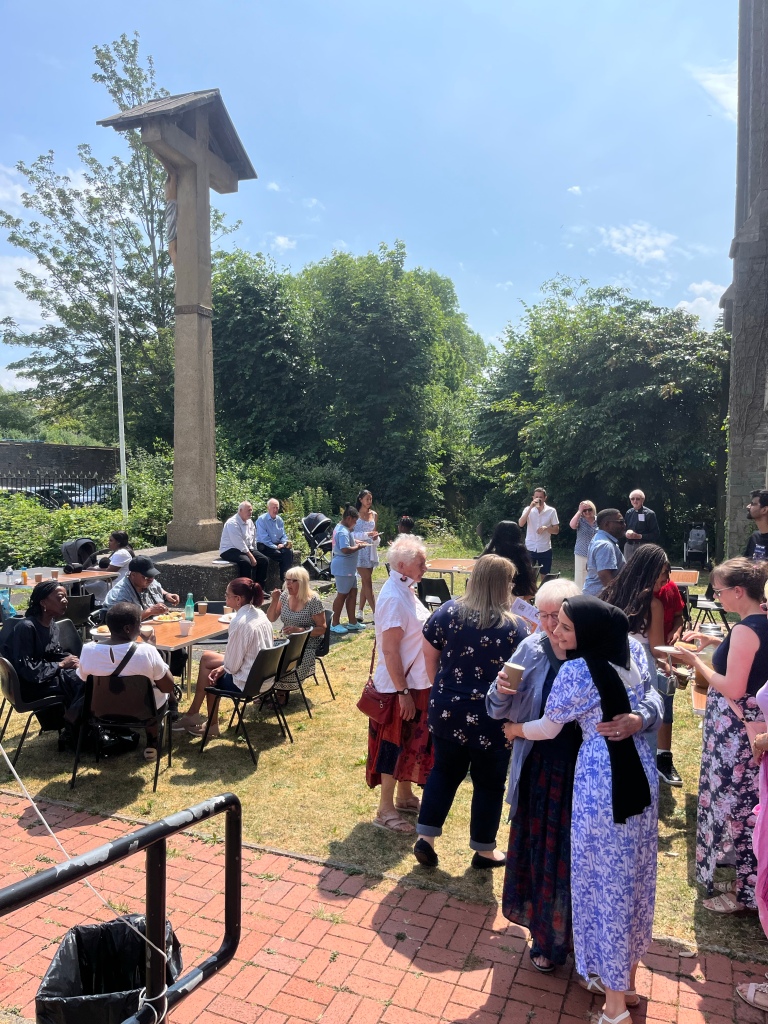
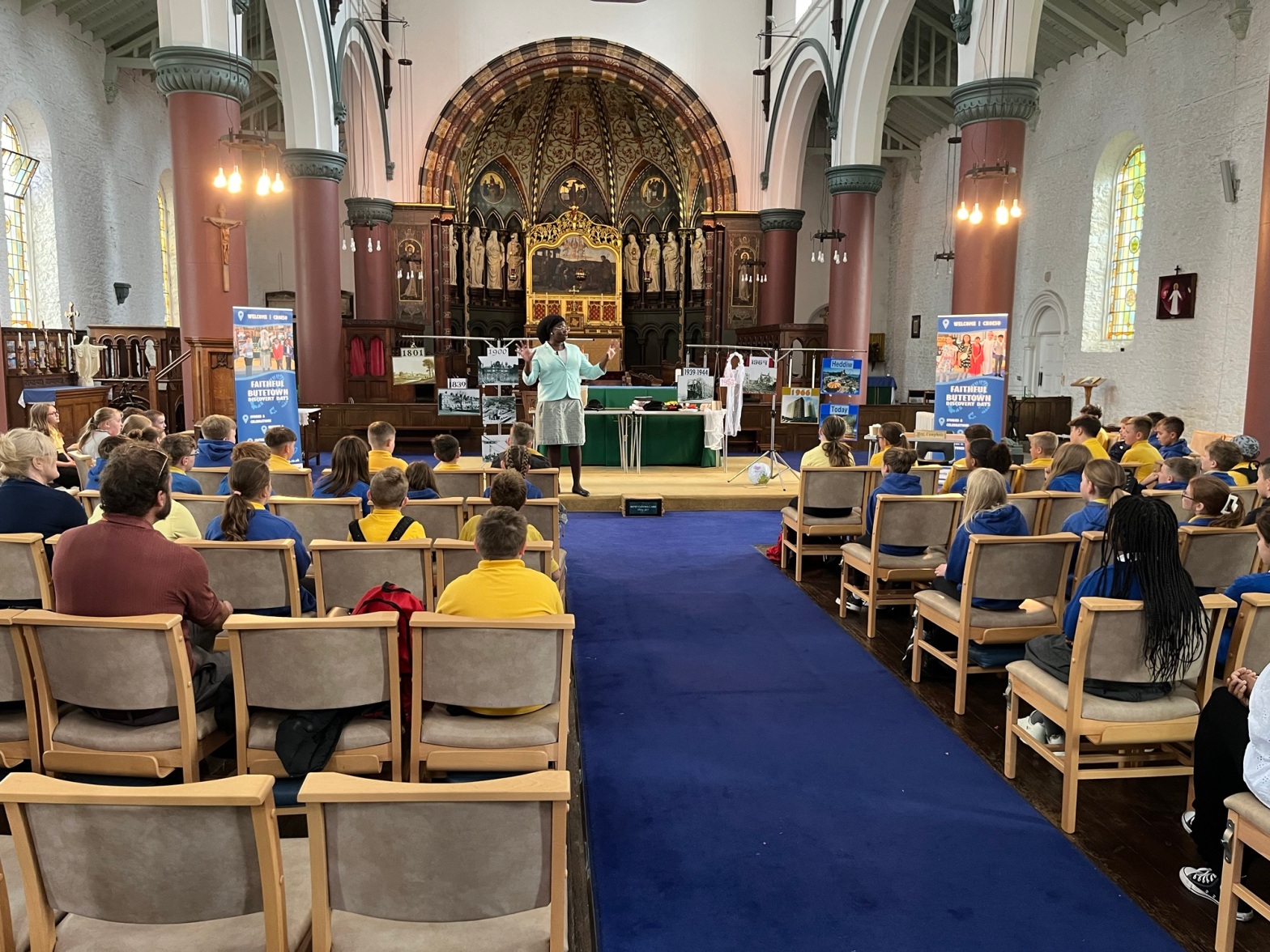
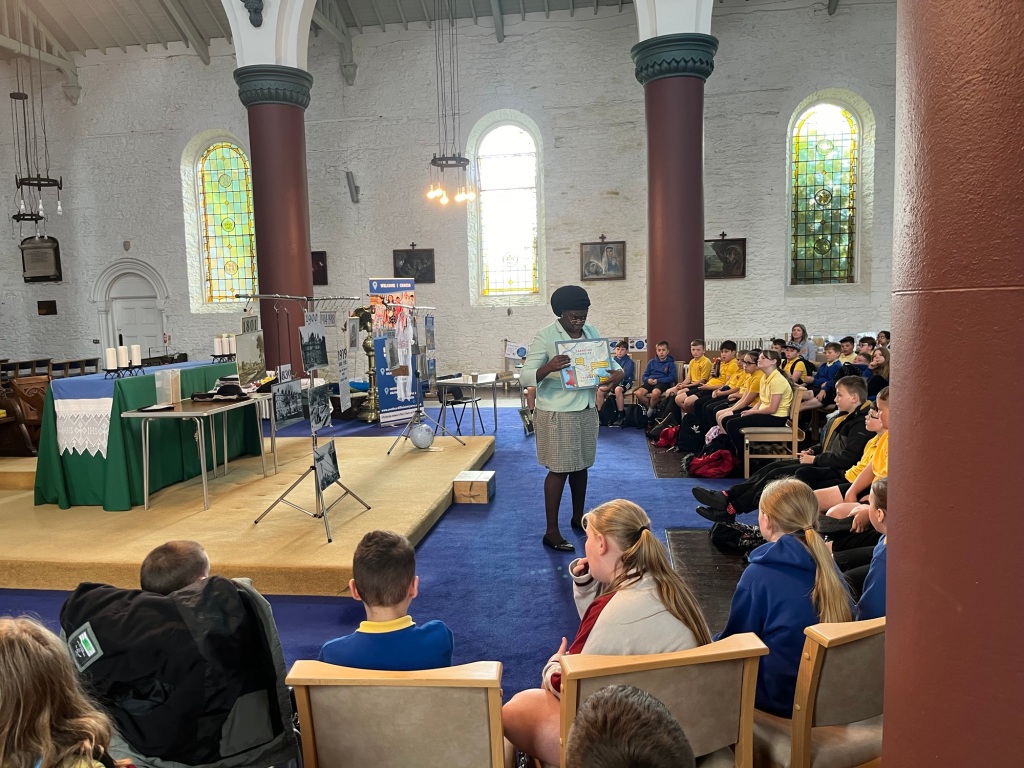
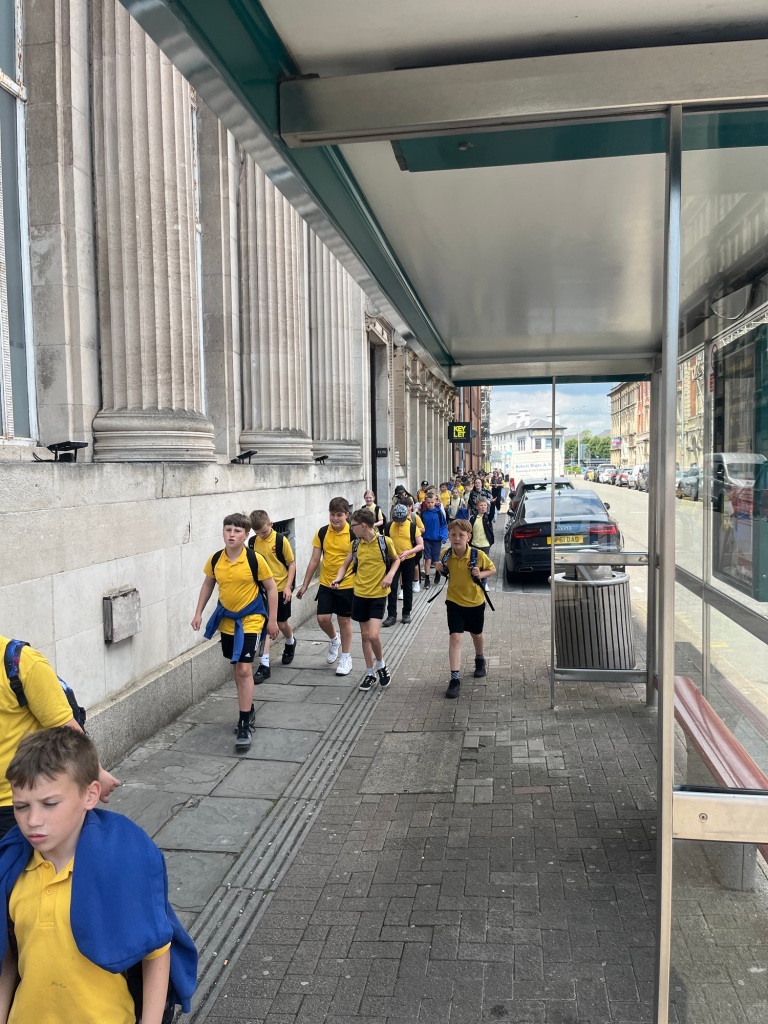
This summer we’re back with our Faithful Butetown Walk on Saturday and our Great Get Together Barbecue on Sunday. It’s all inspired by Jo Cox who recognised that we have more in common than that which drives us apart.
The Great Get Together coincides with the last few days of Refugee Week.
Schools of Sanctuary
Schools of Sanctuary is a national network of over 400 primary and secondary schools, nurseries and sixth forms committed to creating a culture of welcome and inclusion for refugees and people seeking asylum.
Driven by teachers, school staff, parents, governors and community groups, the network supports the thousands of young people seeking sanctuary in the UK, raises awareness of the issues facing people in the asylum system, challenges misconceptions and builds social cohesion.
Last year, St Mary’s Church in Wales Primary School received their award as a School of Sanctuary during Refugee Week. This year, just as we prepare for Refugee Week, we heard the brilliant news that St Paul’s Church in Wales Primary School in Grangetown have now received their award, too! Well done everyone!
We were pleased to feature in an item from Cardiff Council’s Newsroom, as we prepare to celebrate the premiere of a short film from the Sanctuary Committee of St Mary’s School.
The event takes place on Wednesday at 3pm with a rather lovely drinks reception!
🎬St Mary the Virgin Church in Wales Primary School is to host a film premier of a poem written and performed by pupils as part of a special events programme in celebration of #RefugeeWeek. More info here: https://t.co/ae6eNnZZCVpic.twitter.com/0noKPJ92r6
Thank you to everyone who took part in Churches Unlocked at St Saviour’s Church which ended last Sunday.
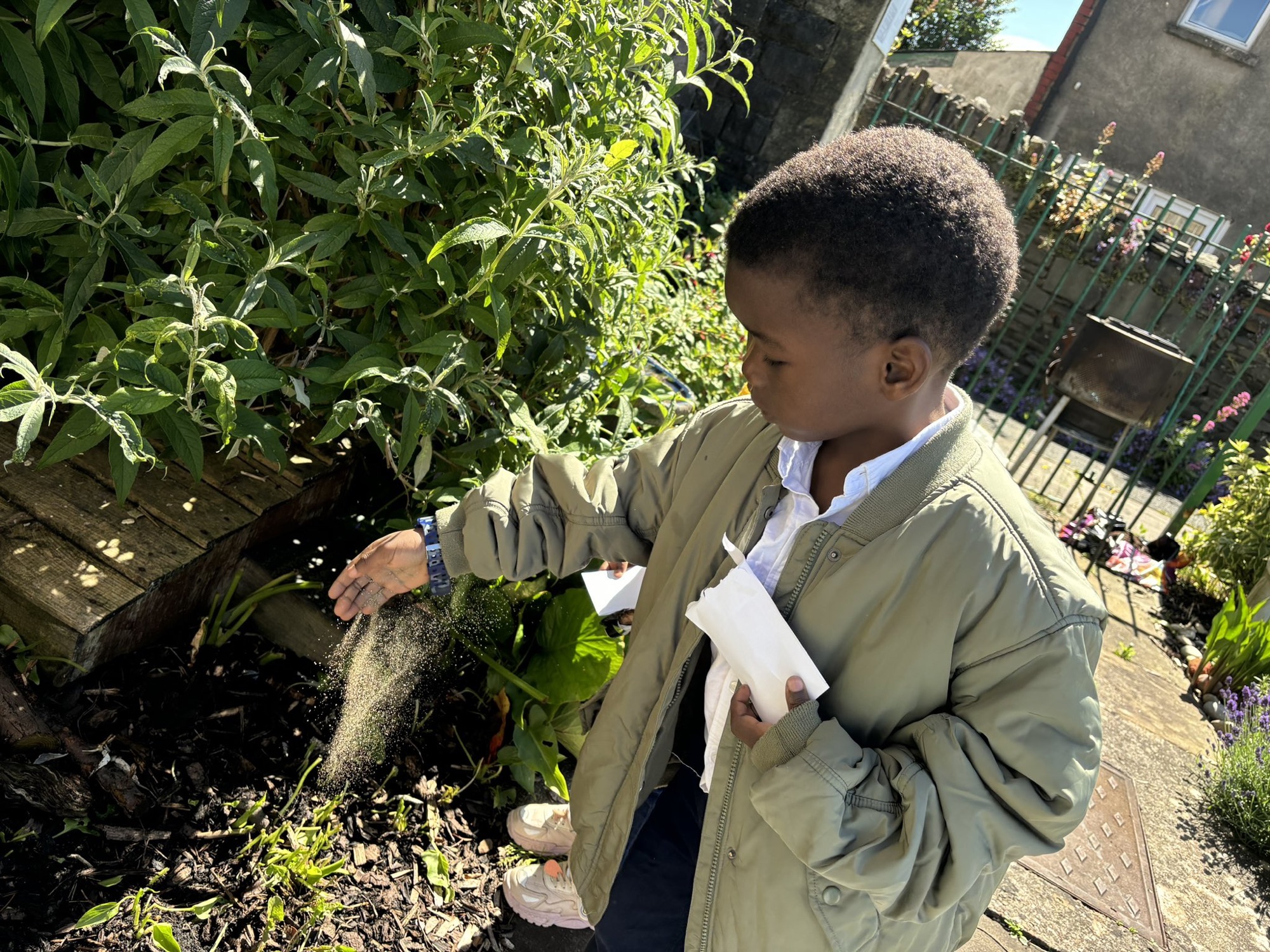
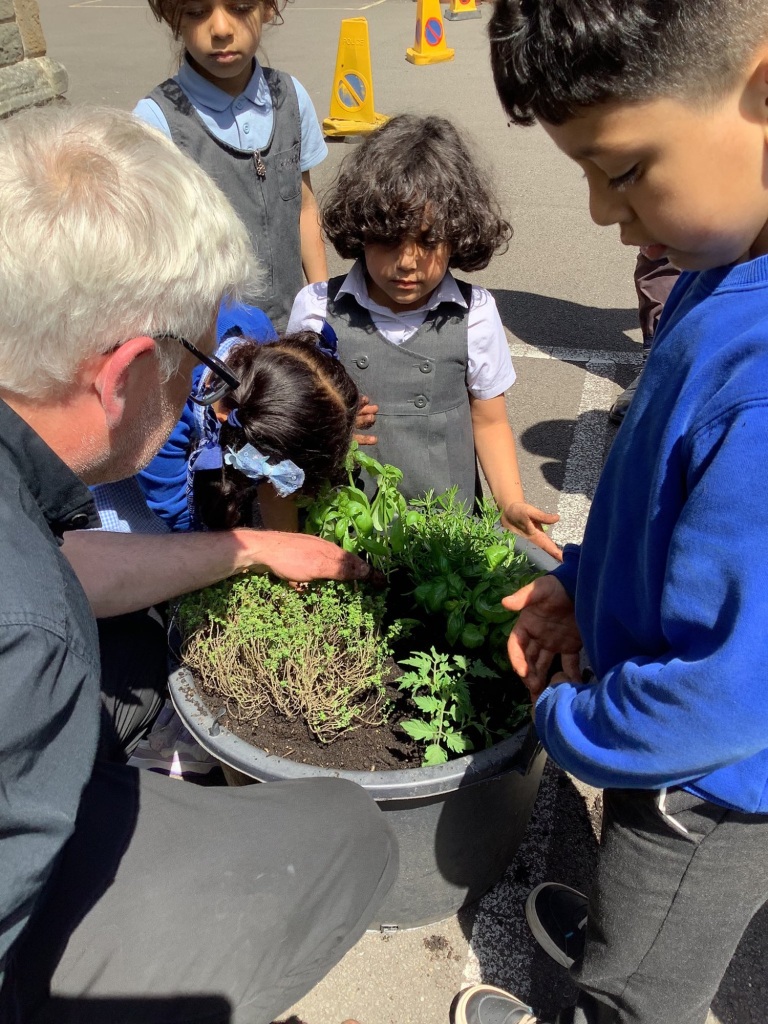
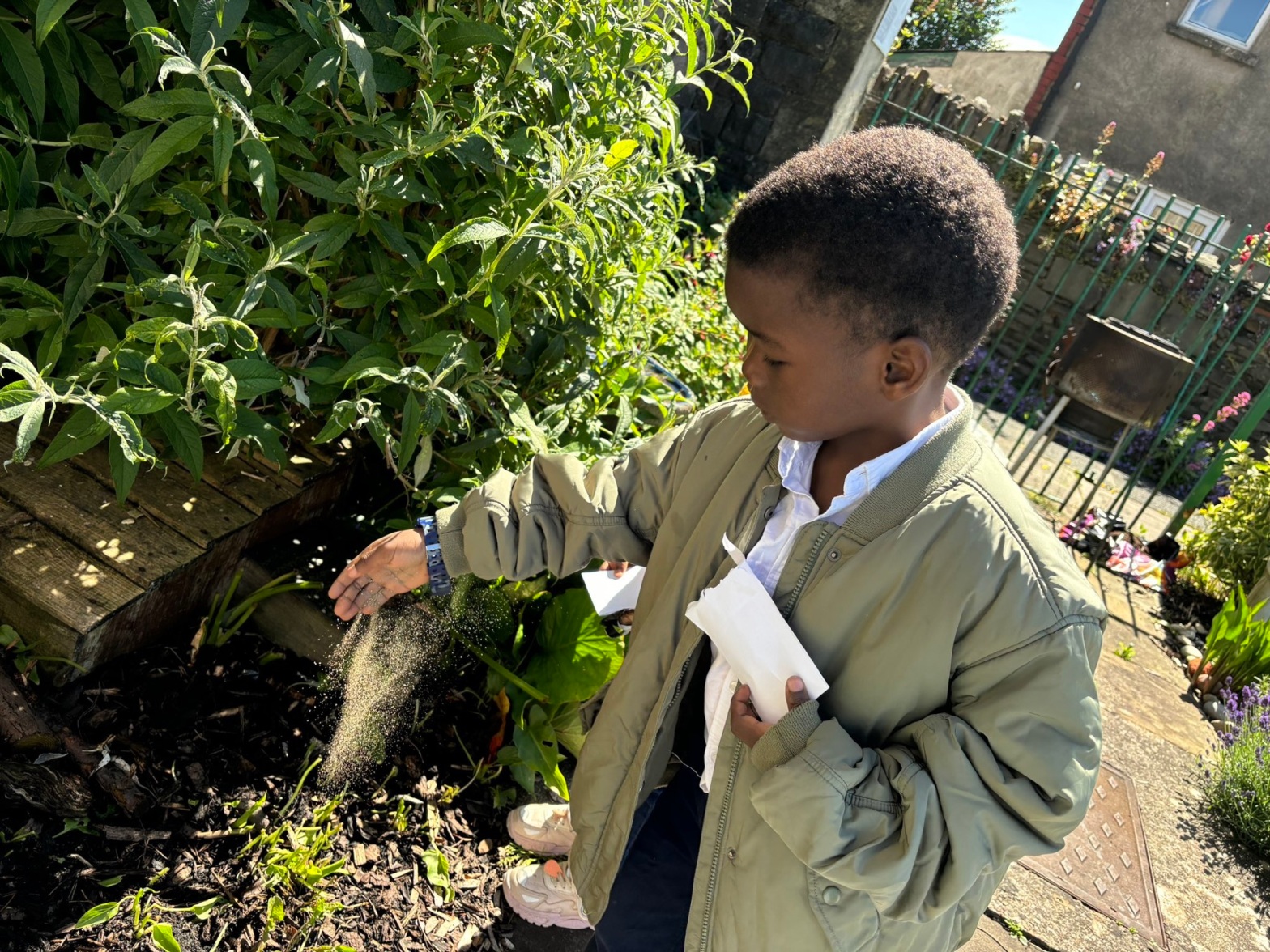
The sun shone on a variety of events and activities, and it was amazing to work again with Moorland Primary School, who visited the Church, and began to create a herb garden for the benefit of the local community.
You can find all the related blog posts in out News section.
Exploring the reredos painted by Tony Goble during Churches Unlocked
Charity Coffee Morning
Each month at St Paul’s, we organise a charity coffee morning with delicious cakes and great company. Each event raises money for an amazing charity.
The next coffee morning is on Saturday 24 June at 10.30am and it’s all in aid of Ty Hafan Children’s Hospice. Please come along!
Strawberry Summer
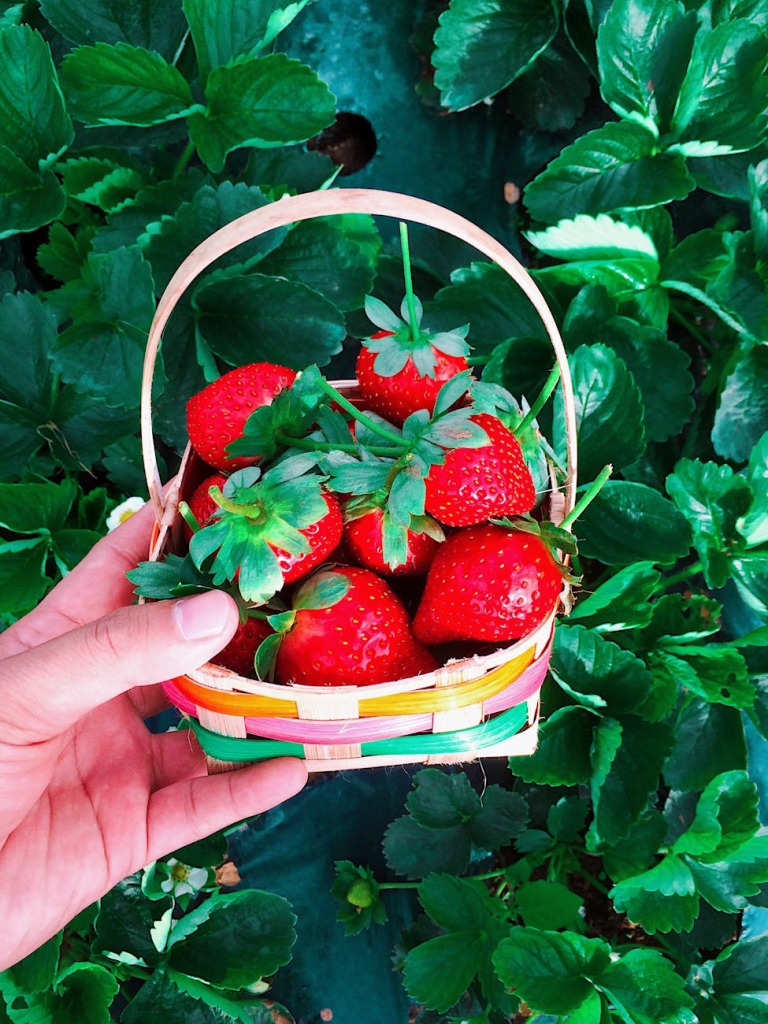
Surely, Summer means one thing! Yes, strawberries!!! Ok, well it’s not the only thing about summer, but we do have two delicious strawberry teas on offer in the Ministry Area over the next few weeks.
Join us for a summer’s afternoon of singing with our Songs of Praise and Strawberry Tea at Ss Dyfrig and Samson on Sunday 19 June at 3pm.
You’ll need to book your place though, so get in touch with Pam Ivins or Kath Jordan.
And if that’s not enough, there’s another Strawberry Tea a few weeks later at St Saviour’s Church on Sunday 2 July at 2pm. Tickets cost £7 for adults and £3 for children
We take Safeguarding seriously. It’s important that all those with particular ministries, roles and responsibilities within the Church undergo Safeguarding Training.
We’ll be hosting MODULE B training at St Paul’s Church Hall on Wednesday 21 June from 6.30pm to 8.30pm
Bookings are made via the Church in Wales website. Please not that MODULE A trainingneeds to be completed online beforehand.
Worship for the week ahead
Prayer and worship is at the heart of our life together, and each day we gather for Mass across the Ministry area.
SUNDAY 28
PENTECOST
BUTETOWN:
S MARY THE VIRGIN
1100hrs Solemn Mass
GRANGETOWN:
S PAUL THE APOSTLE
0800hrs Said Eucharist
1030hrs Sung Eucharist
SS DYFRIG & SAMSON
0915hrs Solemn Mass
SPLOTT:
S SAVIOUR
0930hrs Sung Mass
MONDAY 19
5.30pm Mass (S Mary’s)
7pm Mass (Ss Dyfrig and Samson)
TUESDAY 20
10.00am Mass at (St Saviour’s)
7.00pm Mass (S Mary’s)
WEDNESDAY 21
10.00am Holy Eucharist (S Paul’s)
11.00am Mass (St Mary’s)
THURSDAY 22
9.30am Mass (Ss Dyfrig and Samson)
12 noon Mass (St Mary's)
5.45pm Mass (S Saviour’s)
FRIDAY 2
12 noon Mass (S Mary’s)
SATURDAY 23
11.00am Morning Prayer and Rosary
11.30am Mass (S Mary’s)
On Saturday, on the final weekend of the Churches Unlocked Festival we explored the coracled figure of St Columba and other Celtic saints, and asked what their heritage means for us today!
Detail of the image of St Columba at St Saviour’s Church in Splott
Here, from this coracled figure of St Columba, we hope to take some inspiration, and from the spiritual life he represents, sharing stories, poetry and prayer from the Christian Celtic Tradition, both ancient and contemporary.
But why is St Columba here in the first place? Well, the name and image of St Columba is here at St Saviour’s because the first church of the Established Church in Splott was St Columba’s School Chapel, which stood on the site of the India Centre and was built in 1877.
When St Saviour’s was consecrated in 1888, it was closed for worship though still used as an infant School. It was reopened some years later and had quite a thriving congregation until it was closed in the 1920s. Today the site is still surrounded by Scottish street names because the houses there were built by the Marquess of Bute, and so he brought to Splott his own Scottish heritage. And we can assume that, because of this, the chapel, which was built on land given by him, received the patronage of St Columba, the Apostle to Scotland. As well as the beautiful statue of Columba, modelled on a much smaller statue in the Shrine of Our Lady of Walsingham, he is also present in stained glass, and in the remnants of a chapel here in the south aisle.
St Columba though was Irish and journeyed to Scotland when he was about 40 years old. He settled on the island of Iona from where he evangelized much of the northern and western parts of Scotland. Although both St Ninian (whose name is also well known in Cardiff for the same reasons as Columba) and St Mungo had been active in Scotland before him, Columba deserves the title, ‘Apostle of Scotland.’
He spent some time in the monastery of Clonard overseen by St Finnian. Here he may have experienced something of the traditions of the Welsh Church, for Finnian had been trained in the school of Saint David. Columba was eventually forced to leave Ireland after being on the losing side of a bloody battle in the year 563. We’ll hear more of his journey later.
Mass of St Columba during Churches Unlocked
Tall Tales?
Many stories handed down to us from the Celtic saints of this time appear to be rather extraordinary and extravagant, fanciful and fairly romanticized. It may be difficult to pull fact apart from legend, or to find the truth in the tales, particularly since sometimes their lives may have been written some centuries after their death.
Many of the stories feature amazing miracles, and also reveal an intriguing and intimate relationship with animals and the natural world.
Stories like this, for example, from St Colman of Dromore (County Down, Ireland). In his love of solitude and poverty, he learned much from three strange companions. A cockerel woke him for prayer through the night. A mouse nibbled at his clothes to wake him each morning. And a fly walked down the page to mark the lines of Scripture Colman was reading.
When they eventually died, he was filled with sorrow which he shared with St Columba who replied, “To you, the cockerel, the mouse and the fly were as precious as the richest jewels, so rejoice that God has taken these jewels to himself.”
Sounds fanciful to our modern view of the world? Well, let’s hear from someone a bit more contemporary. Nadeem Aslam, a British-Pakistani novelist, in an interview on Radio 4, said, “Just last month I went for a walk in the hills and there was a beautiful fungus growing on a fallen log so I decided to make a drawing of it. And as I was making a drawing of it, an orange bodied sawfly came and landed on the very tip of my pencil, just a millimetre away from the surface of the paper. And I flicked my hand to make it fly off, but it didn’t. I must have made about two dozen lines and marks and curves, and it stayed there, and then it flew away. And as I was walking away, I asked myself, was that ordinary or was that extraordinary. That is what you need as a writer. You need to be at that level where that boundary between the extraordinary and the ordinary somehow becomes blurred. And you’re not sure if not everything is not a miracle.”
The coracled Columba!
What other miraculous animal tales are there in the Celtic Tradition?
St Piran, like Columba, was born in Ireland. After being tied to a millstone and thrown into the sea by his fellow Irishmen, he was washed up on the shores of Cornwall. There he established his monastery, not at first with monks but with a boar, a fox, a badger, a wolf and a doe. They were his first brothers, as it were, the first members of his community, with whom he built a house of prayer.
St Kevin of Glendalough nurtured a nesting blackbird and her young in the palm of his hand as with outstretched arms he prayed, until they were ready to leave the nest. He also attracted a cow who would escape secretly from the rest of the herd to spend time with him and who, because of these encounters, provided the most profuse and rich milk of all the herd.
And then there is wild boar who took safety in Kevin’s company when being hunted by a cruel huntsman called Brandub who hunted for pleasure, and who took as his victims both human and animal. Following an encounter with St Kevin, both the boar and Brandub were saved!
St Mungo of Glasgow, wandering with his wild hound companion, finally discovered the spot of his new monastery because of the welcome he received from a robin who flew from a tree, perched on his shoulder, and kissed his neck. The site is where Glasgow Cathedral now stands.
Then there are tales of St Cuthbert of Lindisfarne who used to rise in the middle of the night to pray alone. One night, he was secretly followed and watched by one of his brothers. He saw Cuthbert go down into the river and wade out until his arms and neck were covered. There he remained praying for hours. When he emerged onto dry land, he knelt in prayer and otters came up and stretched out beside him, warming his feet with their breath, and drying him with the heat of their bodies.
The life of our own St Cadoc is no different, and features animals as big as boars and tiny as mice. Possibly born at Gelligaer, it was a boar which marked the place for Cadoc to build his oratory at Llancarfan in the Vale of Glamorgan. It was a mouse which led him to a hidden room full of grain during a famine, and stags which were tamed to pull timber for building so that his followers weren’t deterred from their study of Scripture.
St Cadoc played a part in the conversion of St Illtud, and when he escaped from the royal household, and settled in the place we know as Llantwit Major, a stag came bounding into his hut whilst he was praying. A number of hounds arrived after the stag but remained outside. They fell silent with heads bowed. King Paulinus and his knights arrived, ordering them to go in and kill the stag but they remained still. Illtud emerged and welcomed them into his hut to eat. At that moment, the stag poked his head out of the hut and stared at the scene outside. The King’s heart softened, and they crowded into the hut for a meal. Illtud led the stag outside who lay with the hounds in peace. Two of the most famous students of Illtud were St David who evangelised West Wales and St Samson who sailed to Brittany.
A companion of David was St Teilo. In fact they may have been cousins, and they travelled together to Jerusalem along with St Padarn.. When a local lord offered St Teilo all the land he could encircle between sunset and sunrise, he chose to ride on a stag so he could gain as much ground as possible.
So, yes, there are many stories of the Celtic Saints which feature animals, which expresses the close bond between them and all that God has created. Whilst the legendary tales may be difficult to fathom with our modern minds, the stories can captivate us and, if we dig deeper, they can reveal something of the character of the saint and their intricate relationship with everything that exists. They may seem fanciful and far from the truth, but sometimes, to quote Nadeem Aslam, “you’re not sure if not everything is not a miracle.”
Of course, we have shining examples of people outside the Celtic tradition, like Francis and Julian whose spirituality embraced the natural order, but in Celtic Christianity we have a whole church which saw within every living creature the divine spirit, and so loved all creatures for their own sake.
Emerging from these stories is an ancient secret waiting to be discovered in the way we relate to the natural world. They are, perhaps, a call to pause and look at the beautiful miracle of God’s Creation, to see the details we miss so easily in our busy and distracted lives, to marvel in all that God has made, and to show it respect as the richest of jewels which belong to God, and over which we have been set as stewards not masters.
In a more modern poem, by the Welsh priest poet RS Thomas we read:
A message from God delivered by a bird at my window, offering friendship. Listen. Such language! Who said God was without speech? Every word an injection to make me smile. Meet me, it says, tomorrow, here at the same time and you will remember how wonderful today was: no pain, no worry; irrelevant the mystery if unsolved. I gave you the X-ray eye for you to use, not to prospect, but to discover the unmalignancy of love’s growth. You were a patient, too, anaesthetised on truth’s table, with life operating on you with a green scalpel. Meet me, tomorrow, I say, and I will sing it all over Again for you, when you have come to.
Our own Celtic pilgrimage prayer manual
Celtic Pilgrims
A particular feature of Celtic mission was pilgrimage. Many, like Columba (shown here in his favoured mode of transport) and St David (whose image is also nearby) had clear plans to convert specific territories but many others set out quite aimlessly, trusting that God would lead them. Often, they found themselves in secluded places, or set out to discover places of isolation, where they could begin to establish a community.
As I mentioned earlier, St Columba was born and brought up in Ireland, and for the first few decades of his ministry he travelled around there establishing monasteries. As he set off from Ireland, travelling east to Scotland across the water in his coracle, his heart was almost breaking for his homeland, poured out in the laments attributed to him. Here are just a few of his laments. (cf Celtic Fire, Robert Van de Weyer, page 31)
Great is the speed of my coracle, its stern turned upon Derry.
Great is the grief in my heart, my face set upon Alba.
My coracle sings on the waves, yet my eyes are filled with tears.
I know God blows me east, yet my heart still pulls me west.
My eyes shall never again feast on the beauty of Eire’s shores
My ears shall never again hear the cries of her tiny babes.
If all Alba were mine, from its centre out to its coast,
I would gladly exchange it for a field in a valley of Durrow or Derry.
Carry westwards my blessing, to Eire carry my love.
Yet carry also my blessing east to the shores of Alba.
Closer to home, St Cadoc regularly pushed out from the mainland of south Wales to the island of Flat Holm for retreats during Lent, accompanied by his companions, Baruch and Gwalches. Meanwhile on the sister island of Steep Holme resided his friend, St Gildas.
It was on the return of one of these journeys that Cadoc realised an important prayer book had been left behind, so he sent his two companions back, and during their second return journey, the coracle capsized, and each died. Baruch’s body was washed up on the beach to which he gave his name, Barry Island, and Gwalches’ body found its way to Flat Holm. We’ve re-established a pilgrimage programme to Flat Holm, with an accompanying book of prayers which we will use during this time together.
Statue of St David at St Saviour’s Churcj
Here’s a prayer featured in our Flat Holm Prayer Book, Here in this Place, called ‘The Crossing: a prayer of God’s presence’:
We journey some distance
to be closer to the One
who has never left our side.
We cross the waters
to a lonely place
to encounter the One
who continually stands before us.
We rise and fall across the waves
to embrace the One
who always holds us.
Trinity of Love,
you cross boundaries and swoop across
the chasms of our lives,
enfold us and gather us into your life,
Father, Son and Holy Spirit.
Perhaps the greatest pilgrim of Celtic Christianity was St Brendan – who journeyed across the Atlantic from Ireland in a coracle with fourteen of his brothers. After his death, the Latin version of his life was translated onto French, Flemish and Saxon.
He was Abbot of Clonfert, a large monastery in central Ireland. One Lent, he returned to the south-western tip of the country where he had grown up and spent the time on a high mountain, overlooking the ocean. Others had sailed before him in search of what was called ‘The Island of Promise’ and Brendan decided it was time for him to follow. From their descriptions of the places they visited, it’s likely that they sailed a giant circle via the Faroe Islands and Iceland to Newfoundland, returning via the Azores, which they took to the be the Island of Promise.
Whilst there they were there, they encountered a young man who welcomed each brother by name. He then told Brendan to return home to prepare for his final journey, and the wind pushed them onwards back to the shores they had once left.
They were greeted with joy by their brothers, and after recounting their experience and the message of the young man, Brendan prepared for his final journey home to Heaven, and in Brendan’s prayer on the mountain we see him gazing across the eternal sea to heaven, letting go of his life in this world. Here’s a metrical hymn version from our Flat Holm prayer book on Brendan’s Prayer on the Mountain (Tune: O Waly, Waly)
O shall I, King of Mysteries,
abandon all for sake of thee?
Give up the land which nurtured me
and set my face towards the sea?
Shall I give up my need of fame,
protection, pow’r and wide acclaim?
No food or drink to bring delight,
no bed to lay my head at night.
O shall I say farewell to all,
my land, my home, all that enthrals?
Pour out my heart, confess my sins,
in streaming tears for love of him?
O shall I kneel upon this shore
my knee prints marking out my prayer?
Abandon all and take the wounds
believing now that I’ll be found?
Shall I push out across the wide
expanse of sea and ocean tide?
Shall I let go upon the waves
and trust alone in him who saves?
Across the sparkling seas and storms,
O, King of Heav’n, O Christ my Lord,
you bid me come to Heaven’s shore.
I choose you now, for evermore.
St Columba in stained glass at St Saviour’s
Poetry and Prayer
The spiritual and cultural heart of the Celtic Church were the monasteries – established communities of brothers and sisters, some peopled by both men and women at the same time, and both of whom were able to take positions of leadership. Just think of the likes of Hilda of Whitby and Brigid of Kildare whose monastery was the largest in the whole of Ireland:
“Sit safely, Brigid, on your throne. From the banks of the Liffey, to the coast, you are the princess of our children, ruling with the angels over us” (Celtic Fire, Robert Van de Veyer)
The monasteries created a new Christian community, and the Abbots and Abbesses were the local religious leaders, and through their communities the Christian gospel became part of the tribal and rural culture of the Celtic lands. Some consisted of just a few, no more than ten or twenty, which attracted others, whilst others became were a home to hundred and thousands, from where others then sought more solitude and established more communities.
Every monastery had its scribes who copied the Scriptures and every monk was expected to read and reflect on them. (Some of you may be familiar with the beautiful Lindisfarne gospels which are now housed in Dublin). The Celts though were not renowned for their scholarship. Although there were great schools of learning such as that at Llantwit Major, they preferred expressing their faith in stories and poetry. In the following prayer, we can sense the self-mocking humour at their intellectual efforts in a piece of Celtic verse about ‘The Scholar and his Cat.’ (Robert van de Weyer, Celtic Fire, p74)
I and my white cat has his special work:his mind is on hunting, while mine is on the pursuit of truth.
To me, better than any worldly thing, is to sit reading, penetrating the mysteries of creation. My cat does not envy me, but prefers his own sport.
We are never bored at home, for we each have endless enjoyment in our own activities, exercising our skills to the utmost.
Sometimes, after a desperate struggle, he catches a mouse in his mouth;as for me, I may catch some difficult law, hard to comprehend, in my mind.
He enjoys darting around, striving to stick his claw into a mouse;I am happy striving to grasp some complex idea.
So long as we live in this way, neither disturbs the other;each of us loves his word, enjoying it all alone.
The task which he performs is the one for which he was created;and I am competent at my tasks, bringing darkness to light.
Celtic Christians lived out their faith during each day, marking each moment with prayer, aware of the closeness of God, from morning to night and through the night.
There are prayers on rising and going to rest, when kindling the fire or before eating, prayer on the passing of time, and on the shortness of life, but they did not live in fear of death. Rather they embraced it as part of God’s designs. Their prayers are filled with images from nature, and those which reflect the changing seasons of the year. There are prayers like St Patrick’s Breastplate which is both a prayer for protection and a prayer of intimacy, of putting on Christ, of Christ being close, which we know well in this metrical version:
Be thou my vision, O Lord of my heart; naught be all else to me, save that thou art. Thou my best thought, by day or by night, waking or sleeping, thy presence my light.
Be thou my wisdom, be thou my true word; I ever with thee, and thou with me, Lord. Born of thy love, thy child may I be, thou in me dwelling and I one with thee.
Be thou my buckler, my sword for the fight. Be thou my dignity, thou my delight, thou my soul’s shelter, thou my high tow’r. Raise thou me heav’nward, O Pow’r of my pow’r.
Riches I heed not, nor vain empty praise; thou mine inheritance, now and always. Thou and thou only, first in my heart, Ruler of heaven, my treasure thou art.
True Light of heaven, when vict’ry is won may I reach heaven’s joys, O bright heav’n’s Sun! Heart of my heart, whatever befall, still be thou my vision, O Ruler of all.
In our Flat Holm book, we have similar prayers and also prayers on leaving the house or prayers when travelling. Each moment is or can be a sacred one. Here’s one such prayer which rejoices in the presence of God in his Creation, called ‘A New Creation: A Prayer of the Incarnation.’
God loves material things,
the matter of creation.
Every atom glows with glory,
each fibre is a festival of his power to create.
The hidden roots beneath the soil,
the microscopic creatures
unseen by the human eye -
each, in its own minute world,
and, in its own tiny way
playing its part in the pulse
and the breath of the planet.
Into this world,
among Creation’s matter,
leapt God’s almighty Word,
first spoken in the beginning,
now made flesh and blood
in Mary’s own.
Their hearts
beat in time,
a synchronised symphony of love,
a beating drum,
the breath and play of the planet
brought to silence
as it awaits the first indecipherable cry
of the Newborn
who has come to announce
a new creation,
redeemed by love.
And I love this prayer from ancient Celtic literature reflecting on ‘Youth and Age’ (featured in Celtic Fire by Robert Van de Weyer)
Once my hair was shining yellow, falling in long ringlets round my brow;now it is grey and sparse, all lustre gone.
Once as I walked along the lane girl’s heads would turn to look at me;now no woman looks my way, no heart races as I approach.
Once my body was filled with desire, and I had energy to satisfy my every want;now desire has grown dim, I have no energy to satisfy even the few desires that remain.
Yet I would rather chilly age than hot youth;I would rather know that God is near, than have no thought of him in my head.
I have had my day on earth;now I look to eternity in heaven.’
Celtic Christianity Today
The year 597 was a turning point for Celtic Christianity. It saw the death of Columba in Iona and the arrival of St Augustine, sent by the Pope, in Canterbury. The Celtic church had steadfastly rejected the authority of Rome but now it would begin to accede although not after putting up an obstinate resistance, and slowly the Celtic Church, which had been far more generous in wanting to learn from Rome than the other way around, would begin to lose its grip, and this was cemented in the Synod of Whitby in the year 664
However, the Celtic expression of faith is still retained today. There are still remnants in the lives and outlook of Celtic Christians today both in our love of story and song, in the poetry and prayer, in the Cynefin, our connection to the landscape and sense of belonging, even our stubborn love of gardening and, in Wales, to that sense of Hiraeth and Hwyl, where people express their faith from the heart before the intellect.
What would a modern Celtic Christian spiritual experience or outlook on the world look, or feel like?
1.
One that is intricately woven into the fabric of our lives and believes that God is not separate from his creation, and that there is no moment where, no matter in which he is not. This means not just our experience of nature but the very means of human existence, both rural and urban, and gives us permission to be concerned about all areas of life, as we seek justice for creation and for all human lives.
2.
It would mean a life in which our day is punctuated by prayer, and in which every activity has the potential to be a divine encounter, so that even work is not seen as a distraction to prayer but as a means of prayer. How would that outlook improve our attitude to work, so that we do not simply feel like cogs in the wheel, going through the motions but are participating in the creativity of God.
3.
It would mean being a pilgrim people who pushed out in faith, sometimes across unknown waters in search of that Island of Promise, and so being adventurous and bold., whilst – on the journey – creating community which also embraced seclusion, and the ability to be at home with ourselves and with God.
4.
Finally, at the heart of the Celtic monastery was the constant fire, the hearth that burned. And so to have authentic Celtic Spiritual expression in our own day would be valuing that which gathers and warms us, that which is of benefit to all, each of us fanning the flame, knowing that it is not simply me or you or I who receive the warmth and the benefits, but all.
The End
So, since we started with St Columba let us end with him, and with his own ending to this life and the account of his death which, in typical Celtic tradition features a horse!
Columba was growing weary with age. After visiting some of his brethren on the western side of the island of Iona to say farewell, followed by blessing the granary and the ample heap of grain which comforted him in the knowledge that his brethren would be well provided for, he set back towards the monastery. Halfway along the road, he sat down where a cross had been erected. As he rested, the white horse which carried the milk churns came up to him. The horse laid its head upon Columba’s breast and began to whinny, and even to weep and foam at the mouth. Diormit, Columba’s beloved attendant, began to drive the horse away but Columba stopped him. He said, “Let him alone, for he loves me. Let him pour out his tears of grief here in my bosom. You, a man with rational soul, can know nothing about my departure except what I tell you. But this dumb creature, possessing no reason, has been told by the Creator himself that I am about to leave him.” So, he blessed his servant the horse; and the horse turned sadly way.
Columba later died, lying in front of the altar with his attendant Diormit lifting his right hand to bless the monks. And the whole church resounded with cries of grief. He died on 9 June in the year 597.
The following well known hymn is attributed to St Columba:
Alone with none but thee, my God, I journey on my way: what need I fear when thou art near, O King of night and day? more safe am I within thy hand than if a host should round me stand.
My destined time is known to thee, and death will keep his hour; did warriors strong around me throng, they could not stay his power: No walls of stone can man defend when thou thy messenger dost send.
My life I yield to thy decree, and bow to thy control in peaceful calm, for from thine arm no power can wrest my soul: could earthly omens e’er appal a man that heeds the heavenly call?
The child of God can fear no ill, his chosen, dread no foe; we leave our fate with thee, and wait thy bidding when to go: ’tis not from chance our comfort springs, thou art our trust, O King of kings.
Welcome to a new edition of our newsletter, featuring news and updates from the churches of South Cardiff Ministry Area.
This week, you can check out CHURCHESUNLOCKED, get ready for REFUGEE WEEK or give some time of day to our GLORIOUS GARDEN spaces at all our churches.
There’s also news about the next CHARITY COFFEE MORNING at St Paul’s. Oh, and there’s not one but TWO STRAWBERRY TEAS coming up!
There’s so much going on! Why not get involved?!
Food for the Journey
On Sunday we celebrate the feast of the Body and Blood of Christ, known familiarly as Corpus Christi, as we give thanks for the beautiful gift of the Eucharist.
It’s a feast when typically a procession of the Blessed Sacrament takes place.
Weather permitting, the procession at St Mary’s will end with Benediction in the gardens
On Sunday evening, we’re also invited to St Theodore’s Church, Port Talbot to celebrate Vespers, Procession and Benediction.
It all begins at 6pm, and Fr Dean is the guest preacher.
Churches Unlocked
This Sunday, the Churches Unlocked festival comes to an end, and for us at St Saviour’s we’re celebrating with the usual Sung Mass at 9.30am but it’s followed by a delicious brunch from 1030am. Why not join us?
You can find out more about some of the happenings during the last week below – like the session on the Tony Goble reredos or Coracles and the Celtic Saints, and all that happened in our garden!
Exploring the reredos painted by Tony Goble during Churches Unlocked
Coracles and Celtic Saints
On Saturday, as part of the Churches Unlocked Festival, we explored the lives and traditions of some of the Celtic Saints, and asked what their heritage holds for us.
You can read the talk (which also included songs, hymns, poetry and prayers) right here. You can also find out more about our own Celtic Island pilgrimages to Flat Holm.
Refugee Week
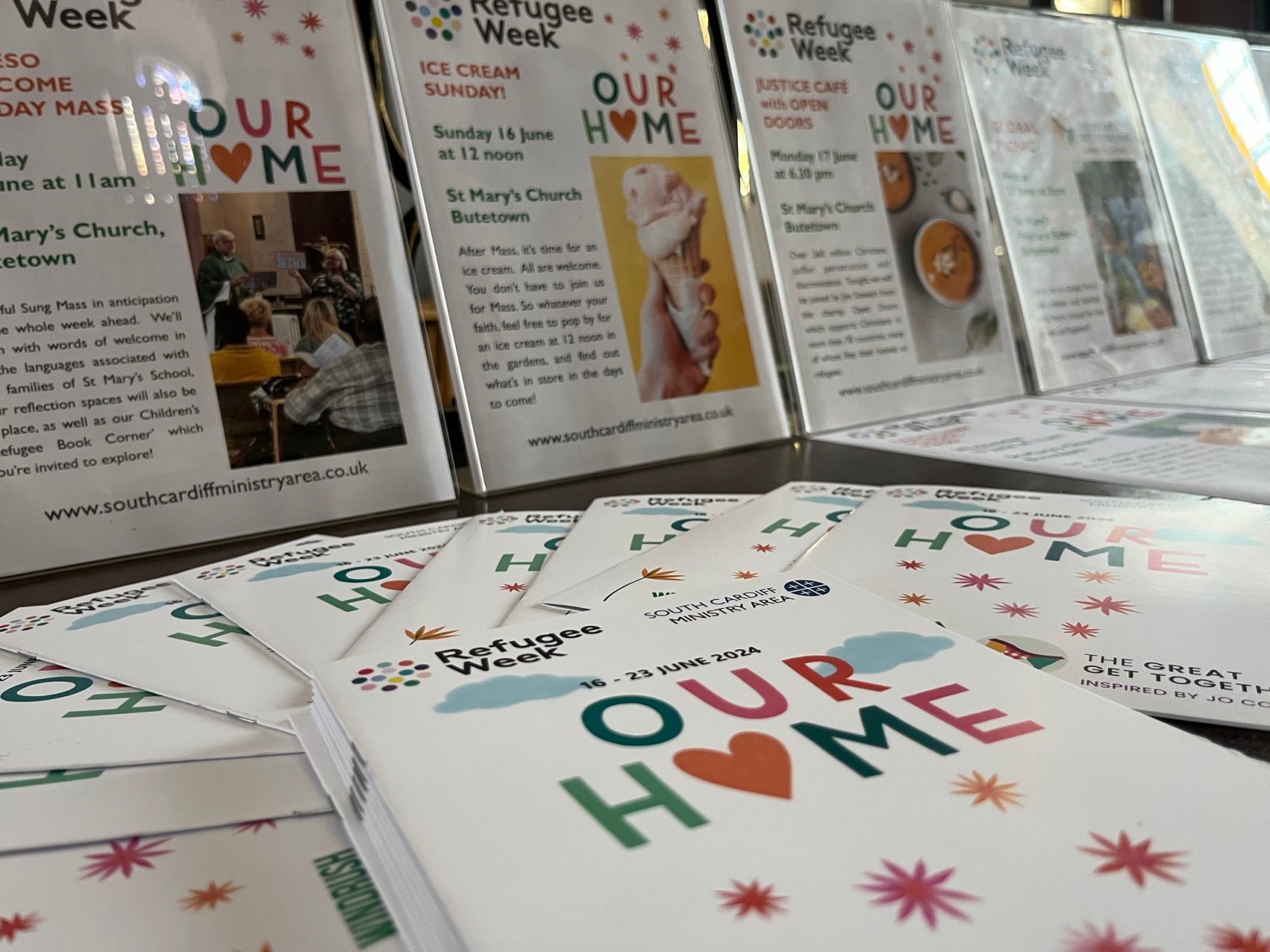
Refugee Week is almost here, and we have a packed week ahead beginning on Sunday 18 June with our usual celebration of Mass at St Mary’s followed by ICE CREAM SUNDAY in the gardens.
During the week, we’ll also be celebrating Windrush Day and The Great Get Together.
You can check out the full programme of events below (click on the booklet cover!). There’s also an article featuring St Mary’s on the Diocesan Website
Gardening Galore
We have some great outdoor space at all our church sites, and each offers different opportunities to create a welcoming environment for all – including nature!
During Churches Unlocked, St Saviour’s welcomed groups of children from Moorland Primary School to explore the Church and also to work on the garden. They planted sunflowers and began to create a community herb garden.
Children from Moorland Primary School creating a herb garden
We also received a garden statue of St Francis of Assisi to create an outdoor shrine – a place to pause and pray.
The statue was donated by Eleri in memory of Fr Graham Francis, and we have another statue of Our Lady on its way which will soon also be incorporated into our garden space.
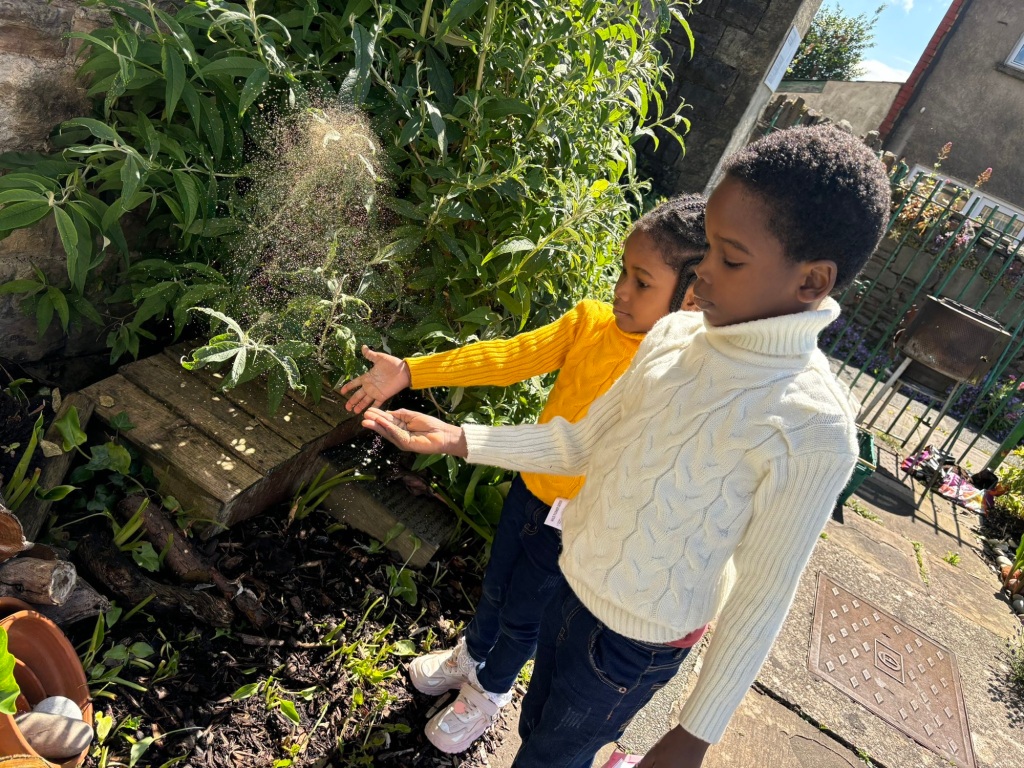
Meanwhile, at St Mary’s, parts of the car park at the entranceway to Church have been further brightened with a burst of colour, offering bee friendly plants, herbs and shrubs. Every space can be beautiful!
The Bute Street gardens have also received some work with a great deal of cutting back, but there is still lots more work to do!
If you’d like to be involved in any aspect of gardening, or would like to be part of an Eco Team which can forward ways to strengthen our environmental responsibility, and maybe move towards an Eco Award with A Rocha then get in touch!
Some of the children from Moorland Primary School who visited the church and gardens during Churches Unlocked
Charity Coffee Morning
Each month at St Paul’s, we organise a charity coffee morning with delicious cakes and great company. Each event raises money for an amazing charity.
The next coffee morning is on Saturday 24 June at 10.30am and it’s all in aid of Ty Hafan Children’s Hospice. Please come along!
Strawberry Summer
Surely, Summer means one thing! Yes, strawberries!!! Ok, well it’s not the only thing about summer, but we do have two delicious strawberry teas on offer in the Ministry Area over the next few weeks.
Join us for a summer’s afternoon of singing with our Songs of Praise and Strawberry Tea at Ss Dyfrig and Samson on Sunday 19 June at 3pm.
You’ll need to book your place though, so get in touch with Pam Ivins or Kath Jordan.
And if that’s not enough, there’s another Strawberry Tea a few weeks later at St Saviour’s Church on Sunday 2 July at 2pm. See Liz Norman for details!
We take Safeguarding seriously. It’s important that all those with particular ministries, roles and responsibilities within the Church undergo Safeguarding Training.
We’ll be hosting MODULE B training at St Paul’s Church Hall on Wednesday 21 June from 6.30pm to 8.30pm
Bookings are made via the Church in Wales website. Please not that MODULE A trainingneeds to be completed online beforehand.
Daily Reflections
On most days, we publish a quick read based on the readings of the Mass of the Day.
You can find these on the News section of our website, where you can also sign up to receive all our posts delivered to your Inbox. Discover more here
Worship for the week ahead
Prayer and worship is at the heart of our life together, and each day we gather for Mass across the Ministry area.
SUNDAY 28 PENTECOST
BUTETOWN: S MARY THE VIRGIN 1100hrs Solemn Mass
GRANGETOWN: S PAUL THE APOSTLE 0800hrs Said Eucharist 1030hrs Sung Eucharist
SS DYFRIG & SAMSON 0915hrs Solemn Mass
SPLOTT: S SAVIOUR 0930hrs Sung Mass
MONDAY 29 Mary, Mother of God 10am Mass (S Mary’s) 7pm Mass (Ss Dyfrig and Samson)
TUESDAY 30 of Ordinary Time 10.00am Mass at (St Saviour’s) 7.00pm Mass (S Mary’s)
WEDNESDAY 31 Visitation of the Blessed Virgin Mary 10.00am Holy Eucharist (S Paul’s) 11.00am Mass (St Mary’s)
THURSDAY 1 Our Lord Jesus Christ the Eternal High Priest 9.30am Mass (Ss Dyfrig and Samson) 10am Mass (St Mary's) 5.45pm Mass (S Saviour’s)
FRIDAY 2 of Ordinary Time 10.00am Mass (S Mary’s)
SATURDAY 3 Saints Charles Lwanga and his Companions 11.00am Morning Prayer and Rosary 11.30am Mass (S Mary’s) 12 noon Sacrament of Reconciliation (Confession)
Wednesday 31 May, 2023 | The Visitation of the Blessed Virgin Mary |Readings: Zephaniah 3:14-18; Responsorial Psalm: Isaiah 12; Luke 1:39-56 (You can find these in full on the Universalis website – Click here)
Writing from her hiddenness in the attic of an Amsterdam house, Anne Frank wrote, “I don’t think of all the misery, but of the beauty that still remains.” There, in the three-storey attic, she hid from 1942 to 1944 during the German occupation of the Netherlands, documenting her life in hiding. She died at the Bergen-Belsen concentration Camp in February or March 1945. Her diaries were published two years later.
Today, we celebrate the Visitation of the Blessed Virgin Mary to her cousin Elizabeth in the hill country of Judaea. Both women have news to share, and each rejoices in the circumstances of the other. Elizabeth exclaims, ‘Why should I be honoured with a visit from the mother of my Lord?” She then then bears witness that her unborn child, hidden within her womb, shares in the joy, for she feels him leaping at the presence of Jesus. On that hilltop is so much joy and beauty. It is a hidden moment, shared only by these two women and their unborn children. Mary’s voice proclaims the greatness of the Lord. Her words show confidence in God’s power to transform the world with his justice.
When we reflect upon the world, we can be disheartened by the presence of so much misery, and so many challenges to human dignity. Many people live in fear of war and violence, where darkness seems to reign supreme, or where people experience injustice. There is the growing awareness of the plight of the planet from environmental damage. Each of us too, throughout our lives, will experience times of misery and sadness which can challenge our faith in God and in humanity, and perhaps we find it difficult to move on. Despite all this and more, there is so much beauty that remains. The song of Mary proclaims the beauty and the power of God, where the powerful give way to the poor, the hungry are filled with good things, and thrones are left empty. Today, we rejoice in the beauty of all that God has done in the world, and all that he continues to do, and pray for justice, for peace and compassion.
MAKING CONNECTIONS
These posts are part of our endeavour each day to provide a short homily or reflection from the celebration of the Mass of the day. Links are posted on Twitter and Facebook, and you can also sign up for daily emails in your inbox by registering your email below:
MINISTRY AREA MASS
Mass today (Wednesday 31 May, 2023) is celebrated at Ss Dyfrig and Samson, Grangetown at 10am, and at Mary’s Church, Butetown at 11am | If you would like to send a prayer request then click on the ‘REQUEST PRAYER’ Button. You can discover more about Worship across the Ministry Area on our Worship page