Let’s talk differently about drugs

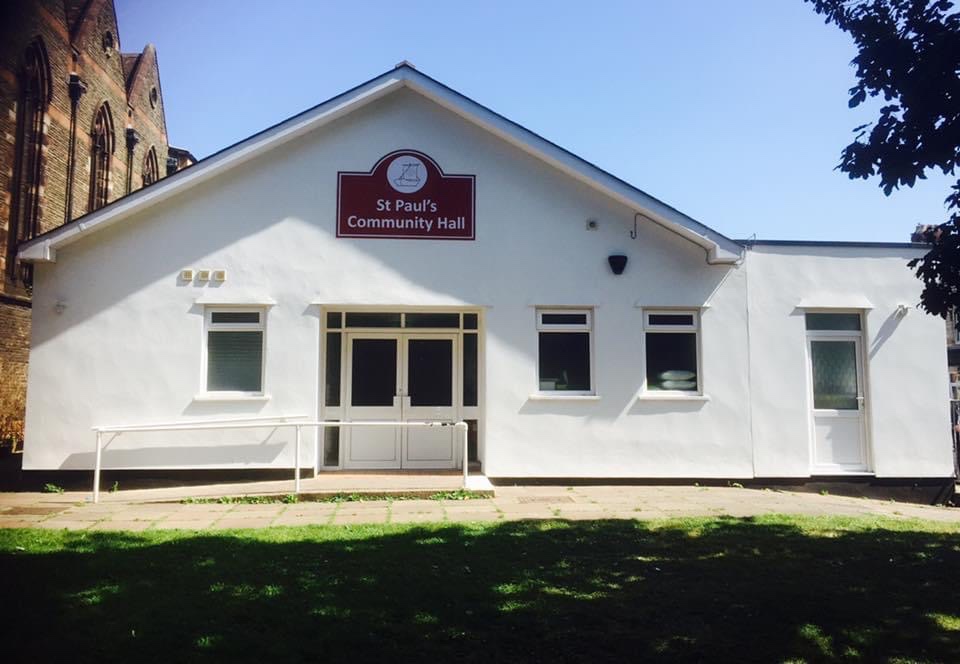
It’s a twenty minute walk from where I live in Butetown to St Paul’s Church in Grangetown to where I’m heading. It takes a little longer to reach there today.

Near the door of St Mary’s Church someone has discarded a needle during the night. I return to the house for the sharps box which is getting pretty full now. I dispose the needle safely.

A minute later, and I pass the entranceway to Ty Gobaith. For weeks, during the evening time, numbers of people gather there, and inject there. They have been dispersed by the decisions made elsewhere. The problem passed on, pushed closer to where people live. Closer to schools.

Here, I count five needles. I wonder if I have time to return to the house to collect the sharps box again. I check my watch. I’ll be late.

A street cleaner is collecting rubbish. I point out the needles. He doesn’t collect needles, he tells me, although the company he works for does.

Luckily, I have the Company’s contact details. Send an email with photographs. Hope they will be able to attend soon.

The school run has just finished. I move on.

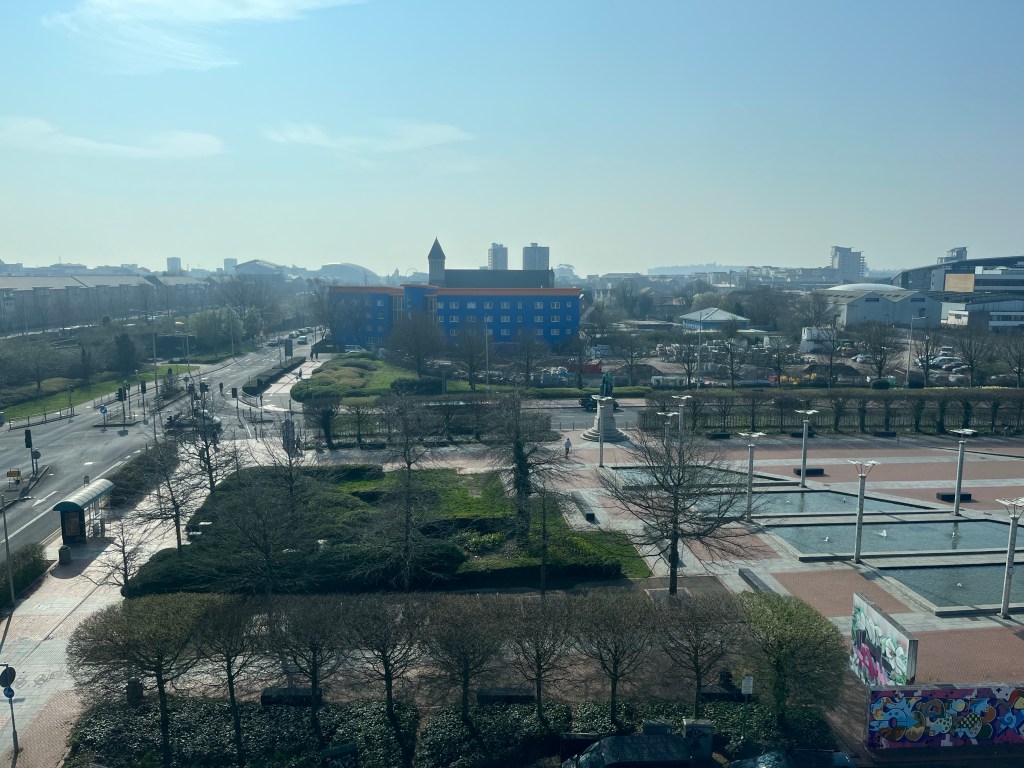
As I walk on, I see more needles scattered at the side of the pavement on Callaghan Square. I take another photograph, send another email.

This is not uncommon. Sometimes, here, we collect needles on a daily basis. Sometimes, it may be just the one needle. Sometimes, half a dozen.
In a five minute walk from the house I have counted eight.

On my return, the needles outside Ty Gobaith have been collected although one was missed. I return home for the sharps box.

Recently, in Glasgow, a safe drugs consumption facility was opened. (You can read about it here). It would be against the law to initiate one here in Wales, in Cardiff. And yet such facilities have emerged across Europe, North America and Australia. They reduce harm for the user, whose life may be fairly chaotic, and provide a supportive environment which perhaps may eventually lead to them accepting the help they need.

They also reduce drugs litter, and create safer communities, prevent a child stepping over a needle, or walking past someone injecting in broad daylight, or even worse receive an injury from a sharp.

I’m not suggesting that such a facility in Cardiff would solve all the problems. I’m suggesting, that a serious and public conversation around the possibilities of safe drug consumption facilities needs to happen, a conversation which should involve all concerned parties including the community, and be driven by the communities affected.

When the first facility opened in Barcelona, there was a fourfold reduction in drugs litter.

It’s time to start talking in a different way about drugs and homelessness. It’s time to begin to make new decisions, to look compassionately on the needs of all affected (individuals and whole communities) and to move towards making a bold decision.

Who wants to talk?

Remember November

As the nights draw in, November brings a chill but there are many things that offer a little light and warmth, including the beautiful feast of All Saints, followed by the Commemoration of All the Faithful Departed, or All Souls.

Honouring the saints, with whom we have fellowship as members of Christ’s Body, reassures us that we have been made to live with God for ever, that we have been made for Heaven where the saints pray for us.

We know many of the saints by name, and through stories which have lingered. Their memory is kept alive, their lives are celebrated on their Feast Days. Some of the saints we know well. The details of others have been lost in time, only their name lives on.

Then there are others of whom we know nothing – not even their name of or even their existence. The Feast of All Saints on Wednesday November 1st provides an opportunity to give thanks for all who have allowed God to triumph in their lives.
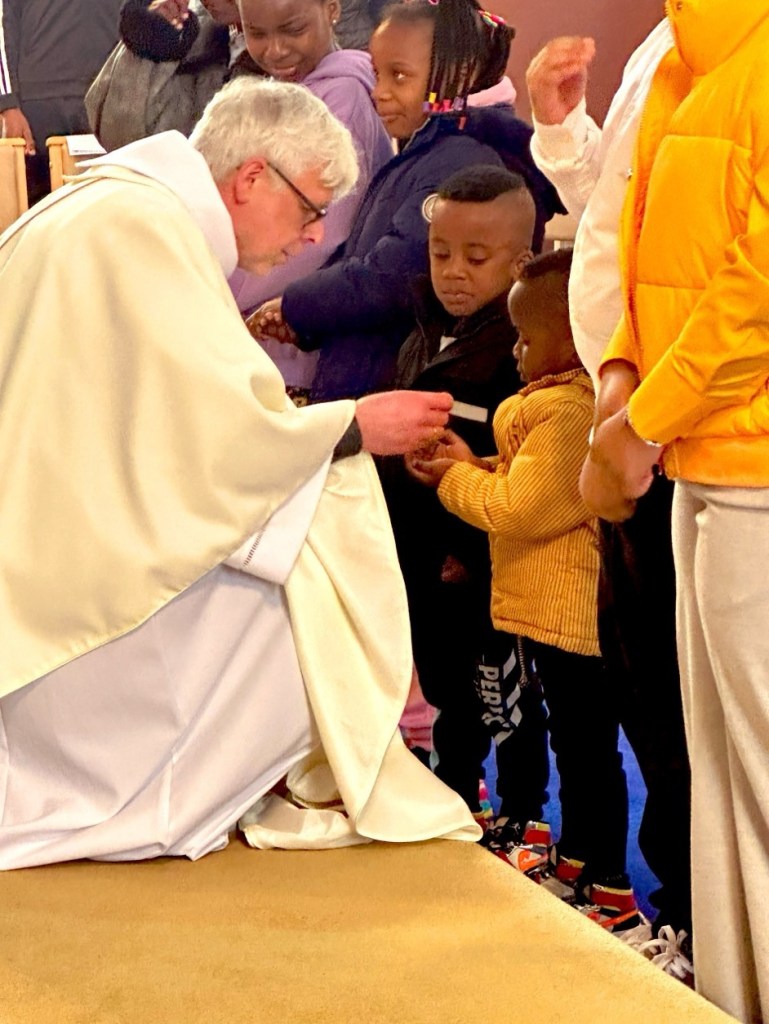
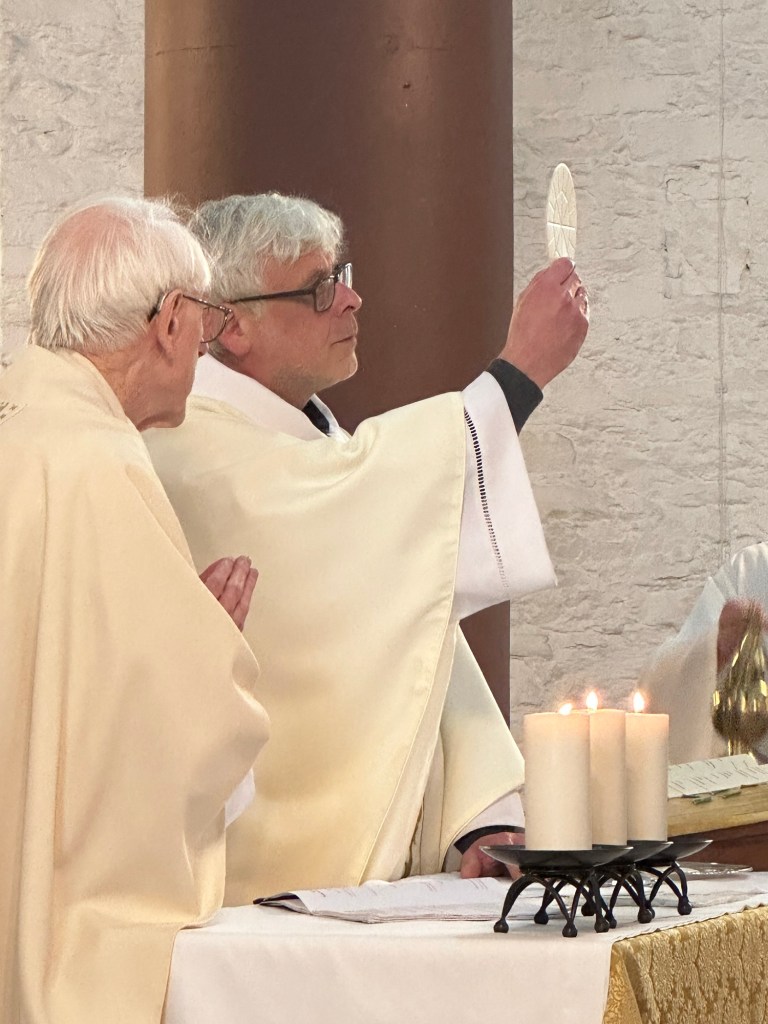
We’ll be celebrating across the Ministry Area, with a morning Mass at St Paul’s, Grangetown at 10am, and a Sung Mass at St Saviour’s Church, Splott at 7pm

On November 2nd, we celebrate the Commemoration of all the Faithful Departed, (also known as All Souls) those we have known and whose presence we miss, praying that we will be reunited with them one day in Heaven.

Our celebration of Mass on this day takes place at Ss Dyfrig and Samson, Grangetown at 9.30am, St Mary’s Church, Butetown at 10am and St Saviour’s Church, Splott at 5.45 pm.

Also, at St Mary’s each day during the whole of November, you can request a special intention for departed loved ones for the Mass of the day. Please add the intention to the list in church or send us a message.

Sit down to move on

Are you sitting comfortably? We have something to tell you!

St Saviour’s Church is on a mission. We love to use our space and resources to serve the local Community.

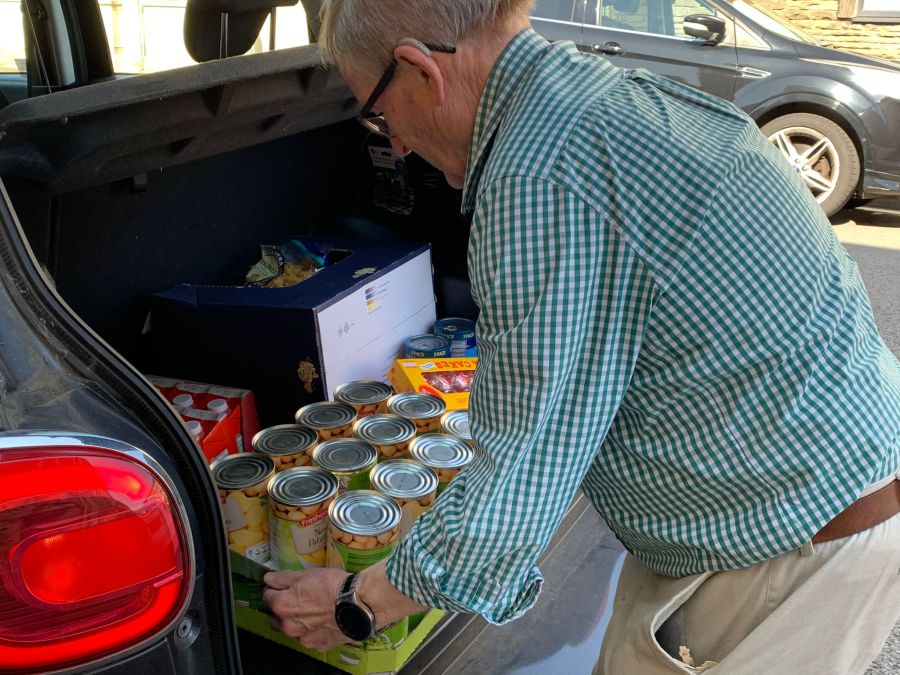
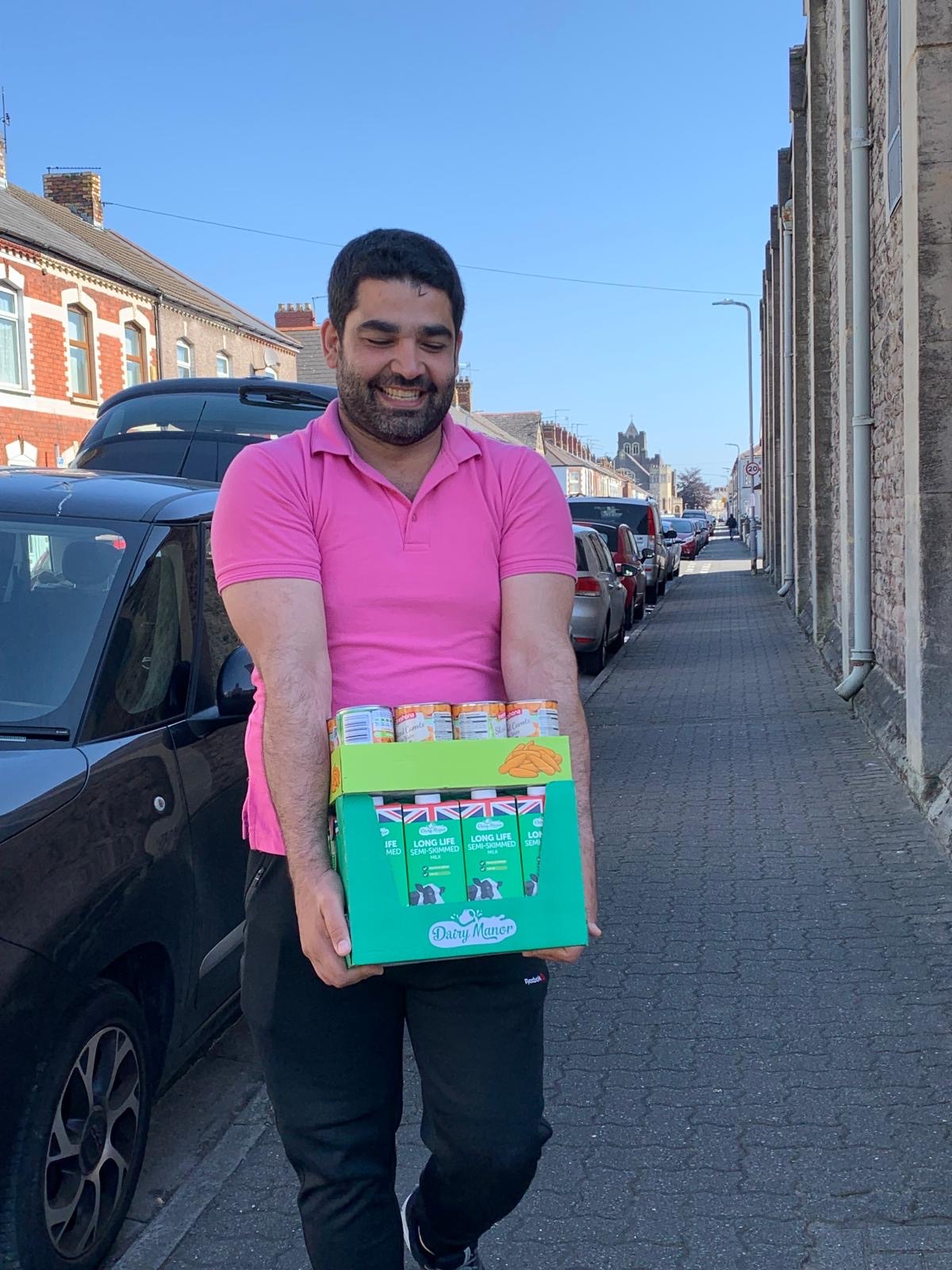
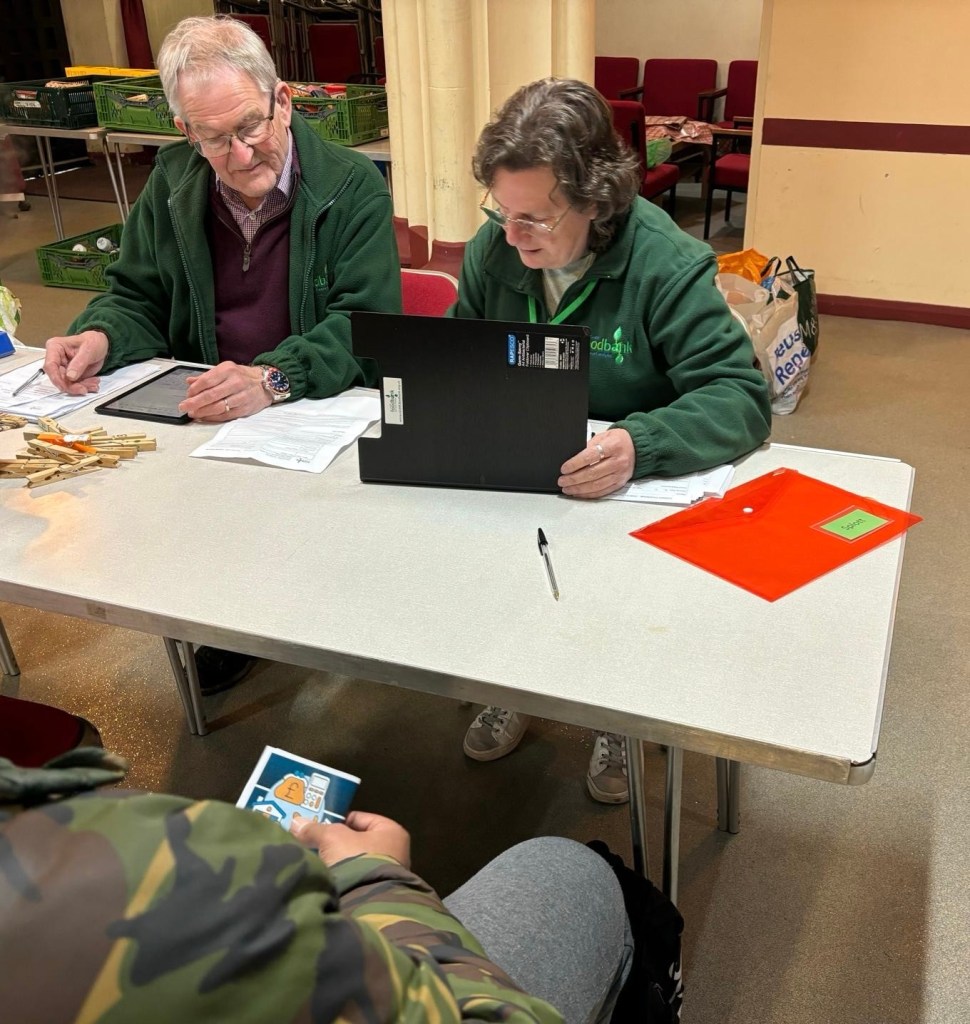
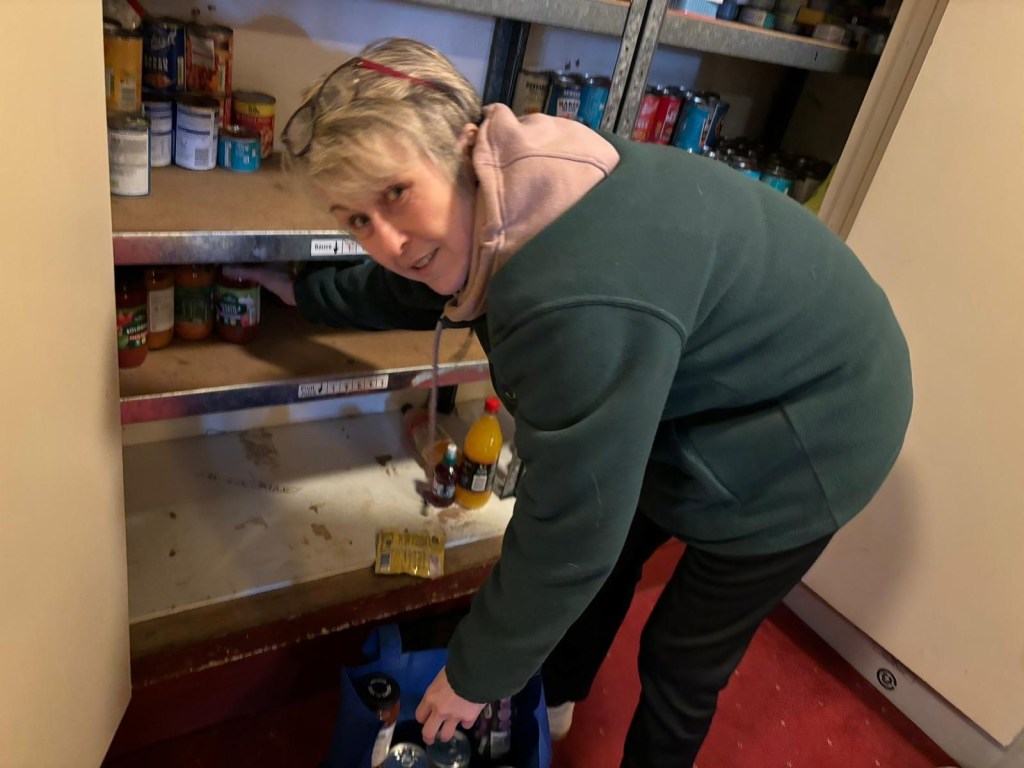
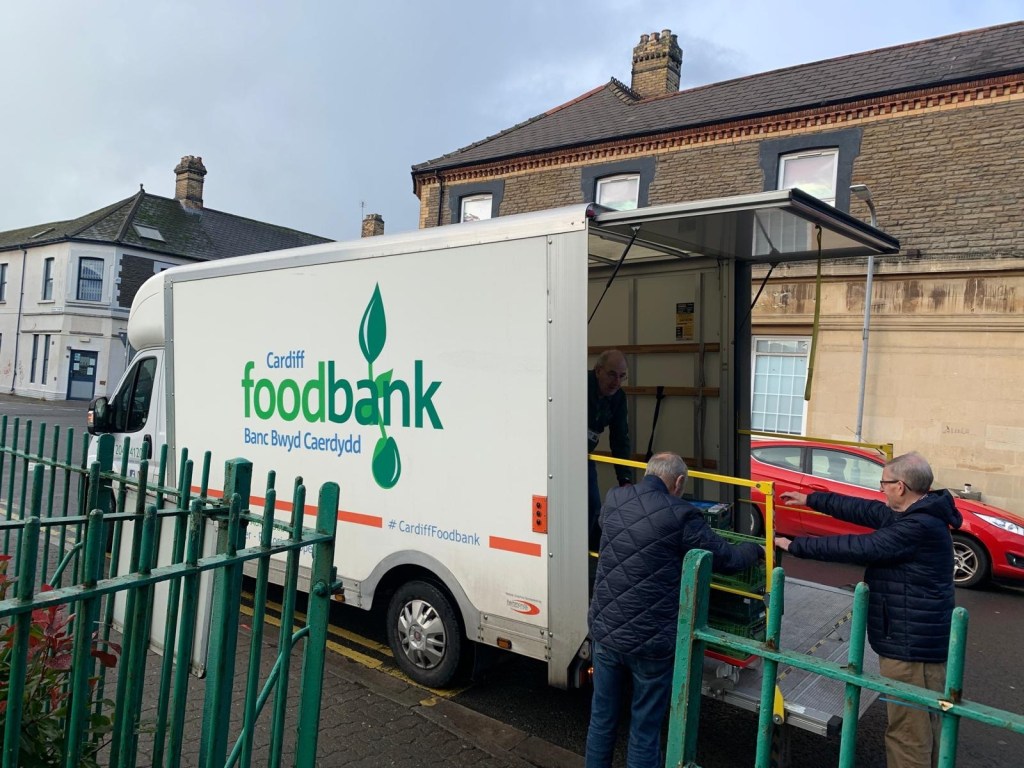
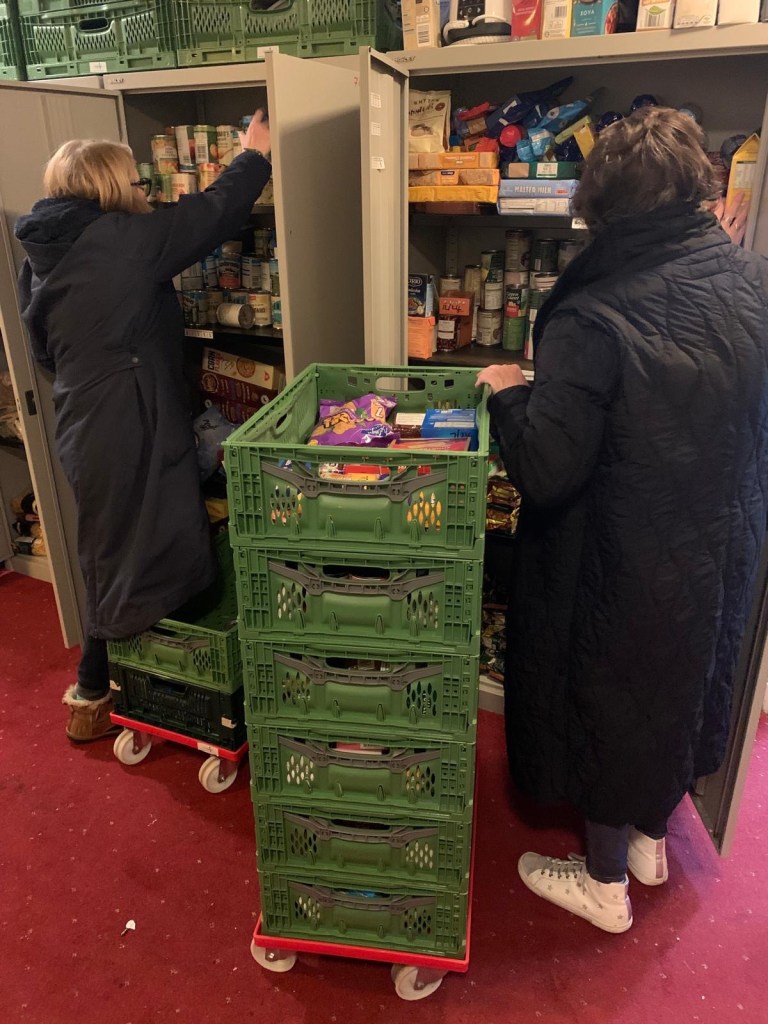
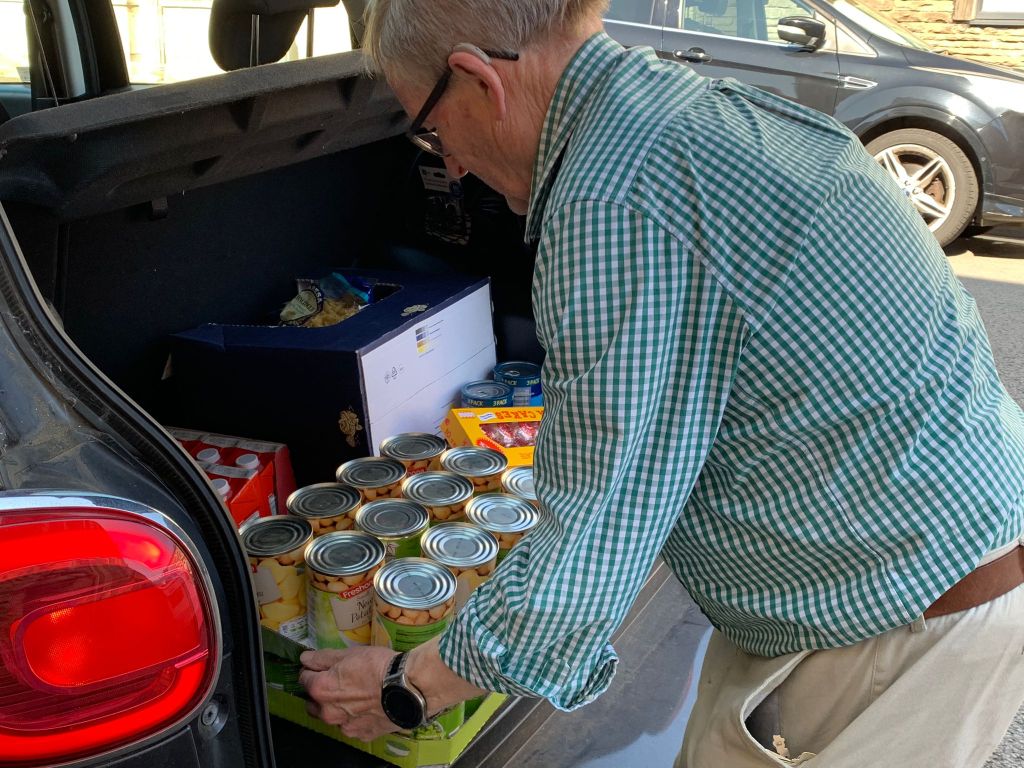
For example, we run two Foodbank sessions each week as we respond to the needs of those in crisis, and we are involved in many community projects across South Cardiff, and have plans to do so much more.

We love to use our space in creative and generous ways whilst also being true to the original purpose of the building and our life together as a worshipping community.

But we have a problem! The chairs at St Saviour’s are over a hundred years old. They have served us well but they’re now on their last legs! But as we move on, with limited resources, it means we have little flexibility to use our building in creative ways for the church and wider community.

We started raising money for new seating a year ago, but at a cost of around £12,000 and with all the other demands involved in the life of St Saviour’s Church, we’re finding it a challenge!

So we’re inviting people to contribute to our most recent development! We need something to sit on! Each chair costs about £160 and we need 70 of them. They will enhance the dignity of the church space, provide comfort and flexibility.

I you’d like to be involved in helping us move on to the next stage of our journey, every pound you give will be so gratefully received. 

For many people in Splott, St Saviour’s Church is a constant and valued feature. You may have been baptised or married here, attended a funeral here, or simply have fond memories of the past.

Whatever your connection, we invite you to be part of the ongoing story of St Saviour’s in Splott. So why not consider donating to our SIT DOWN TO MOVE ON campaign? 

Why are the chairs so expensive?

As a Grade 2 Listed building and a Church we are restricted to what chairs we are allowed to have. There is a rigorous process of application to the Diocese which is open to external scrutiny (such as the Victorian Society and other interested parties)

If you’d like to donate then follow the link to our GoFundMe page. Thank you.

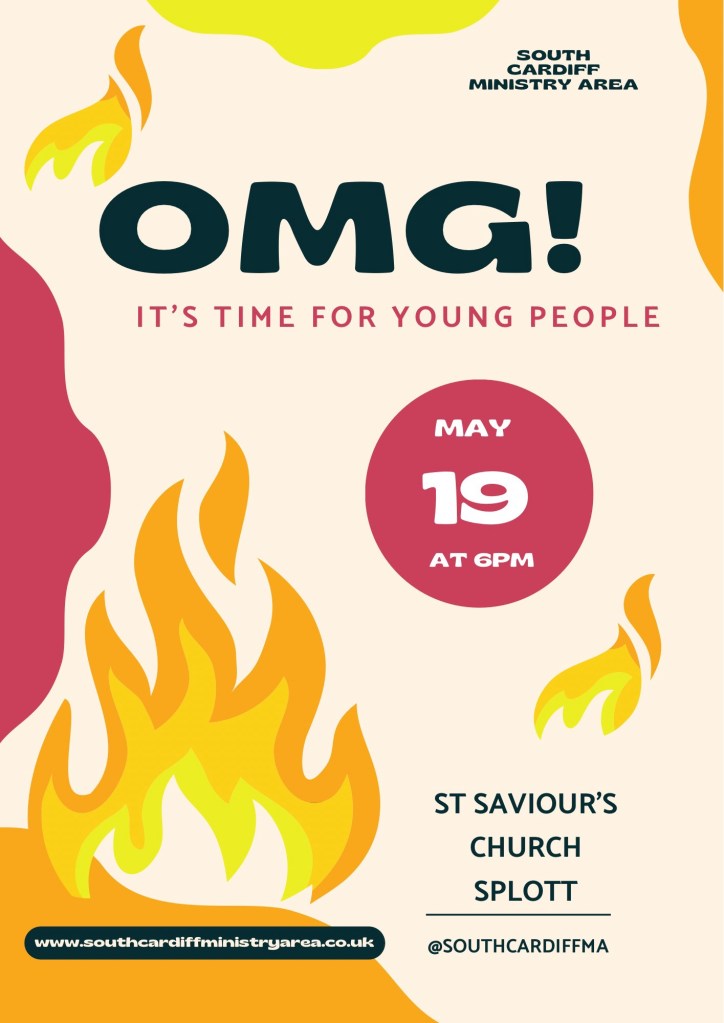
OMG! It’s time for young people

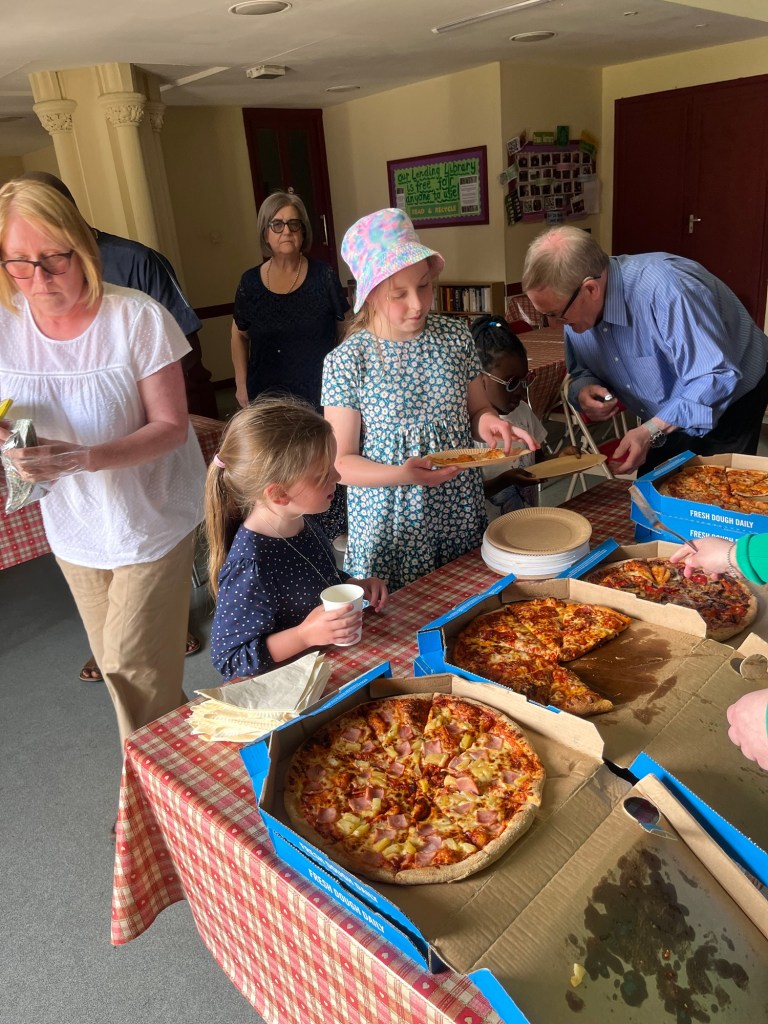
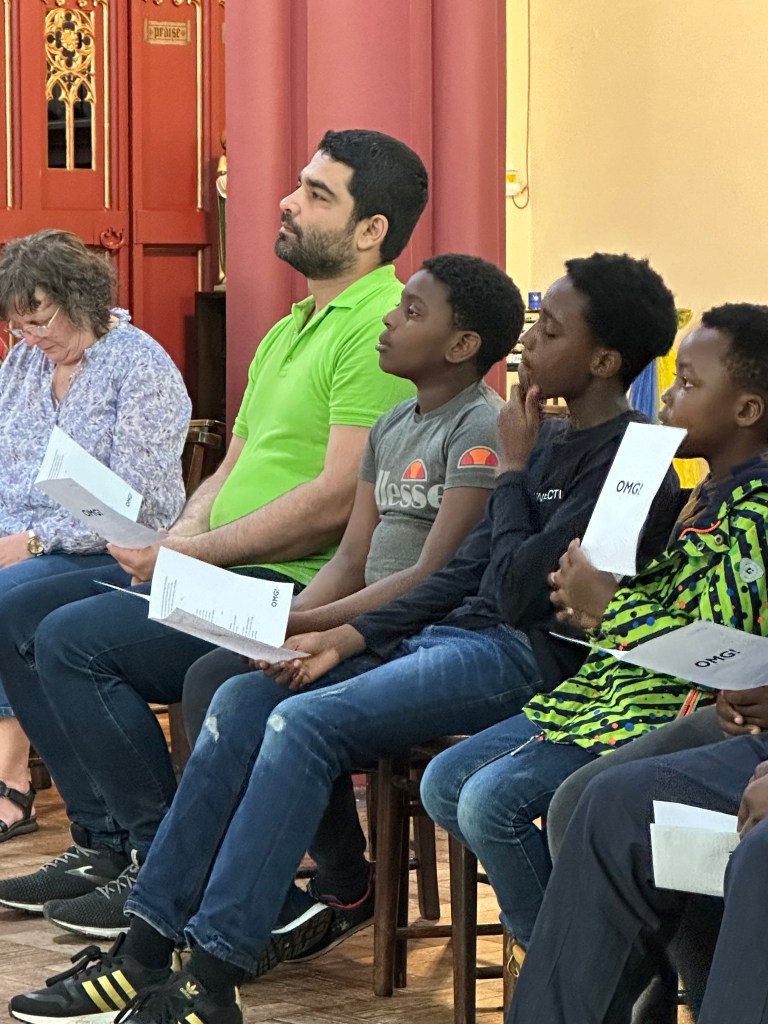
Each month at St Saviour’s Church, Splott, it’s time for young people! Each OMG! event is different but it always includes a time of prayer and worship, and a chance to eat together.

Last month it was a Barbecue. The month before that it was pizza. In October, it was chippy on the menu!

But most importantly, this month’s event provided a time for us to pray for peace in a world that knows war and conflict, suffering and pain. We were invited to create postcards for prayer which we presented at the altar steps, along with a lighted candle.

Check out our two videos of the event, and where you can also read some of the postcards or peace

The next event will be on Sunday November 26th at 5pm

OMG! October 2023


Postcards of Peace

To See and Be

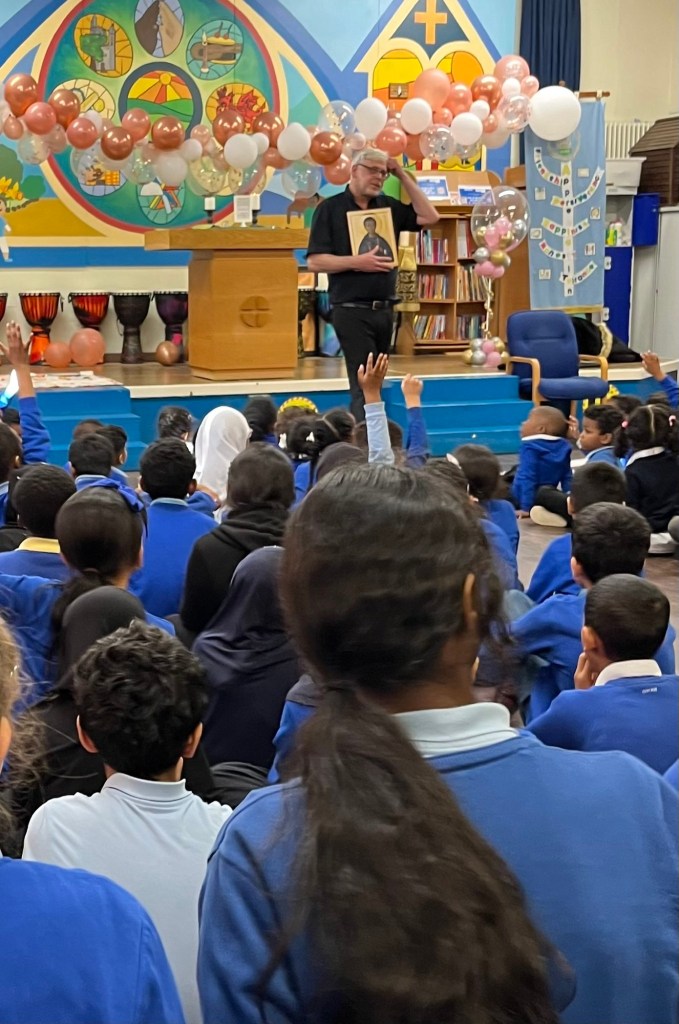
At St Mary’s, towards the end of Black History Month, we’ll be blessing an icon of St Martin de Porres who, amongst many other things is patron saint of those who seek and work for social justice and racial harmony.

There is, at present, just a small representation of black people in the art work at St Mary’s. This can be found in one of the Stations of the Cross, with Simon of Cyrene and his two sons, Alexander and Rufus.

The icon of St Martin will be a place to pray and light candles, and will also go a little way to better reflect our community and the lives of those who worship here.

Who was St Martin?

St Martin was born in the city of Lima, Peru on 9 December, 1579. He was the illegitimate son of a Spanish nobleman, Don Juan de Porras y de la Peña, and Ana Velázquez, a freed slave of African and Native descent.  After the birth of his sister, the father abandoned the family, and his mother supported her children by taking in laundry.  He grew up in poverty and was sent to a primary school for two years, and then placed with a barber surgeon as an apprentice.

He spent much time in prayer and was drawn to the Religious Life.  However, under Peruvian law, descendants of Africans and Native Americans were barred from becoming full members of religious orders, so he asked the Dominicans of Holy Rosary Priory in Lima to accept him as a volunteer to perform menial tasks in the monastery in return for being able to wear the habit and live with the religious community.  He was received at the age of 15, first as a servant boy and then as an almoner. He also took on kitchen work, laundry, and cleaning, as well as continuing his trade of barbering, and performed many miraculous cures.

After eight years at the Priory, the Prior decided to ignore the law, and permitted St Martin to take his vows as a member of the Third Order of Saint Dominic, although he was mocked by some fellow brothers as being illegitimate and descended from slaves.  In 1603, when he was 24 years old, he was allowed to profess religious vows as a Dominican lay brother.

St Martin was noted for his work on behalf of the poor, established an orphanage and a children’s hospital, and had a deep devotion to the Blessed Sacrament where he spent many hours in prayer.  He is the patron saint of black people, people with a mixed ethnic background, barbers, innkeepers, public health workers, and all those seeking racial harmony and social justice as well as animals, schools and public health.

The icon of St Martin will be blessed at St Mary’s Church, Butetown on Sunday 29 October at the 11am Mass. All are welcome.

St Martin de Porres, born: 9 December, 1579; died: 3 November, 1639; Beatified, 1837 by Pope Gregory XVI; Canonized, 1962 by Pope John XXIII

St Martin de Porres, pray for us.

Homelessness Charter

On Homelessness Sunday (October 8th) the Ministry Area of South Cardiff will adopt a Homelessness Charter.


Some years ago, before the Ministry Area of South Cardiff existed, St Mary’s Church adopted a Homelessness Charter. Its purpose was to set out our commitment and response to those who are homeless in our city.

Now, as part of our life together across the communities of Butetown, Grangetown and Splott, we have reviewed and will adapt this charter for the whole of the Ministry Area.

The charter doesn’t claim to solve problems. It’s simply the beginning of a process which attempts to establish a culture in which we can work together.

Not only does the Homelessness Charter aim to offer a consistent and realistic response to all experiencing homelessness, it also commits us to working with others on issues of Housing Justice, and to respond effectively to some of the related issues.

We will regularly review the charter. So that we can do more and do better!

Photo: Liam Riby, Unsplash

Homelessness Charter


We welcome people who are homeless and will treat you with dignity and respect.

We offer friendship and accept you as you are. We will talk with you and listen to you, and will try to understand your situation. You are welcome to join us for worship but all people regardless of religion, race, gender,
sexuality or disability are welcome here. (We may also host external organisations, so please ask about the accessibility of these).


We will guide you to services which can help you with your specific needs.

If necessary and appropriate, we will liaise with them for you. Our pastoral leaders and other individuals in our congregation commit to having an up to date knowledge of Homeless Services across our city and issues which may affect you so that you will receive a consistent, fair and honest response. However, we recognise there are limitations to the help we can give. Our community consists of all kinds of people, some of whom have their own vulnerabilities but we seek to equip our whole congregation so that they will be understanding and supportive.


We aim to offer a safe environment for all.

All staff, volunteers and members of our community of faith and all who visit and use our church premises (including those who are homeless) can expect to be treated with respect and to be safe from harm so that we can offer a welcoming and friendly environment, free from violence, aggression, bullying and fear. We will report aggression, violence, anti-social and criminal behaviour and damage to our property to the police. Drugs are not to be used or dealt on our
premises, neither is begging. We work to the Safeguarding Policy of the Church in Wales.


We will support you financially through donations to homeless charities and other projects in our city.

We are unable to give you money or pay for services directly. We value and will promote the work of those charities and organisations, and are committed to supporting them regularly and in appropriate ways.

We have a concern for your physical, spiritual and emotional needs.

Each church has different resources available to them in terms of being able to provide food. However, we recognise that some external projects which offer food also provide parallel services which can help you even further. We can guide you to these services and to the abundance of free food available across Cardiff but we will always attempt to help you at your point of need. We are unable to provide accommodation. On occasions when people are rough sleeping on our premises, we will assess the risk to both you and others, and explore with you the possibilities available by liaising with various services and authorities.

We will be actively involved in Housing Justice and issues which affect those who are homeless.

This also means being informed about the issues which lead to homelessness, and the experiences of those who are homeless.


Homelessness Sunday

Why not join us on Sunday 8th with celebrations across the Ministry Area?

St Paul’s Church, Grangetown at 8am and 1030am

St Dyfrig and St Samson’s Church, Grangetown at 9.15am

St Saviour’s Church, Splott at 9.30am

St Mary’s Church, Butetown at 11am


On Sunday 15th, our Guest Preacher at St Mary’s at 11am is John Stark, chaplain to the Salvation Army’s Ty Gobaith


This charter sets out how, as a whole church community, we will respond to, welcome, care for and support those who are homeless across the churches of South Cardiff Ministry Area, as well as how we will respond to the situation of homelessness and Housing Justice. Adopted on Homelessness Sunday, October 8, 2023. We will continue to review and adapt as appropriate.

ugger utetown

This is difficult to write.

The ‘b’ key on my laptop is playing up.

It sticks.  It’s sporadic.

And so, I have to type and retype, use the spell check, copy and paste, to get the bloody ‘‘b’ into my text.

It’s 8.30pm on Thursday evening.

Some people are beginning to gather outside Ty Gobaith, the Salvation Army Hostel right at the top of Bute Street, and which borders (literally) St Mary’s Primary School. It’s a successful and valuable resource for those who find themselves homeless. They do amazing work.

Those who gather, though, are not one of the sixty or so residents there.

They carry their bags across Callaghan Square. Their heads are lowered, determined, they move on. They know where they are going.

I don’t know where they have been, what their story is, what has brought them to this place, at this time. So many traumas and tragedies. There are so many vulnerabilities, but an apparent Police Order* means they are dispersed from the area around the Huggard Centre (and the many businesses and the brand new apartments there) and so they arrive closer here, closer to the Primary School.

Many of their lives are so complex and so chaotic. There are so many issues, so many problems, so many unknown stories waiting to be heard.

Tonight, they stand and crouch and sit.

They look for a vein to inject, and then inject.

I stand for while and watch. And then turn away. Leave them to find their escape from the shit they have found themselves in.

They have been gathering here for some days now, maybe weeks.

This morning, I cleaned up needles from the steps of St Mary’s Church, a child’s stone’s throw away from St Mary’s School which begins its new term in a few days’ time.

My CCTV tells me that two males were here yesterday at 3.30pm, the same time as children will be spilling out from school in less than a week’s time. They leave their needles and mess behind, move on.

I clean up. Place their needles into a box. Dispose of the litter. Move on.

There has been an increase of commotion and arguments at the top of Bute Street over the last few weeks. More activity, more gathering, more chaos.

It’s beginning to get awful, often violent.

“What are you looking at? Fuck off?” said someone the other day as I passed by as they did their own thing in the street where I live, a yard or two from the school.

How do we respond to both the needs of those who are homeless and vulnerable and, at the same time, respond to the needs of children – in a “Child Friendly City?” My current experience in Butetown at the moment is that this isn’t being considered and isn’t being addressed as a pressing need, despite so many concerns.

Some years ago, when I began my time as parish priest in Butetown, after living here for much longer, many of us noticed a change. There was flagrant dealing and use of drugs which devastated and disturbed the community. It continued until it became commonplace.

I remember speaking to a young mother walking her child to school.  We had just passed a drugs deal on the street.

“How does that make you feel?” I asked.

“It is what it is,” she said, “we just get used to it.”

It had become the new normal. Something to put up with and not question. A problem pushed into our path, not of our own making.

However, things soon changed. People responded. Life seemed to become better. Lockdown improved some things too. But lately things have become worse.

This afternoon, as I walked around, I saw more discarded needles, here and there. The underpass at Letton’s Way between Lloyd George Avenue and Bute Street was littered with needles and, outside Cargo House – another facility for those who are homeless and run by Cardiff Council – more discarded needles, just a few yards from the Primary School’s entrance.

On my way home, I pass by two people sat on the kerbside in North Church Street. Two more skirt down North Church Street, wander into the Church Car Park, see that I am there ahead of them, decide to move on. Perhaps, it’s two less needles for me to dispose of. The least of my worries, and certainly of theirs.

Things are beginning to regress. It’s a return to how things were, some years ago, a slip back in time. Instead, this time, there is a new aggressiveness, a new anger.

Around me, within just a few hundred yards, there are millions of pounds of investment being made, ploughed into new buildings and shiny new developments like the new Cardiff Arena, and many Apartment buildings that rise up but do not include any social or affordable housing. Butetown gets squeezed out until it just becomes “the Bay.”

The city build up, builds out, brags and bulges but sometimes, like tonight, this just seems like it’s another case (thanks to copy and paste) of Bugger Butetown.

*since this was first published, the South Wales Police has confirmed there is no dispersal order in place. . Ty Gobaith had suggested this was the case from the information they had been given, but it seems it’s just the security measures employed by local businesses around the Huggard Centre which has moved people away from the area and so into ours

Bread of Life

In September, we’re serving up an exciting Course which explores the Christian Life through the Lens of the Holy Eucharist. So, if you’re hungry to find out more, read on!


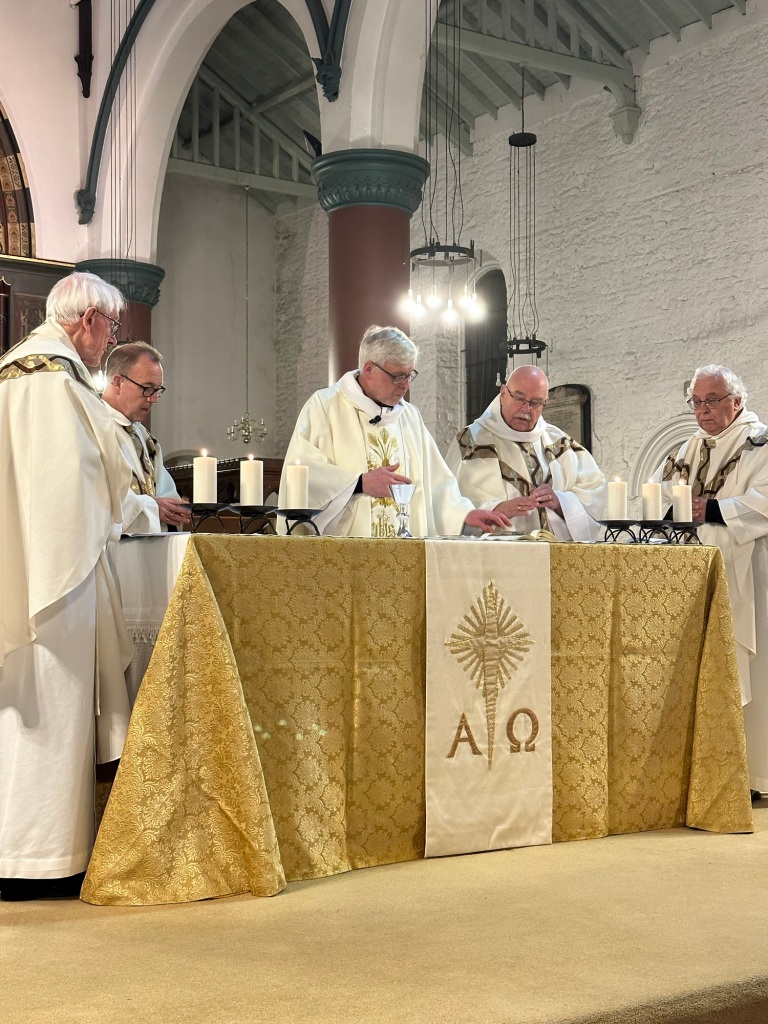
Each Sunday and through the week, we gather to celebrate the Holy Eucharist.  It’s at the heart of our life together.  But why is it so important, and what does it teach about the Christian Life?

Well, that’s where ‘Bread of Life’ comes in.  It’s the start of an amazing journey in getting to know Jesus Christ with a new and deeper understanding.

The course has received considerable investment from The Confraternity of the Blessed Sacrament (CBS) and across the Church. This is reflected in the quality of the videos which accompany the course.  They have been specially commissioned and filmed in biblical locations such as Jerusalem and across the UK.

There is also an attractive Guest Book, designed to accompany participants through their involvement with Bread of Life (published by SPCK) and on their ongoing faith journey, as well as podcasts and other resources.

The Eucharist is at the heart of our life together

A Slice of Life

The course consists of six modules. The first module introduces the Eucharist as the central sacrament of the Christian life by looking at its history, its meaning and its importance to today’s Church.  The second module looks at what it means to be reconciled to God, and why we participate in repentance and absolution as preparation for receiving the Eucharist.

As we move through the weeks, the third module explores the importance of Scripture, and we look in detail at the biblical passages that inform our understanding of the Eucharist.

In the last three modules, we appreciate the role of prayer in the Christian life.  We will focus on the Lord’s Prayer as the prayer of the Eucharist and as a beautiful pattern of prayer.  We will explore what it means to receive Christ in the Eucharist, and finally (as we move on from the course) see why the eucharistic life is missional and outward looking.

Want to find out more?

If you’re interested why not join us on Wednesday September 20 at 7pm at St Paul’s Church, Grangetown for a gentle introduction to the Course, all served up with light bites and refreshments!  You can learn more about the course and decide if you’d like to make the journey with us!

You an find out more about Bread of Life at www.breadoflifecourse.co.uk

Urban Pilgrimage

You don’t have to travel far and wide to make a pilgrimage. Our new ‘Urban Pilgrimage’ experience in the Celtic tradition makes discoveries on our doorstep in the heart of the city of Cardiff.


“You may have a highly polished shoe but your footsteps are no grander than those made by a barefoot man.”

So goes an ancient Christian Celtic proverb. The Celtic Saints travelled well, pushing out across land and sea, often in search of solitude, sharing the good news of Christ as they went.

But they also knew how to be still, rooted in the landscape, creating community, discovering God in their surroundings, in their daily activities, and in the beauty of Creation.

They worked with the landscape of which they were a part, labouring with love. They embraced the terrain. They were part of the scenery whether it was mountain or meadow, a woodland or an island retreat.

Each piece of ground for them was holy ground.

So many of those Celtic saints left their mark on the land. For some, their names were defined the place that they – and we – have called home.

Familiar features

Whilst many of us make pilgrimage to places far away, the place we call home is calling out to be discovered. The familiar features of our landscape can often hide secret treasures. Hidden away and out of place, we can make pilgrimage through the parks and streets, between the buildings and high rise flats, and encounter God in the everyday sights and sounds.

As soon as we cross our doorstep, a pilgrimage has begun.

“Whilst many of us make pilgrimage to places far away, the place we call home is calling out to be discovered”

This year, we launched our pilgrimages to the island of Flat Holm, a place sought out by St Cadoc, fifteen hundred years ago. Whilst the island is situated within the ancient parish boundaries of St Mary’s it is often elusive, and remains just a distant sight for many. It takes an hour’s crossing by boat – which may put off some potential pilgrims!

This year, we launched our pilgrimages to the island of Flat Holm in the Bristol Channel

However, as well as offering this Island pilgrimage opportunity, we are planning pilgrimages closer to home, right here on our doorstep in the heart of Cardiff, the capital city of Wales.

Everyday demands

Whilst the post-industrial landscape of a former docklands may not necessarily cry out with the opportunity for pilgrimage, like the Celtic saints before us we can find God rooted in the landscape, and present in our everyday demands and activities.

Even within the urban landscape, nature can thrive – if given a chance – and it’s within God’s creation (and as part of this creation) that Cadoc and all the Celtic Saints experienced so intensely the presence of God.

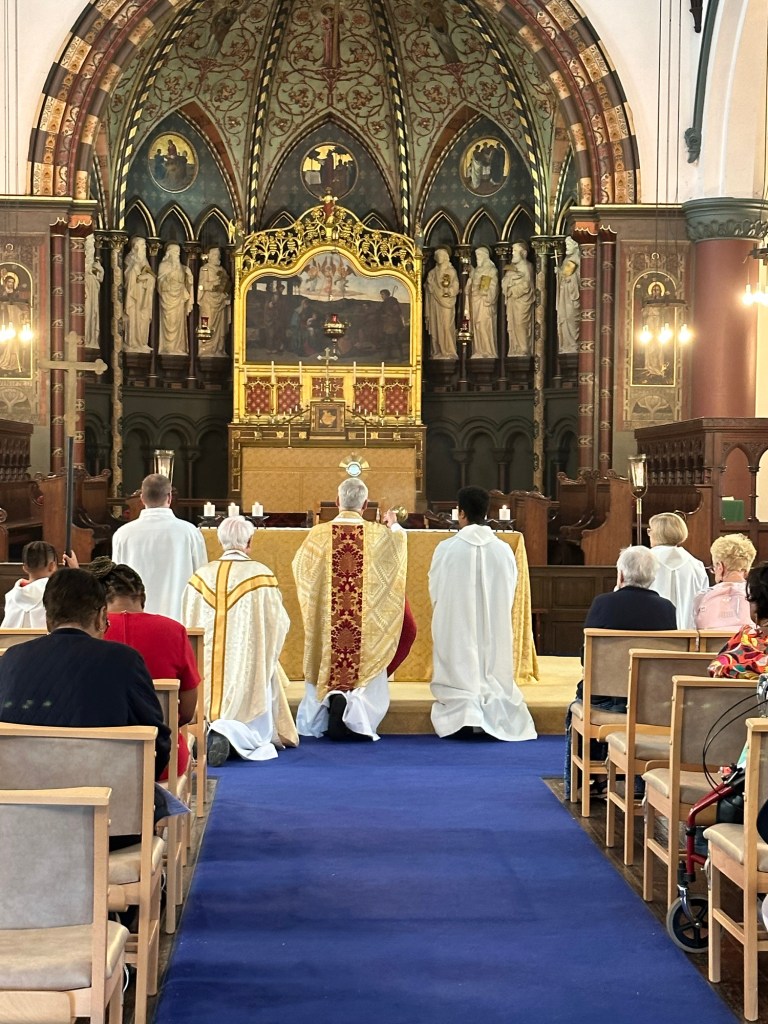
Our “on shore” pilgrimages in the Celtic and catholic tradition will begin at St Mary’s Church in Butetown for Mass and the Blessing of Pilgrims. We will stop along the way for particular times of prayer and ministry – as well as for well earned refreshments!

You can bring your own drinks and food or make the most of the many cafes, shops and restaurants along the route.

To make the most of the pilgrimage it’s suggested you purchase our Celtic pilgrimage manual (£5 each) which is filled with specially written prayers and liturgies in the Celtic tradition, and which we will use along the way.

As part of the pilgrimage, we may also make a crossing across the flat water of Cardiff Bay from Penarth to Mermaid Quay (which costs £6.20 – card payments only – paid direct to the company)

Walking across Cardiff Barrage we will be able to see Flat Holm (on a fine day!) and will be the closest on land that we can get to the island!

A Great Equaliser

Someone recently described their pilgrimage to the Shrine of Our Lady of Walsingham as “a great equaliser.” He went on to say that each pilgrim was so different “but we all have this one thing in common.”

It’s the same with any pilgrimage. A community is created, and our diverse and varied lives, for a little while, become intertwined like Celtic knot-work.

When we make pilgrimage together, each of our footsteps, whether we wear well polished shoes or tread barefoot, is no grander or poorer than anyone else’s.

So why not join us?

You too can discover a pilgrimage experience with a difference. Here, on our doorstep, we can encounter God. Here, through the streets, each step can be a prayer, each movement a miracle or a moment of meaning.


Each Urban Pilgrimage will begin with Mass at St Mary’s Church (Butetown, Cardiff) and we will be publishing details of dates soon.

We can also organise bespoke pilgrimages for particular groups – so please get in touch if you’d like to explore this.

The walking distance is approximately 3.5 – 4 miles on the flat and, depending on stops, takes approximately 2- 3 hours (although this time can vary depending on the particular pilgrims taking part, and each pilgrimage will also take a slightly different route. We move as slow as the slowest pilgrim!

Sometimes we will take in the Cardiff Wetlands, at other times we will wind our way through the nature filled canals of Atlantic Wharf. Each pilgrimage will walk the pavements and the built environment and also explore the beauty of God’s creation.

The first Urban Pilgrimage takes place on Saturday 16 September 2023 beginning at St Mary’s Church at 1130am

To book your place or for more details, contact Fr Dean Atkins (mobile: 07368176300 or email: deanjatkins@outlook.com)


Fly High

Last week (19 -25 June) we celebrated Refugee Week with a full programme of events and activities, working closely as a community with St Mary’ School. Here, Fr Dean offers a brief reflection on just one or two high-flying moments

I’ll call him Hamed.

In typical style, that’s not his real name.

He’s eleven years old and, so he tells me, he arrived in the UK a year ago.

He’s trying to thread a cord through a hole he has made in a kite.  The thread doesn’t fit, despite licking the end to make it finer, to make it fit.  And so, he reaches for a tool, bores again through the plastic, makes the hole bigger, leans in closer, his eye on the thread and the hole.  This time he succeeds, and he quickly ties the thread.

For Hamed, this is a moment in which he shines.  The kite making workshop in which the children of Year 6 are engaged may just be another arts and crafts activity, with pieces of the Curriculum creatively drawn in by Miss Fry, their teacher.  Science, numeracy, design and technology and so much more is gathered in to this all-day activity during Refugee Week at St Mary’s School.

But, for Hamed, this is a personal moment, a memory, from home.

He has made the journey from Afghanistan.  I know nothing of his journey.  This is not the moment, and it’s not my place to pry or press.  Who knows what traumas would emerge.  I simply talk to him and listen to what kite flying means to him. 

He speaks in his broken and growing English but what he doesn’t say is expressed by his face which glows.  His eyes are wide.

Kite Flying is a national sport and pastime in his home country of Afghanistan and so, for Hamed, this is a taste of home.

Like many things, kite flying was banned by the Taliban in his home country.  The Kite making workshop was intentional for us.  It formed part of our Refugee Week celebrations for St Mary’s Community, as Church and School worked so closely together.  It was one activity which, we thought, would help express our connections with those who are refugees.

One of the kites from Refugee Week on display at St Mary’s

At the time of planning, we didn’t think it would connect so profoundly with a child in our school. We thought this would be a learning exercise, a simple celebration that raised and explored some issues. But now our school has 1 in 10 children who are refugees. And Hamed is one of those children.

During the Global Picnic on Friday which rounded up the school week, with children dressed in clothing that was important to their cultures, Hamed sided up to me.  His kite had been on display in St Mary’s Church.  ‘Can I get my kite now?’ he politely asked.

We walked across the fields of St Mary’s School, sliding through the football mad boys and girls.  I pointed him to the open doors of the Church.  He ran in and emerged with his bright red kite.

A message written by a pupil at one of the prayer and reflection spaces at St Mary’s Church during Refugee Week

In the days before, the Welsh Parliament had voted against the UK Government’s Illegal Migration Bill.  The announcement had received an applause at our event on Wednesday when we premiered the School Sanctuary’s Committee’s video, ‘A Sanctuary Alphabet.’  It was simply an indicative vote with no veto.

In the days after, the Court of Appeal stated that Rwanda was not a safe third county for migrants to be deported.  They ruled the Government’s plans as unlawful.

After a busy Refugee Week with so many activities and events, I sped my way to London on Monday morning for the Parliamentary Prayer Breakfast on Tuesday as a guest of Stephen Doughty MP.   After the event, Stephen gave me a generous whistlestop tour of Parliament and then, as I left the building, I encountered Citizens UK who were organising an action on the Green outside, overlooked by statues of Gandhi and Mandela and so many others.

Part of the Action of Citizens UK at Parliament

The action was against the detention of refugee children. “Two classrooms of children could be locked in prison like conditions every day under the Governments proposed bill,” they said.

Two classrooms of children.

I stayed there for some time, became a part of the action, and I thought of Hamed.

I know nothing of his journey – how he got here, how he arrived.

He’s eleven years old and, so he tells me, he arrived in the UK a year ago.

And he loves flying kites.


Watch the Sanctuary Alphabet from St Mary’s School Sanctuary committee