“Both at the crib and at the empty tomb we discover the new life which Christ brings.” Today’s reflection from Mass.
BIBLE READINGS: You can find the readings for St John the Evangelist on December 27 here (Universalis Website)
Just as Mary made haste to visit her cousin Elizabeth, and the shepherds made haste to see the good news of which the angels sang, there is the same sense of urgency at the end of Jesus earthly life.
He has a hurried burial and likewise on the third day, Peter and John race to the empty tomb. John is the fastest. Maybe it’s because he’s the youngest and still has the fitness of youth, whilst Peter’s age is beginning to take its toll. Who knows?
But there in that place of death, they find only signs of life. As Jesus was wrapped in swaddling bands as a baby so the cloths which wrapped him in death are left behind. He has no need of them. Death has been swallowed up in life.
These days of Christmas are perhaps less rushed and not so busy as the days which led up to it. But there still remains a sense of urgency as we attend to Christ. The world continues to spin, and life goes on. Wars and injustice continue, and there is still much to do but it begins with attentiveness to Jesus. A life of prayer and sacrament.
Both at the crib and at the empty tomb we discover the new life which Christ brings. The Word of God becoming flesh, active in his world, alive and bringing us peace. May his Word dwell in our hearts and lives.
DAY BY DAY
If you’d like more resources for daily prayer then check out our DAY BY DAY pages.
As some box away Christmas for another year, our celebrations continue. The martyrdom of Stephen reminds us of the demands of discipleship and the lingering presence of God in our lives, who never goes away. Here’s today’s reflection from the daily Mass
Already fed up of Christmas, some people will spend Boxing Day taking down their Christmas decorations. For them, Christmas is over. For us, it’s just beginning.
And so the lights and tree and carols remain. They will outlast what’s left of the vegetables. They will be here long after the last Turkey curry has been eaten. We stubbornly cling to Christmas—each day of the Christmas Octave extending Christmas Day into one long day.
The unfolding of God’s revelation continues until the magi arrive from their long journey and glimpse the glory of God and Jesus is revealed to the nations. The revelations is symbolic of course, and continues throughout Jesus’ life, as people grapple with the mystery of who he is.
In the good news of Jesus revealed in the four gospel writers, only two have any account of Jesus’ nativity. Mark plunges straight into the Baptist’s call, as does John who then gives us a poetic prologue, philosophical and literary, of the mystery of the Word made flesh.
We cannot box the Incarnation away for another year. The hope for a baby and child is that they will grow up healthy and well, reach adulthood, follow dreams, make a difference in the world, and live a long life.
We cannot box the Incarnation away for another year.
It’s on the cross, that Jesus says his work is accomplished. If we had stopped believing in Jesus when we left the crib, then what good would that have done?
On the back of Christmas Day, we have the drama of Stephen’s martyrdom, the first person killed because of their faith in Christ, a faith he won’t let go. Stephen is stubborn. He holds onto what he knows will save.
After a visit to the crib, it’s a quick and harsh reminder of the realities of living and the demands of discipleship. But even here, in this brutal scene as people pick up stones in anger, there are glimpses of light and glory. Stephen is given a vision of heaven opened up, and Jesus at God’s right hand.
Christmas is stubborn. It never goes away. Because God continues to be present in the world today, in our lives and the life of the church. We are his body, his presence in the world. His presence lingers. God is stubborn but not forceful. After all, in the Incarnation, he is at first a needy baby, small and fragile, in need of care and attention.
Christmas is stubborn. It never goes away. Because God continues to be present in the world today, in our lives and the life of the church.
For us, the baby bit is easy. We can even reduce it to cuteness if we’re not careful. Stephen’s situation is by no means cute. And yet, he remains faithful, stubborn, refusing to box his faith away, not even for a moment.
So, let’s stick with Christmas for a little while longer. After the busyness of the pre-Christmas rush, these days are a gift to quietly contemplate the mystery of the Word made flesh, and how God lingers patiently in our lives.
Today’s Mass
Mass today is at 12 noon at St Mary’s Church, followed by drinks and nibbles
You can check out the readings for the Mass today here (Universalis Website)
Happy Christmas! What does God see in the shepherds? Or rather, what is God trying to say, by choosing the shepherds first to reveal to the news of the birth of Christ? In a polarised world, God bridges to the gap between us.
I’m sure many of us will have our favourite Christmas songs which get us into seasonal mood. Many of the songs sing of being with family and friends and loved ones for Christmas, and making the journey home.
I’ll be home for Christmas by Bing Crosby, There’s no place like home for the holidays by Perry Como, and Driving home for Christmas by Chris Rea who sadly died a few days ago. So much of our Christmas imagery is about being together with loved ones.
We live in a world of distance and separation. Many people are poles apart. There is a growing distance between rich and poor, between left wing and right wing. There are also people who revel in dividing others and fill the space with a hateful agenda. We are sliding into a world where people are poles apart.
There is also a distance between human living and nature. Political, financial and industrial decisions are made at the expense of the natural world. The only pole that seems to be disappearing is the North Pole, melting by the minute because of human beings.
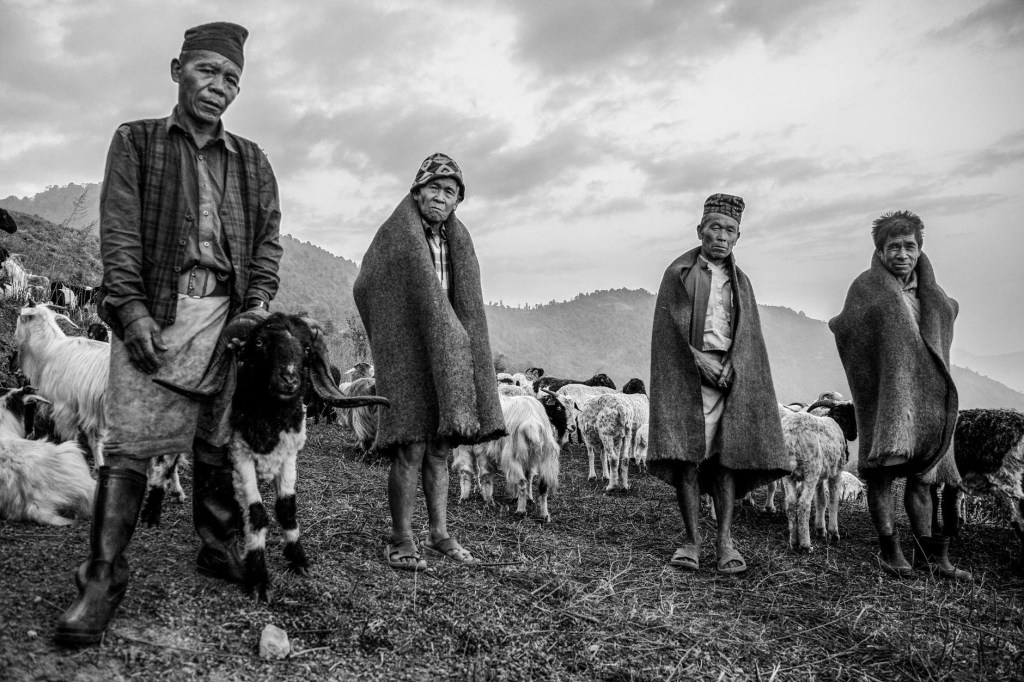
The shepherds are poles apart from some of the great players of the nativity story.
Their life is a far cry from the palace of Herod, from Caesar and the powers of the Roman occupation who move people from one place to another in a political game. They are far from the religious authorities who say one thing and do another. The shepherds work through the darkest hours, out in the open, religiously unclean, on the edge and out of sight, unimportant and disposable.
And yet, it’s to them that God first reveals the news of the birth of Jesus. Surely, knowing God, it’s not an indiscriminate, unplanned or impetuous decision. What does God see in the shepherds? Or rather, what is God trying to say, by choosing the shepherds first?
It’s not a question I am going to answer. But a question I leave with you—what is God saying by choosing those shepherds?
And what do the shepherds have to say? Once they’ve seen Jesus, they’re unable to keep quiet. It is the shepherds who perpetuate the rumours. They keep the message going, pass on the news. They fill the streets and the countryside with the gossip of God, their lives echo the promise of peace on earth.
Ah, peace. That antidote to distance and separation. Peace which tears down walls, and dares to reach out to others to bridge the gap that human self interest has created
So what could our prayer be for the year ahead? Well, first we need to look back at how things have been. What part have we played in the sins of society? How have we been part of the cogs of human industry that have caused disharmony and division, hatred and injustice?
If we are open and honest enough, each of us will realise that in some way we share some of the guilt of creating a world that is polarised.
Perhaps our prayer can be to begin to live in a gentler way. Gentler towards ourselves and those around us. Gentler to those with whom we disagree. Gentler towards those who are different from us.
St Teresa of Calcutta said, “Peace begins with a smile.” If we think this is too simplistic, then maybe we should try it and see how it goes.
Begin our conversations not with confrontation but with a smile. Because the beginnings of peace emanate from us. We can’t wholeheartedly expect world leaders to solve the disagreements and wars that exist between nations, if we can’t control our own personal squabbles and confrontations—if we can’t make peace where we are.
That’s what the Bible means by “charity begins at home.” That phrase is often taken by some to mean that we shouldn’t be worried about people and things out there, when we have problems of our own. What it really means is that love emanates from us, and—such as love is— it can’t be contained.
None of us is entirely powerless. We make choices every day for good or bad. So the question is—what will we do this year to bridge the gap, to bring peace, to reach out from one pole to the other? To fill the space that exists between one pole and another with love.
To discover Christ in the distance between us. To help create a world of justice, love and peace.
“It’s important to have those personal moments with God. To place ourselves into his hands, and trust in his promises away from the gaze of others, caught up in love of him and know that we are loved.” Today’s daily reflection.
BIBLE READINGS: You can find the readings for December 24 here (Universalis Website)
With the continued growth of the use of Social Media, every aspect of some people’s lives are constantly in the public sphere. They tell the world where they’ve been or where they’re going. They post photographs of what they’ve bought, or what they’d like. They broadcast what they think, who they like and what they disapprove of. Proud parents share cute pictures of every week, month or year of their children’s lives. In so many ways, our lives have become public property—which can can give some people a greater sense of worth but can also create great anxieties and tensions.
In today’s gospel, there is an intimate moment in the song of Zechariah where the new father turns to his son and speaks to him directly. All his hopes and dreams of the past are wrapped up in the child in his arms. Like any parent, he has great hopes for his child. But for him, it’s not a case of wishful thinking. It’s a hope born from faith, and from trusting the promises of God. Although we are given a glimpse into this moment, we do so tenderly.
As members of the church, our lives are interconnected. We are united in Christ, called together to proclaim the good news of Jesus in word and action. But each of us, too, has an intimate relationship with God which is nurtured in our own private space through prayer. It’s important to have those personal moments with God. To place ourselves into his hands, and trust in his promises away from the gaze of others, caught up in love of him and know that we are loved.
MASS TODAY
Mass today on Wednesday 24 December is at S Paul’s at 10 am S Mary’s at 11am
DAY BY DAY
If you’d like more resources for daily prayer then check out our DAY BY DAY pages.
What’s in a name? In today’s gospel reflection from the daily Mass, we look into Zechariah’s predicament, dumbstruck in disbelief!
BIBLE READINGS: You can find the readings for Friday of the December 23 here (Universalis Website)
The UK has no comprehensive list of banned names. However, according to the UK Deed Poll Office, there are some restrictions including Offensive language, explicit or sexually suggestive names, or names that have the potential to cause harm or ridicule, or names that could mislead, such as king, queen or doctor. Examples of names which have been rejected in recent times in the UK include Cyanide, Martian, King and Rogue. Whilst in France, one family were unable to call their baby Nutella.
Perhaps it puts Zechariah’s predicament into perspective. To call his son John may seem a rather harmless thing to do—even though he was breaking the tradition of naming a baby from amongst a pool of family names. Yet, this is not the only surprising thing about John—for his birth is out of the ordinary, especially considering Elizabeth’s advanced age. It is so unexpected and miraculous that Zechariah doubts the angel’s message and so he is struck dumb until the day he announces his child’s name. Meanwhile, the people are left to wonder what this child will be. In years to come, their wondering will be realised when John becomes the Baptist, the one who prepares the way of Jesus, calling them to turn their lives around.
At Christmas, we celebrate the birth of Jesus, a name which means, “He who saves.” Like John the Baptist, his name is God given, all part of God’s design to save us. God knows us by name. Jesus, who is the Christ, calls us to himself. With him, we are able to call God our Father, adopting the family name of Christian and rejoicing in his saving love.
MASS TODAY
Mass today on Monday 23 December is at S Mary’s at 630pm
DAY BY DAY
If you’d like more resources for daily prayer then check out our DAY BY DAY pages.
“Discipleship may be difficult, but none of us is in this alone. We receive guidance and inspiration from one another. We are reminded of this every time we sing or say the Magnificat, the Song of Mary.” Today’s reflection from the daily Mass.
BIBLE READINGS: You can find the readings for Friday of the December 22 here (Universalis Website)
In the movie, Joy Ride, starring Olivia Coleman, Joy is travelling to her sister so she can hand over her new born child whom she doesn’t want. Along the way, her taxi gets stolen by a young boy called Mully who is on the run from his uncaring dad following the death of his mother.
Joy has no connection with her baby, and doesn’t want to begin one. As they embark upon a road trip together, Mully is the one who helps Joy. After helping to take care of his own sister’s child, he teaches Joy how to care for a baby including how to change nappies and breast feed.
The readings today are full of the news of motherhood. One from the Old Testament and one from the New. Both pregnancies are unexpected. When Mary receives the news that she is to be the mother of Jesus, her mind returns to others she has known—if not in person, then certainly from within the long tradition of Gods people. Perhaps she can see some parallels in her own life with that of Hannah. A miraculous pregnancy accepted as a gift from God followed by so much praise and thanksgiving for all that God is doing.
Hannah and Mary and every other mother will no doubt have received some help and guidance from those around them—particularly those who have known how to care for a newborn child. Likewise, as we follow Jesus, and give him the attention and love he desires, we are also upheld by the the presence and support of others around us. We stand in the long tradition of those who have gone before us—the Communion of Saints which consists of the living and departed. Discipleship may be difficult, but none of us is in this alone. We receive guidance and inspiration from one another. We are reminded of this every time we sing or say the Magnificat, the Song of Mary. Although her vocation is unique, we are all called to be Christ bearers. Sometimes, we may just need a little help.
MASS TODAY
Mass today on Monday 22 December is at S Dyfrig and S Samson at 630pm
DAY BY DAY
If you’d like more resources for daily prayer then check out our DAY BY DAY pages.
In today’s reflection on the daily mass readings, Fr Richard considers how God is always calling us to new adventures in his service, and never to stand still
Readings for 20 December: Isaiah 7.10-14; Psalm 24.1-2, 3-4, 5-6; Luke 1.26-38. Text of readings can be found here.
For many of us, the approach of Christmas represents a furious round of activity, with attendance at carol services and parties, Christmas shopping, present wrapping and more besides. Indeed, the busy-ness seems to have been ongoing since mid-November, or even earlier. We might be forgiven for looking forward to the days after Christmas, when we can relax a bit, go for a walk, watch TV and feast on turkey sandwiches!
As much as we might be relishing the prospect of a rest, our readings today remind us that God is continually calling us to act, to take part in his work of renewing the world, and to embark on new adventures in his name. In the reading from Isaiah, God calls Ahaz to act – to ask him for a sign of God’s providence towards the nation of Judah. Ahaz refuses the invitation, so God acts anyway – giving the sign of a virgin conceiving and bearing a son who will be called Emmanuel.
In the famous Gospel reading of the Annunciation, God through the angel calls Mary to co-operate in his plan for the salvation of the world. She is invited to embark on the incredible adventure of becoming the mother of his only Son. Despite the uncertainties, unlike Ahaz she accepts the invitation without hesitation.
Perhaps we will have the chance to stand still for a while after Christmas. But God never calls us to stand still in our life of discipleship. As with Ahaz, as with Mary, he is continually inviting us to do something new in his service, to make our contribution to advancing his kingdom here on earth. As we prepare once again to celebrate the joy of the Saviour’s birth, let us also pray for the grace and courage to say “yes” to God and willingly go where he is leading us.
Mass today is at 11.30am in St Mary’s.
If you’d like more resources for daily prayer then check out our Day By Day pages.
In today’s reflection on the daily mass readings, Fr Richard considers how God so often uses something which seems ordinary – such as the birth of a child – to achieve something amazing.
Readings for 19 December: Judges 13.2-7, 24-25; Psalm 71.3-4, 5-6, 16-17; Luke 1.5-25. Text of readings can be found here.
The news that a baby is on the way can generate a whole range of emotions for the family concerned. Joy and excitement will surely be common reactions, as everyone eagerly looks forward to the tiny new human, that bundle of cuteness, arriving on the scene. Added to this there might be surprise, if the pregnancy was not planned; there also may be a degree of worry or concern if finances are tight, or previous pregnancies have been difficult. And then of course everyone will wonder what will become of this new addition as he or she grows up and makes their way in the world.
The arrival of a new child is at the same time routine (there are 4.3 births per second throughout the world), and incredibly special. It is striking how often in the Bible God uses such an event to further his purposes. Today we hear of two such instances – the announcement of the birth of Samson to Zorah and his wife, and that of John the Baptist to Zechariah and Elizabeth. To these we could add the births of Isaac, Samuel, and of course that of Jesus, to which our readings today are looking forward.
God deliberately chooses such an ordinary yet also extraordinary event to remind us of a very important truth. We might think of ourselves, our lives, our churches and communities as fairly ordinary, nothing that exceptional. In reality, of course, we are all exceptional because we are unique, and created in God’s image. Yet just as he works in and through the seemingly ordinary event of childbirth (albeit adding unique and even miraculous elements), so he can work through us, and our situations, ordinary as they might seem to us, but extraordinary and special as they are to him.
Mass today (Friday 19 December) is in St Saviour’s, Splott at 10am
If you’d like more resources for daily prayer then check out our Day By Day pages.
In today’s reflection on the daily mass readings, Fr Richard considers how God’s hope is often revealed through difficulty and trials, rather than perfection
Readings for 18 December: Jeremiah 23.5-8; Psalm 72.1-2, 12-13, 18-19; Matthew 1.18-24. Text of readings can be found here.
You can blame it on Christmas movies, the John Lewis TV advert, scenes on Christmas cards and chocolate boxes, and nowadays social media as well. There is an image in the public mind of what constitutes the perfect Christmas: the turkey perfectly cooked with all the trimmings; the tree looking immaculate with beautifully wrapped presents beneath; and the house full of happy and harmonious family members. Often, the truth can be a long way short of this, and we have all heard of (or experienced) a Christmas that’s less than perfect.
In our readings today we see a God who is not concerned with a chocolate-box image of perfection. Indeed, it seems that it is disaster, difficulty and vulnerability that God prefers to work through in order to show forth his hope. Jeremiah was writing to a people whose very nation had been destroyed; Israel had been conquered and the people sent off into exile in a foreign land. Yet out of these ashes God promises to raise up “a virtuous branch for David”, a king who will rule with integrity, and restore the nation.
In the Gospel, God is working out his purposes for the salvation of all through an ordinary, lowly family, the couple’s very relationship threatened by this unexpected pregnancy. It is through these less-than-perfect circumstances that God enters into our less-than-perfect world, in order to draw it back to him.
As Christmas approaches, with all its expectations, let us be on the lookout for God’s hope manifesting itself through the struggles, the disappointments and the difficulties – for that is where his hope is most often to be found.
Mass today (Thursday 18 December) is at 10am in St Dyfrig & St Samson, Grangetown.
If you’d like more resources for daily prayer then check out our Day By Day pages.
In today’s reflection on the daily mass readings, Fr Richard considers what it means truly to accept God’s way for our lives.
Readings for Tuesday of the third week of Advent: Zephaniah 3.1-2, 9-13; Psalm 34.2-3, 6-7, 17-18, 19, 23; Matthew 21.28-32. Text of readings can be found here.
One of the many banes of modern life is having to scroll through pages and pages of terms and conditions before signing up to some service or other, then ticking the box which says “I Agree” right at the end. Which person actually reads (or could understand) every word before agreeing? Most of the time this has no consequences, but occasionally we might come a cropper for some reason, and the reply from officialdom would be “well, it was in the terms and conditions you agreed to”!
Our readings today highlight this difference between blithely agreeing to something, and understanding deep within ourselves the implications of that decision. In our first reading tonight we have the first two verses from Zephaniah chapter 3, then a gap, followed by five more verses. In the first part, God is condemning the people for their rebellion and lack of trust in him. Outwardly they claimed to be his people, but their lives did not match this rhetoric. They had clicked “I agree” without understanding what that meant in practice. In the second part of the reading, however, God promises to purify the people, to bring about a conversion of hearts and minds.
A similar theme is present in today’s Gospel. Jesus uses the parable of the two sons to illustrate the contrast between the chief priests and the elders, those who claim to be true followers of God, and the tax collectors and prostitutes. The former show by their attitude that they haven’t really understood what God demands. The latter, though their lives might be outwardly chaotic, have understood and are making that inner conversion. That is what we are all called to. It is the harder way than simply ticking “I agree”, but God promises to accompany us on that journey, and help us.
Mass today (Tuesday 16 December) is at 6.30pm in St Mary’s, Butetown.
If you’d like more resources for daily prayer then check out our Day By Day pages.






 South Cardiff Ministry Area