We can all view the same situation in different ways. As Christians we are called to look upon all people – including refugees – with the eyes of love, compassion and hospitality. Fr Richard reflects on today’s readings from Mass.
Readings for Friday of week 11 of ordinary time can be found here.
Have you ever seen one of those optical illusions where one picture contains two different images at the same time? At first glance, you may think it is a picture of an ornate white vase; but look again and you can also see the outline of two faces in shadow looking at each other. Another one might look initially like a duck with a long beak; or seen in a different way, a rabbit with long ears! Often in life, how we view a situation will depend on the eyes, or the attitude that we bring to it.
Athaliah the queen mother of Israel sees her infant grandson Joash as a rival in her bid for power. To her, he is not a beloved relative but a problem to be eliminated. She would rather that he be killed along with the rest of the royal family. Joash’s aunt, Jehosheba, sees him through quite different eyes. To her he is a vulnerable child, the heir to the throne, and someone who must be protected. She hides Joash away in the Temple. Fittingly for this week, Joash becomes a refugee in his own country, his safety dependent on the love, courage, and hospitality of another. Throughout this week, as we have reflected on the daily Mass readings in the light of Refugee Week, an important theme has emerged: how do we see refugees? With what eyes do we view them? Are they a political football, to be used to score points in our ever more divisive national debates? Are they a problem to be gotten rid of? Or do we view them as human beings, as Jehosheba did with Joash, who need love, support, and a safe place in which to live? The latter is surely the attitude of organisations such as Oasis whom we pray for in our Mass intention today.
Jesus says “the eye is the lamp of the body … if your eye is healthy, your whole body will be full of light, but if your eye is bad, your whole body will be full of darkness.” How we view others not only affects them, important as that is. It also says something fundamental about ourselves. Are we full of light or full of darkness in the way we look upon the most vulnerable in our world?
Mass today is in St Saviour’s at 10am.
If you’d like more resources for daily prayer, check out our Day By Day pages.
The Lord’s Prayer contains some of the most radical lines in any prayer. Yet it is not just a formula of words to be recited, but also a call to action to transform the world. Fr Richard reflects on today’s readings from Mass.
Readings for Thursday of week 11 of ordinary time can be found here.
Imagine that a community decides to build a new playground for children. Many meetings are held to discuss the location, the facilities, how the money will be raised, and who will do the work. And then … nothing actually happens. So much talk, and no action. Everyone would be left feeling very frustrated and disappointed. However, if after all those meetings and discussion, everyone got on and built a splendid playground, the feeling instead would be one of accomplishment and satisfaction.
In today’s Gospel, Jesus gives his followers a formula of words to say when they pray. No doubt several sermons could be preached on every line of the Lord’s Prayer, but there is one part which is striking because it is so radical, even revolutionary. “Your kingdom come, your will be done, on earth as in heaven” is calling for nothing less than the transformation of this world into the life of heaven. This means the removal of everything from our present world which is contrary to the will of God – no more war, hatred, violence or suffering. We may say these words several times every day, but how do we move from words to action, like our imaginary team building that playground? How do we build God’s kingdom on earth?
Our first reading reminds us of those great figures from the Old Testament, Elijah and Elisha, who were never afraid to speak the truth to power when God’s values and kingdom were being violated by kings and rulers. Christians today are called to follow in that great tradition, inspired by our daily reciting of the Lord’s Prayer. We are called not only to speak out when refugees are treated inhumanely, but also to build that world where no-one needs to become a refugee in the first place, a world where justice and peace prevail for everyone. This requires action, but action that must be fully rooted and steeped in prayer.
Mass today is in St Dyfrig and St Samson at 10am.
If you’d like more resources for daily prayer, then check out our Day By Day pages.
Many people are not remembered in the pages of history, especially refugees who have died seeking safety far from home. However, God knows and loves everyone; our love should extend as far as his does. Fr Richard reflects on today’s readings from Mass.
Readings for Tuesday of week 11 of ordinary time can be found here.
In recent years there’s been a growing interest in oral history projects. This is where historians sit down with a tape recorder (or nowadays a mobile phone) and listen to the stories of ordinary people – soldiers, miners, factory workers, dinner ladies, shopkeepers and countless others. These are people whose name would never normally have been recorded by history, whose lives would never have been noticed. Yet oral historians recognise that history is not only made by the powerful and famous. Everyone’s story is important and deserves to be heard.
The name of Naboth would never normally have been remembered. He was not rich, influential or powerful. The ones who wielded power in the land, King Ahab and Queen Jezebel, had Naboth killed so they could steal his vineyard. They assumed he would soon be forgotten. Yet God knew who Naboth was, God remembered him and loved him. And so he sends the prophet Elijah to confront the king over what he had done. Jesus’ command to “love your enemies” comes from the idea that every life matters. It can be all too easy to divide up the world into those who are like us, deserving of our love, and those who are not. For Jesus, our circle of love extends far beyond those we know to embrace everyone, everywhere.
Many refugees who die in the process of fleeing war, persecution or terror will never be remembered by history. They may not even have a grave, and their families might not know what happened to them. But the God who remembered Naboth and was angered by his death, remembers and loves them all. In this Requiem Mass we claim that love for those who have died as refugees. We protest at a world that divides people up into those worthy of love and those not, a world that views some lives as expendable. And we pledge to extend our circle of love beyond those we know or who are like us, to all those forgotten by history but whose lives and stories are imprinted on the heart of God.
Mass today is in St Mary’s at 6.30pm.
If you’d like more resources for daily prayer, check out our Day By Day pages.
Often in our world the rights of ordinary people get trampled over by the rich and powerful. Jesus shows us a radically different way to treat others. Fr Richard reflects on today’s readings from Mass.
Readings for Monday of the 11th week of ordinary time can be found here.
A priest friend of mine once experienced a burglary at the vicarage. The police called to examine the scene and went from room to room. One of the officers said to him “my goodness they’ve made a right mess of the study”, to which my friend, never the tidiest of people replied, “no, this is exactly how I left it”! Luckily I’ve never been burgled but if you have, or have had anything stolen, you will know the sense of violation that comes with it. Often people say it is the sentimental value of things stolen that saddens them the most. It is as though a part of their history has been taken; the thief shows a lack of respect for this, and by extension to the owner themselves.
In our first reading Ahab the king of Israel wants something that someone else owns – Naboth’s vineyard. As with an item of sentimental value, Naboth doesn’t want to let go of the vineyard, which he calls “the inheritance of my fathers”. The vineyard is more than an asset: it represents Naboth’s heritage and family history. But this matters little to Ahab’s wife Jezebel, who arranges to have Naboth killed so Ahab may have the vineyard. She has no respect for Naboth’s heritage, or even his very life. These are things she is willing to trample over in order to get her way. In the Gospel Jesus presents a radically different way of dealing with people. Even the one who has wronged us should be treated with respect, the respect due to every human being, rather than be crushed in our desire for revenge.
Very often, refugees are treated as less than human. They are the collateral damage of someone else’s war, a source of income for people traffickers, or the football of domestic political debates. Yet like Naboth they all have a history, a heritage, and something important to contribute to the places where they end up. This week let us pray for the grace to build communities where every person is valued, every story is listened to, and God’s justice and mercy can flourish.
Mass today is in St Dyfrig & St Samson at 6.30pm.
If you’d like more resources for daily prayer, check out our Day By Day pages.
A cursory glance at this weeks Top 40 Uk singles gives several song titles which include the word love, particularly the number one single by Ariana Grande “I hate that I made you love me.” Love in all its forms is something so often used by songwriters. And you’d expect the church to be no different! Some of our favourite hymns like “Love divine, all lives excelling,” or “Love that wilt not let me go,” are just a few which come to mind straightaway. In the Bible, the word “love” features hundreds of times, and our readings today are no different— both from the Book of Deuteronomy and the first Letter of John: “God so loved the word that he gave us his only begotten Son.”
John tells us that “love is from God,” and today as we celebrate the feast of the Sacred Heart, we give thanks for the love of God in Christ. It was the Medieval Mystics who fostered devotion in the Sacred Heart as they contemplated God’s love. God loved us first, and it is in that love, that we live and grow. It shapes and fashions us, changes us, transforms us. We love because we have been loved.
In a world where hatred can so easily be sown, and where division exists between so many different groups of people and between whole nations, we pray that the love of God in Christ will so transform us, that we will love one another, a love which can transform, and shine through the world like the rising dawn.
Mass today is in S Saviour’s at 10am
If you’d like more resources for daily prayer then check out our Day By Day pages.
In his book, The God of Surprises, Fr Gerard Hughes provides a number of questions and reflections at the end of each chapter. One of them was to write your own eulogy. Not what someone might say about you—but what you, in your wildest dreams, hoped might be said about you by the end of your life. It is a sobering and very profound activity, inviting us to look back at our life and stirring us to reach for the goals and achievements we had thought about.
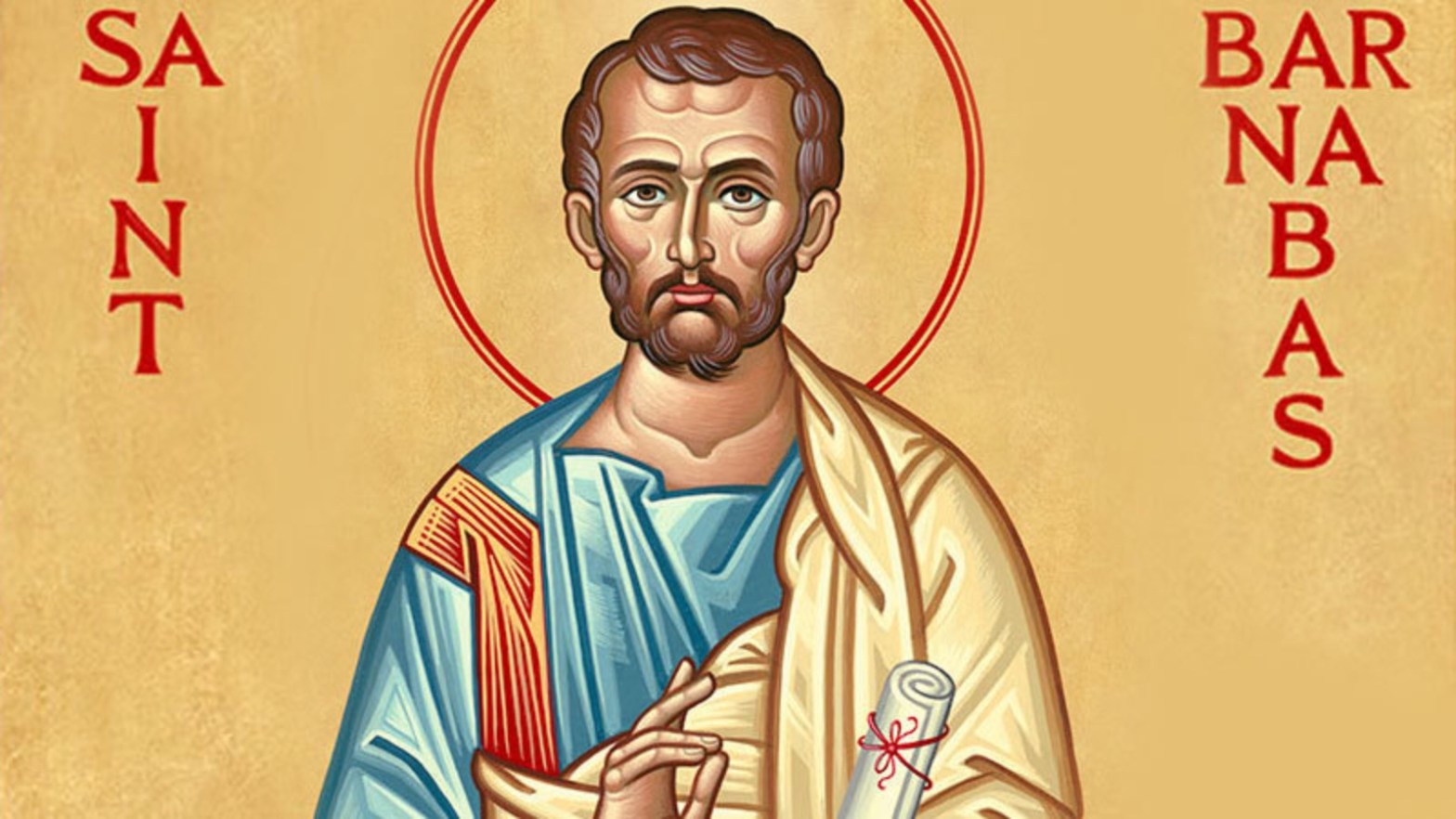
Today, as we celebrate the memorial of St Barnabas, his whole life is summed up in in the Acts of the Apostles in one sentence: “He was a good man, full of the Holy Spirit and of faith.” Barnabas eventually became a companion of Paul, spending time with him in Antioch, where followers of Jesus first became known as Christians, and joining him on his missionary journeys.
How would you like to be remembered? As someone who liked to play Bingo, or have a good laugh? Someone who partied or enjoyed shopping? Someone who had a good sense of humour, enjoyed football, was straight talking, hard working or “quite a character?” Some of these things may go a little way to describe some people, and there is nothing wrong with any of it. Or we could be remembered—as St Barnabas was—as “a good person, full of the Holy Spirit and of faith.” Of course, that would take a different shape in each of our lives, depending on our circumstances and what God is asking of us. But perhaps today’s memorial can stir us to look at our own lives and the impact we make upon the world, considering what it means to be “a good person, full of the Holy Spirit and of faith.”
Mass today is in Ss Dyfrig and Samson at 10am
If you’d like more resources for daily prayer then check out our Day By Day pages.
Connecting you to the churches of South Cardiff Ministry Area across Butetown, Grangetown and Splott.
Our vision is to be a creative and resourceful community which is welcoming, faithful and just!
This Week!
Refugee Week is on the horizon and there are plenty of activities and events taking place across our ministry area. We’re also celebrating the Great Get Together in memory of Jo Cox, and three of our schools are hosting Global Picnics.
There’s also advance notice of our ministry area annual vestry meeting which is taking place at the end of June, an important meeting in the life of our churches.
Refugee Week
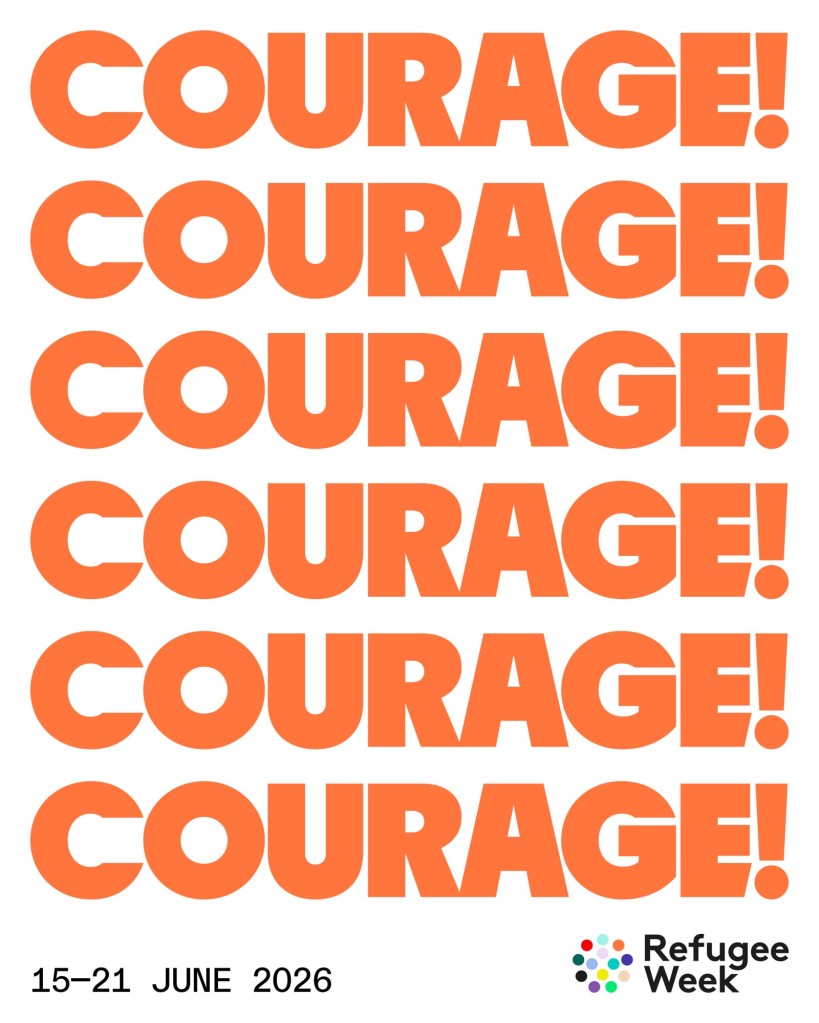
This year’s theme is COURAGE!
Here is the full programme of what’s going on … everyone is welcome to everything!
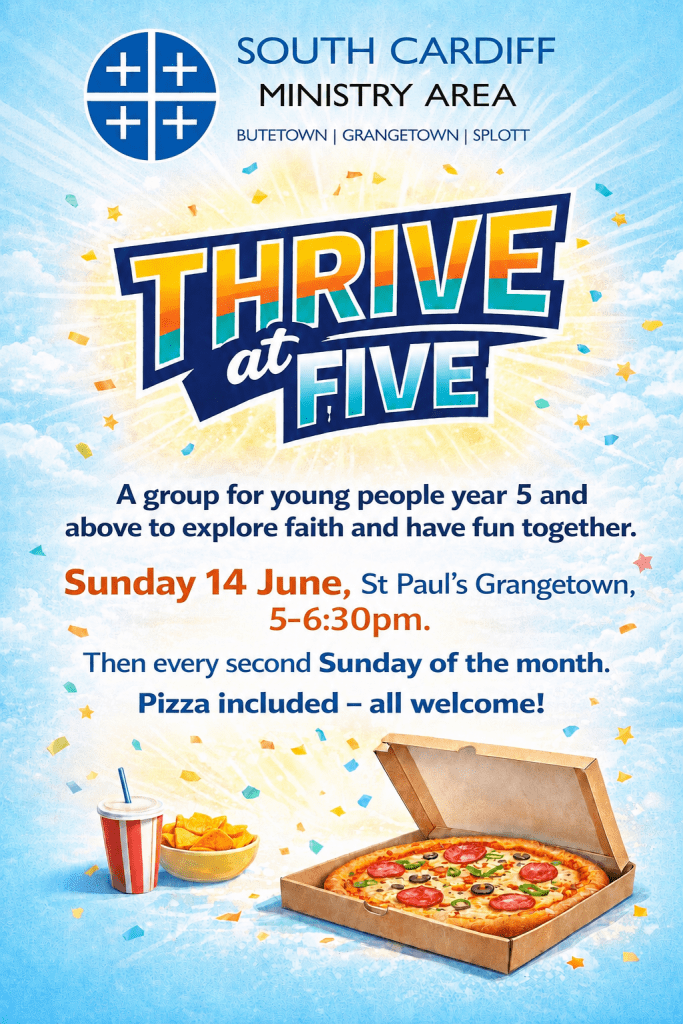
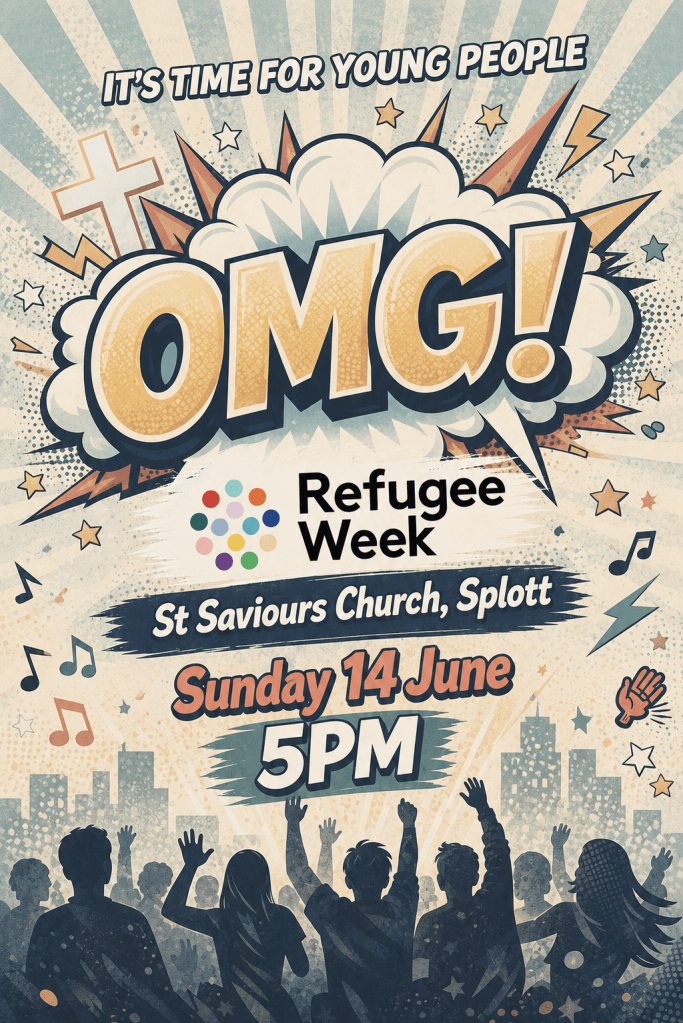
Sunday 14 June – Ice Cream Sunday. All are welcome to join us after Mass for ice cream. Also today OMG! at St Saviour’s and Thrive at Five at St Paul’s (both at 5pm) will have a Refugee Week focus.
Monday 15 June – Film Festival, 7pm at Ss Dyfrig & Samson. Join us for snacks after the 6.30pm Mass while we watch a few short films (each a few minutes long) as part of the Refugee Week Film Festival.
Tuesday 16 June – Global Picnic 3.15pm, Moorland Primary School. We’ll be joining Moorland Primary School for their picnic at the end of the school day.
Tuesday 16 June – Requiem Mass, 6.30pm in St Mary’s. We will remember all those who have lost their lives seeking refuge.
Wednesday 17 June – School Mass, 10am in St Paul’s & 11am in St Mary’s. Our schools Masses this week will have a special Refugee Week theme.
Wednesday 17 June – Croeso Butetown, 6.30pm in St Mary’s. We’re inviting any stakeholders or interested parties to a conversation about releasing funds to support small projects that make a difference to the community – all welcome!
Thursday 18 June – Global Picnic as part of the Great Get Together hosted by St Paul’s School, 1.30pm in Grange Gardens. Another opportunity to come together to share food and fellowship.
Friday 19 June – Global Picnic at St Mary’s School, 3.15pm. Also part of the Great Get Together, do come and join us at St Mary’s School for what is always a lovely occasion.
Sunday 21 June – Great Get Together Barbecue, St Mary’s. To round off the week and to celebrate Sanctuary Sunday, there will be a barbecue at St Mary’s following the 11am Sung Mass. Vegetarian and Halal options will be available – all welcome.
Our normal rhythm of worship continues with Mass celebrated every day across the ministry area. During Refugee Week will be offering mass for the following intentions:
Monday 15 June, Ss Dyfrig & Samson at 6.30pm – Thanksgiving for the contribution made by refugees to our country, and all participating in Refugee Week.
Tuesday 16 June, St Mary’s at 6.00pm – For all refugees who have died seeking safety and sactuary.
Wednesday 17 June, St Paul’s at 10am and St Mary’s at 11am – That we may welcome all who seek safety and sanctuary in our community and country.
Thursday 18 June, Ss Dyfrig & Samson at 10am – For leaders, politicians and governments making decisions which effect the lives of refugees; for peace and stability thoughout the world.
Friday 19 June, St Saviour’s at 10am – For Oasis in Splott, and all other organisations in Cardiff that support refugees.
Saturday 20 June, St Mary’s at 11.30am – For all involved in the Great Get Together, and for community cohesion and unity.
As well as Refugee Week, we’re also celebrating the Great Get Together which this year is the tenth anniversary of Jo Cox’s Death, and so the Great Together will be particularly special.
Yes, it’s that time again. Thrive at Five is St Paul’s event for young people and this month will help kickstart our Refugee Week celebrations!
OMG!
At St Saviour’s, we also have a Refugee Week event for young people at the same time! The food this month is delicious fruit kebabs (and maybe a few marshmallows!)
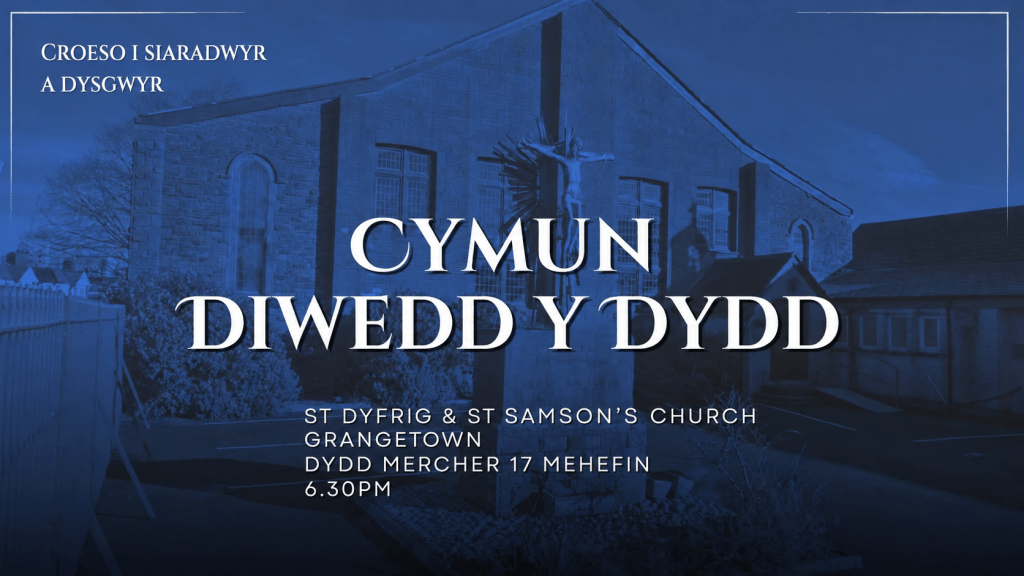
Cymun Diwedd y Dydd – Mass in Welsh
Our next celebration of Mass in Welsh is taking place on Wednesday 17 March at 6.30pm in Ss Dyfrig & Samson – all are welcome, from learners to fluent speakers.
Ministry Area Vestry Meeting
The Annual Vestry Meeting is the AGM of our ministry area. At this meeting, the annual accounts are presented, a report is given of the past year, and officers and ministry area council members are elected for the coming year.
This year’s meeting is taking place in St Mary’s Church on Tuesday 30 June, following the 6.30pm Mass. All parishioners of our ministry area are welcome to attend.
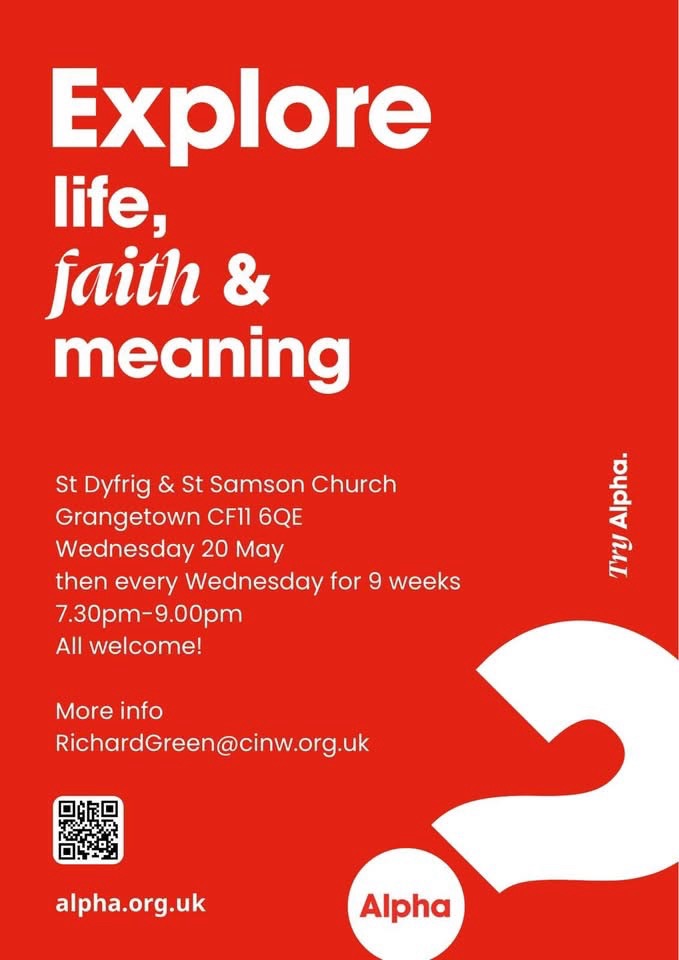
Alpha comes to Grangetown
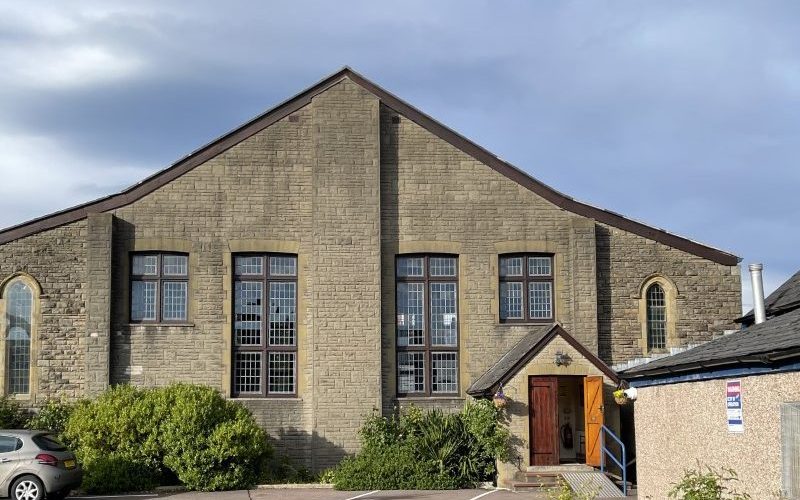
A course for anyone interested in the big questions in life! Join us every Wednesday at Ss Dyfrig and Samson, every week from 7.30pm – 9pm
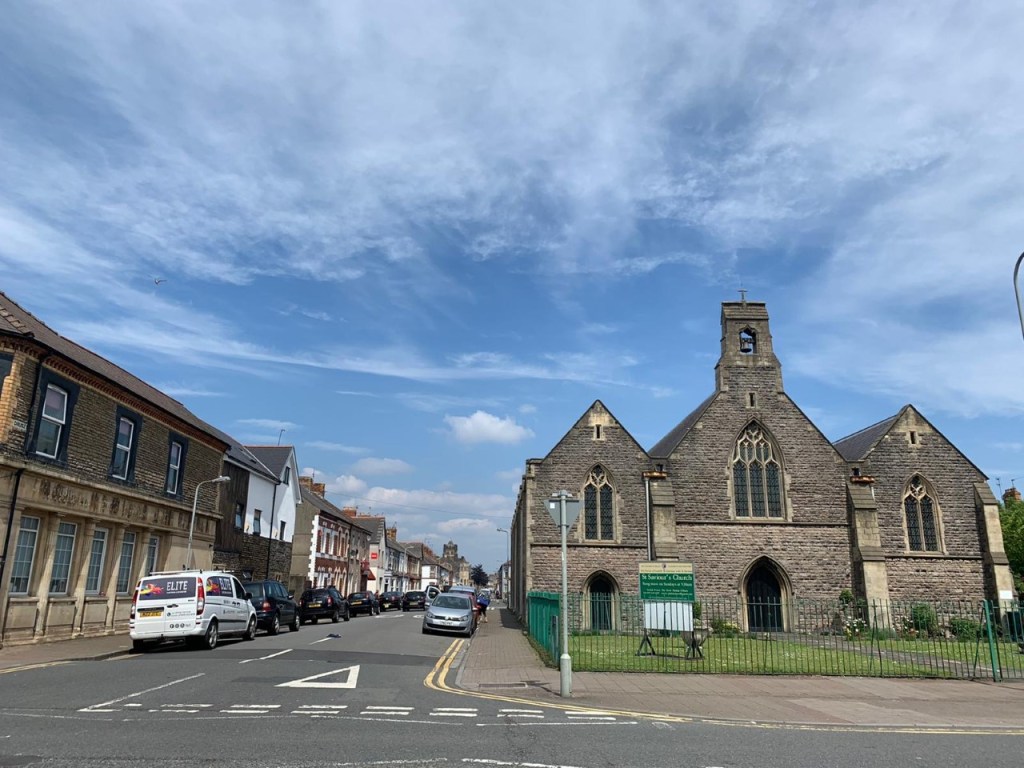
St Saviour’s Community Consultation
A few weeks ago, we announced some exciting news for St Saviours and Splott, as we work together with Splott Community Volunteers.
We are now beginning our community consultation. This will take many forms but there will be one such session where you can meet with our architects and share some of your hopes, dreams and ambitions for St Saviours and what is needed in our community.
There will be more news soon but, in the meantime, put the date in your diary for a drop in session at St Saviours on Wednesday June 24th between 4 and 6pmI
If you missed the announcement, you can find it here
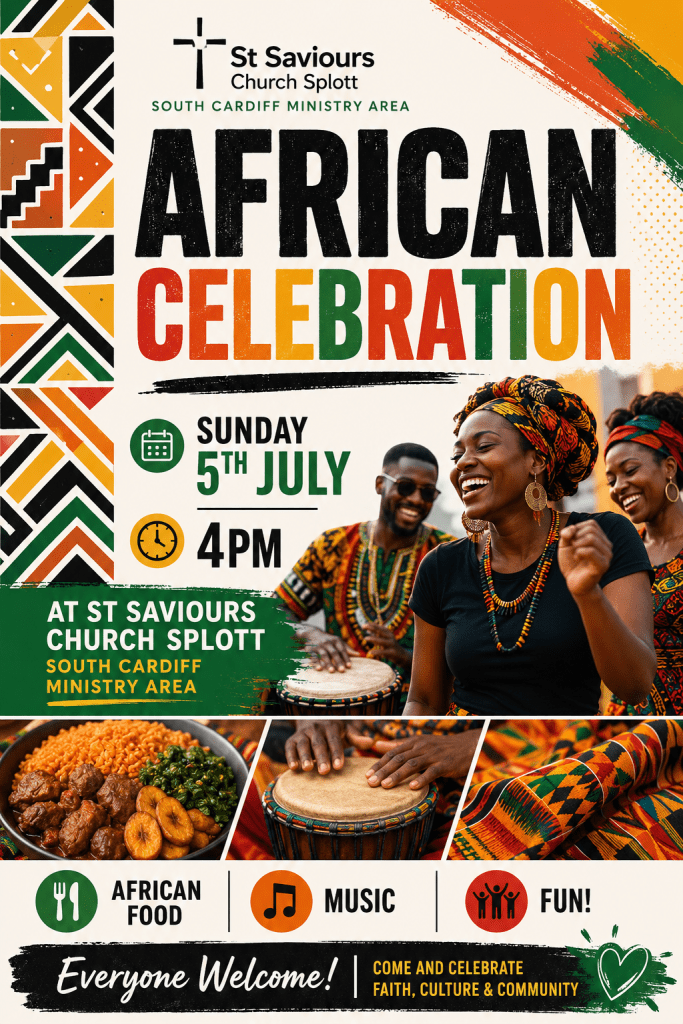
Put the date in your diary! An African celebration at St Saviour’s Church on July 5th, organised by our wonderful Nigerian families!
Grangetown Consultation
St Paul’s and St Dyfrig & St Samson’s churches in Grangetown are working together to understand what really matters to our community.
A short survey (about 5 minutes) is available and will help us learn how we can serve and support our neighbourhood better.
You can fill in the survey anonymously or leave your details so we can contact you to follow up on your ideas. Your data will not be shared with anyone else and will be deleted after 12 months.
The incredible range of activities that you read about in this bulletin, together with our regular round of services and ministry, is only possible thanks to the generosity of those who give financially to our churches.
We are grateful for all your support. If you don’t yet give, then we invite you to consider signing up to the Gift Direct scheme. This acts like a direct debit from your bank account every month, so that you can decided a regular sum to give. To start giving this way, click the link below. On the Gift Direct webpage, on the Beneficiary drop down menu, search for South Cardiff Ministry Area, then select the church you would like to support. Fill out your details on the online form, and the rest will be taken care of for you!
We also invite those who give regularly to review your level of giving. We are conscious that the cost of living is increasing, but this means that our costs are rising too! Once again, we are grateful for everyone’s generosity.
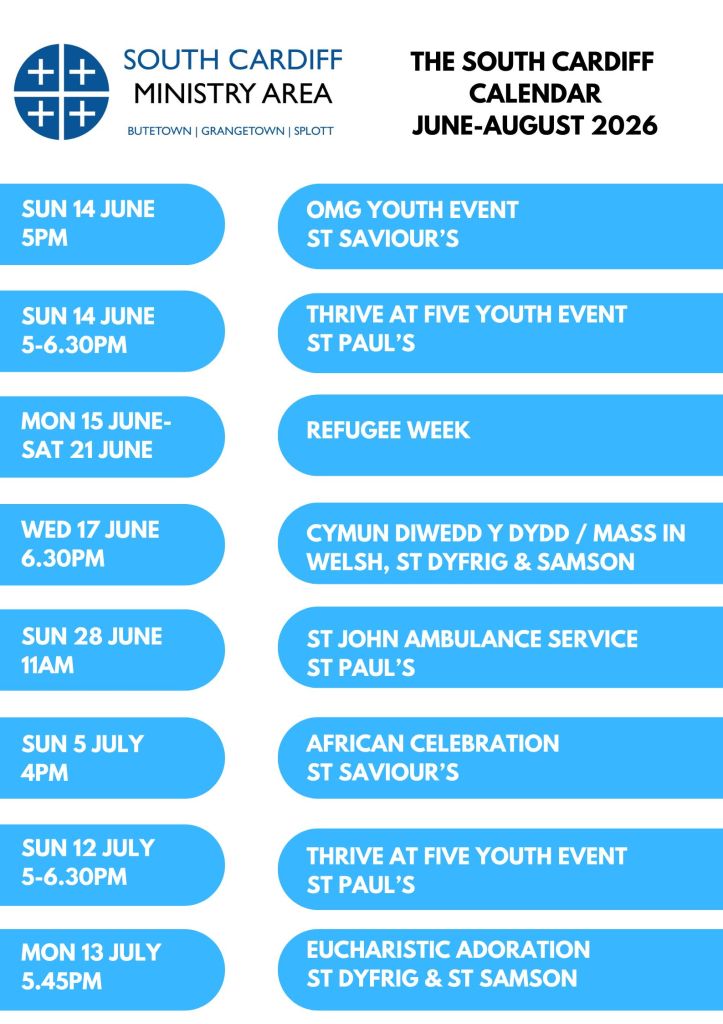
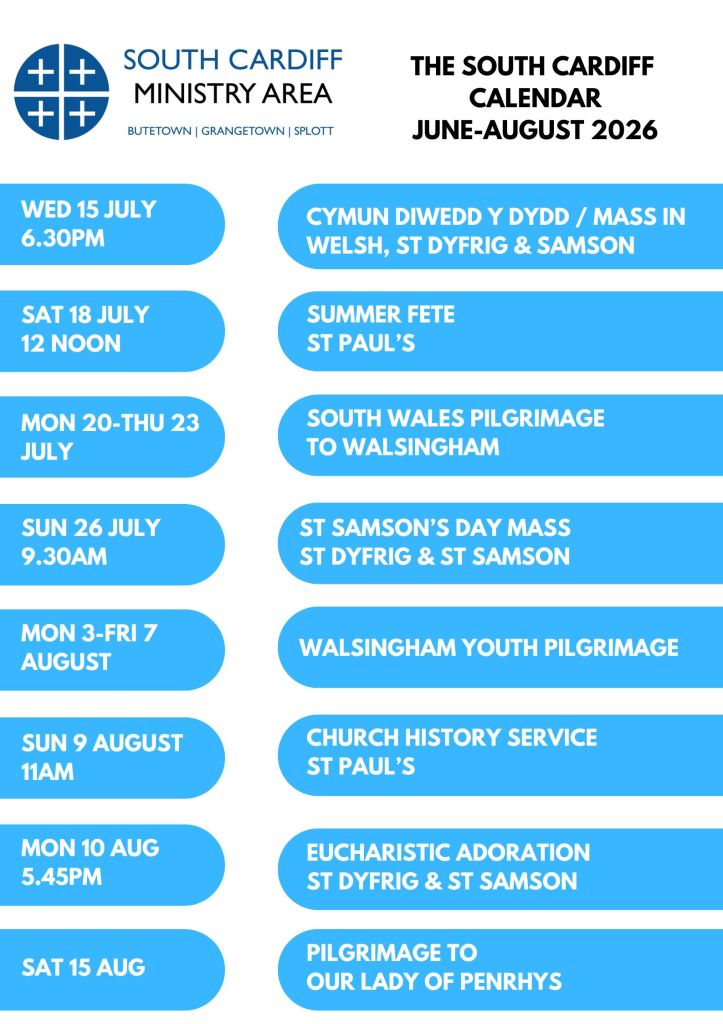
Dates for your diary
Here is a new-look South Cardiff Calendar, with details of lots of upcoming events and activities across our Ministry Area. Make sure you put everything down in your diary so that you don’t miss anything!
There will be more details about these events in future editions of Connect.
Young people aged 11-18 are invited to join us for the Walsingham Youth Pilgrimage from 3-7 August.
Around 500 young people from all over the UK camp in a field just outside the village of Walsingham. Worship takes place in a large marquee led by the excellent worship band CJM. There are also lots of different activities for young people to take part in during the week.
As part of the Welsh camp, all tents are provided and you will be fully catered for. All you need to bring is a sleeping bag, air bed, clothes and toiletries. For more information, please contact Fr Richard and also take a look at the link below to find out more.
Mass is celebrated each day across our churches. Here’s our pattern of prayer for the week ahead.
Thursday 11 June| St Barnabas, Apostle (Feast)
10.00am:  Mass at Ss Dyfrig and Samson

Friday 12 June | The Most Sacred Heart of Jesus (Solemnity)
10.00am: Mass at St Saviour’s

Saturday 13 June | St Anthony of Padua, Doctor
10.50am: Morning Prayer at St Mary's followed by
11.00am: Rosary with prayer for the Ministry Area
11.30am: Mass
12 noon: Sacrament of Reconciliation (Confession)

Sunday 14 June | 11th Sunday in Ordinary Time
9.30am:  Sung Mass at Ss Dyfrig & Samson
9.30am:  Sung Mass at St Saviour’s
11.00am: Sung Mass at St Paul's
11.00am: Solemn Mass at St Mary's

Monday 15 June | of the 11th Week in Ordinary Time
6.30pm:   Mass at Ss Dyfrig & Samson

Tuesday 16 June | of the 11th week of Ordinary Time
6.30pm:  Mass at St Mary’s

Wednesday 17 June | of the 11th Week in Ordinary Time
10.00am: Mass at St Paul's with St Paul's School
11.00am: Mass at St Mary's with St Mary's School
6.30pm:  Mass in Welsh at Ss Dyfrig & Samson
You can discover more about our regular pattern of worship through the week at
“Darkness cannot drive out darkness.” Fr Dean reflects on today’s readings from Mass.
Readings for Tuesday of the 10th week of ordinary time can be found here.
Martin Luther King famously said, “Darkness cannot drive out darkness: only light can do that. Hate cannot drive out hate: only love can do that.” The symbolism of light is well used in all areas of life. Plato said, “We can easily forgive a child who is afraid of the dark; the real tragedy of life is when men are afraid of the light.” It is, of course, an image which Jesus used often himself, when he referred to himself as The Light of the World, and the prologue to John’s gospel is washed in light.
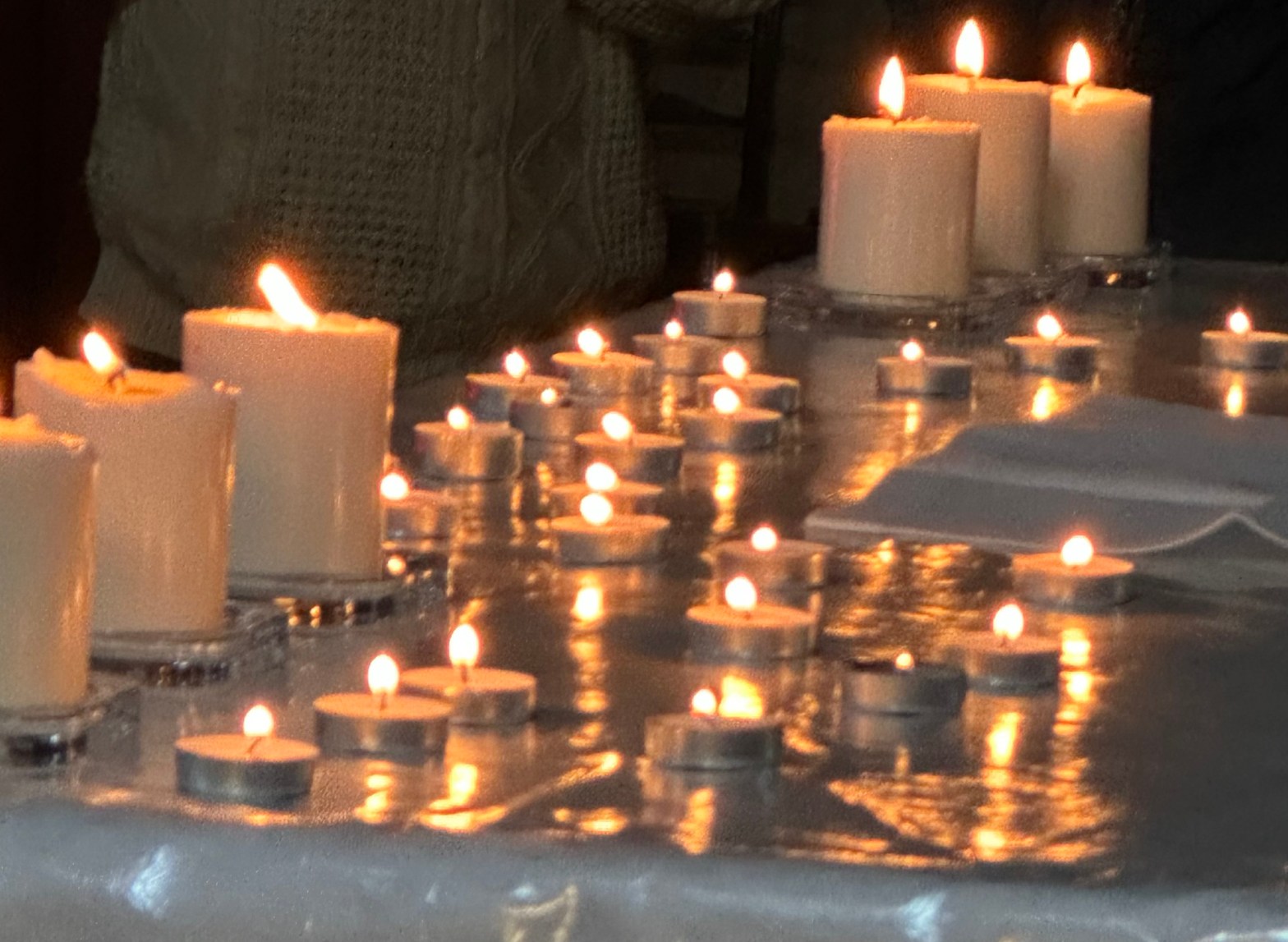
In the gospel reading today, Jesus turns the image on us, his followers. “You are the light of the world,” he says. His teaching urges us not to cover up or conceal the light which we can give when we do good works. All that we do, however, small, can bring light to a dark situation. We can bring hope where there is hopelessness, bring love where there is hate. As another old saying goes, “It’s better to light one small candle than to curse the darkness.”
At times, we may underestimate the good that we are able to achieve. We may even, at times, doubt or own sense of worth and value. Some people have the rather negative quality of being able to gaslight others. They undermine them, control them, make them doubt their own worth. Jesus does no such thing. Jesus does no such thing. He encourages us to shine as beacons in the world. To use the words of another bright beacon of the church, St Francis, we pray:
Lord, make me an instrument of your peace: where there is hatred, let me sow love; where there is injury, pardon; where there is doubt, faith; where there is despair, hope; where there is darkness, light; where there is sadness, joy. O divine Master, grant that I may not so much seek to be consoled as to console, to be understood as to understand, to be loved as to love. For it is in giving that we receive, it is in pardoning that we are pardoned, and it is in dying that we are born to eternal life.
Mass today is in St Mary’s at 630pm
If you’d like more resources for daily prayer then check out our Day By Day pages.
Sometimes we might think that the small acts of kindness or goodness we do don’t make much difference. Yet if borne of love they can be truly transformative. Fr Richard reflects on today’s readings from Mass.
Readings for Saturday of the 9th week of ordinary time can be found here.
The American poet, writer and civil rights activist Maya Angelou was eight years old when she was sexually abused by her mother’s boyfriend. The man was later killed by Angelou’s uncles. The trauma of her assault and feelings of responsibility for her attacker’s death caused Angelou to stop speaking for five years. She credited a teacher and family friend, Bertha Flowers, with helping her to speak again by telling her “you do not love poetry until you speak it”. For Flowers those words may not have seemed much, but said with love and care they transformed Angelou’s life and enabled her to become one of the most celebrated writers and speakers of the 20th century.
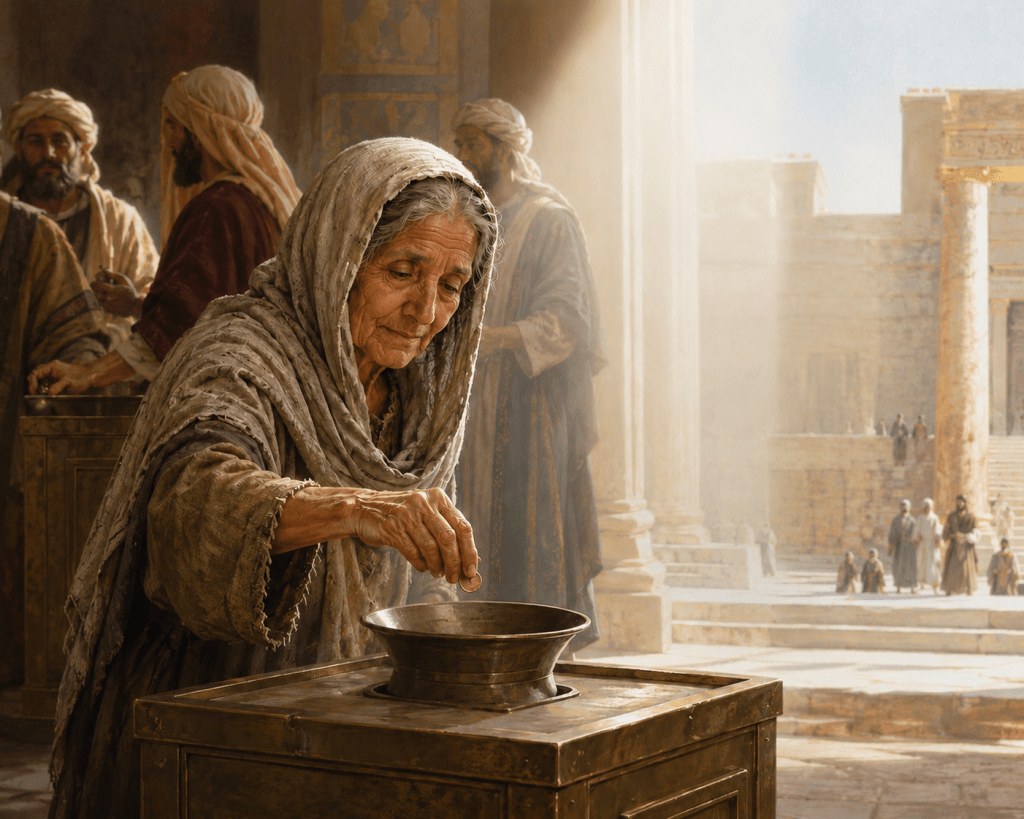
Sometimes an act which seems insignificant to us can have an amazing impact. So it was with the offering of the widow described in today’s Gospel. The penny she puts in the offering box is equivalent to 1/64th of a denarius, and a denarius was the average daily wage. Compared to the large sums donated by the rich folk it is miniscule. It is hardly noticed, and will not make much difference to the Temple coffers. Yet it involves a huge sacrifice for the widow – it is all she has – and is noticed by God himself, who sees that the value of this small act is far greater than the monetary value of the gift. He knows the true cost involved, and that it was a gift given of love. Perhaps Paul wondered at times whether all of the rejections, the beatings and imprisonments were worth it. In Philippians he describes all his achievements as rubbish compared with knowing Jesus. Yet as we read today, he trusted that despite everything his ministry was worthwhile, and now he has finished the race.
May we never underestimate the value of seemingly small acts of devotion, encouragement or kindness. Give at a cost, and borne of love, they have infinite value in God’s sight. Every such act is like another building block of his kingdom. Let us continue to lay those blocks bit by bit, sure in the knowledge that when we too have finished the race, that kingdom will be just a little bit closer.
Mass today is in St Mary’s at 11.30am (preceded by morning prayer at 10.50 and Rosary at 11).
If you’d like more resources for daily prayer then check out our Day By Day pages.
Life as a Christian can often confound our expectations. Things do not always turn out the way we might hope or think. Yet through it all, God remains faithful. Fr Richard reflects on today’s readings from Mass.
Readings for Friday of the 9th week of ordinary time (memorial of St Boniface) can be found here.
Anyone who has ever organised a church event knows the feeling. You spend weeks planning, you publicise it until you’re blue in the face, you have high hopes it will be a success … and three people turn up. Alternatively, you arrange something you think will be low-key and suddenly the place is packed out. You’re left scratching your head trying to make sense of it all. Life, as we all know, has a habit of confounding our expectations.
Many people in the time of Jesus thought they knew what sort of figure the Messiah would be. The Messiah was often referred to as “the son of David”, and the expectation was that he would be a leader like King David, a warrior-type king who would bring freedom to Israel by driving out the Romans. That, of course, was very far from the kind of Messiah Jesus turned out to be. And so, in today’s Gospel, he challenges peoples’ ideas. He quotes Psalm 110 to show that the Messiah is in fact David’s Lord, not his son, and so will be greater in every way than David, rather than a carbon copy of him. From that point on, people had to rethink their ideas of who the Messiah would be and what he would do. Paul reminds Timothy that things do not always work out the way you might expect. Those who do good end up being persecuted, as Paul himself was, while evil people seem to go along quite unhindered. Yet Paul encourages his friend to remain steadfast in all the twists and turns of life, for Jesus will remain faithful to him.
Sometimes we might expect events to unfold in a certain way. We might think we know which events or initiatives will succeed or fail. We might expect life to proceed down a certain path, and then something happens which throws all our plans into disarray. The Christian life is not about everything unfolding according to a well ordered plan, nice as that might be sometimes! It’s often messy, unpredictable, and haphazard. Yet through all of that, we can trust that God’s purposes can be fulfilled even in chaos, for whatever else happens, he is always with us, and is always ready to surprise us.
Mass today is in St Saviour’s at 10am.
If you’d like more resources for daily prayer, then check out our Day By Day pages.