Twelve times

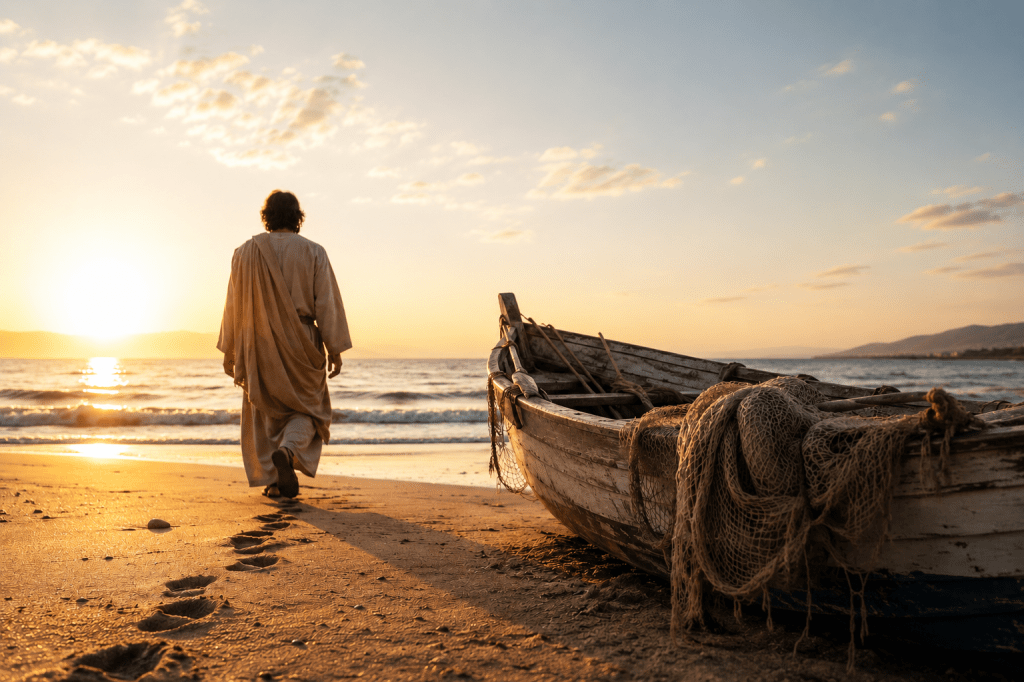
In today’s gospel reading, Jesus appoints the twelve apostles. Here’s our reflection from the Daily Mass.


BIBLE READINGS: You can find the readings for Friday of the Second Week of Ordinary Time here (Universalis Website)


It’s a well known saying that “History is written by the victors.”  Those who win conflicts, define the narrative. They tell their own story which often downplays the truths of the other side in favour of their own.

However, in every generation, history is rewritten, providing a more truthful narrative of the past. One such example is “Black History Month” which celebrates the contribution that black people have played in the life of our country.

Jesus was immersed in the history of the people of Israel and true to the heritage of which he was a part, and the prophecies which went before. From among the many people who followed Jesus, he chose the specific number of twelve to be his apostles—those he would send out to preach and who after his ascension into heaven would form the foundation and leadership of the infant church. The number is symbolic. As there were twelve tribes of Israel, so Jesus builds on the old covenant with Israel, renewing a people for his own. He is true to the past, and to God’s chosen people, to whom God first chose to reveal himself.

The church first began as a movement within Judaism, and what we know as the Old Testament continues today to be the holy book for the Jewish people. Judaism is the rock from which we were hewn.

We know of the many distressing and evil ways in which the Jewish people have been treated, and on Monday is Holocaust Memorial Day when we remember the millions of people murdered during the holocaust of the Nazi persecution. As the Jewish people were the first to be called, so we pledge ourselves anew to nurture loving and respectful relationships with them and people of all religions. 


Mass today is at St Saviour’s Church at 10am


DAY BY DAY

If you’d like more resources for daily prayer then check out our DAY BY DAY pages.


Crowded out

We are called to share God’s kingdom in a world crowded by so many voices and messages. Here’s today’s reflection from the Daily Mass.


BIBLE READINGS: You can find the readings for Thursday of Second Week of Ordinary Time here (Universalis Website)


Anyone who has been part of—or witnessed—a gathering crowd, will know the sense of excitement and also danger, particularly if the crowd is a protest gathering.

Passion can easily turn into anger. An uncontrolled crowd can become uncontrollable. A peaceful protest can easily be sabotaged and become something it was never intended to be.

The diversity of the crowd attracted to Jesus is significant. He has drawn people together from all over the region and beyond. People from different counties and cultures come to him. Those who are sick reach out to him for healing. But he doesn’t take advantage of his fame. At times, he hides from them, and silences the unclean spirits who submit to him, instructing them not to make him known. The crowd was so large and passionate that he feared being crushed— we can imagine a sense of chaos, even hysteria, and certainly danger as Jesus prepares his getaway in a boat.

Jesus, it seems, refuses to be either a crowd pleaser or a crowd Marshall. The signs and wonders he performs are not about gaining popularity for himself but declaring that the Kingdom of God is very near. In a jostling, growing, pressing crowd, the message can be lost. We too are called to share God’s kingdom in a world crowded by so many voices and messages. We don’t need to shout. We simply need to continue being faithful witnesses, quietly serving God in our daily lives, often away from the crowd.


Mass today is at St Dyfrig and St Samson’s Church at 10am


DAY BY DAY

If you’d like more resources for daily prayer then check out our DAY BY DAY pages.


Don’t get the hump!

What’s the design for our life? God’s designs for our life are filled with love for us “to know him for clearly, love him more dearly, follow him more nearly, day by day.” Here’s today’s reflection from the Daily Mass.


BIBLE READINGS: You can find the readings for Tuesday of Second Week of Ordinary Time here (Universalis Website)


“A camel is a horse designed by a committee.” The saying is attributed to the person who designed the Mini car as he lamented team-based design. Any of us who have had to sit on certain committees will be able to share his frustration at times, when there is no unifying vision but many opinions. The outcome can be interesting.

In the gospel reading, the Pharisees have by design created the sabbath to be something that it is not. Rather than welcoming the sabbath to serve them, enrich their lives and bring them closer to God, they have become a slave to it—and they’ve got the hump! (Excuse the pun!) As they criticise Jesus for picking ears of corn, he gives them an example from the life of David when he was hungry and in need, whilst also confirming his own lordship over the Sabbath.

We can so often over confuse our faith. There is so much that is important, but all the obligations we feel are placed upon us, are simply opportunities to grow closer to God. They are intended to liberate not shackle us, change us not chain us. God’s designs for our life are filled with love and, to quote the prayer of St Richard of Chichester, “to know him for clearly, love him more dearly, follow him more nearly, day by day.”


Mass today is at St Mary’s Church at 630pm


DAY BY DAY

If you’d like more resources for daily prayer then check out our DAY BY DAY pages.


Sought out by God

In today’s reflection on the daily mass readings, Fr Richard considers how God is continually searching for us, but also how we have a role in searching out others whom he is calling to serve him.

Readings for Saturday of the first week of ordinary time (memorial of St Anthony, Bishop): 1 Samuel 9.1-4, 17-19, 10.1; Psalm 21.2-3, 4-5, 6-7; Mark 2.13-17. Text of readings can be found here.

You return home and there are several messages on the answering machine. Or you switch on your phone after a service or meeting and you see a number of texts or emails that have come through. Or even – unusually in this digital age – there’s a letter on the doormat with a handwritten envelope in writing you don’t recognise. All of these are examples of people searching us out, trying to make contact because they need us or want us for some reason or another. We are intrigued, perhaps, by the nature of the enquiry, and are keen to find out why we are being sought out.

Our readings today feature two people whom God is seeking for a particular role. Both of them are ordinary people, doing seemingly ordinary things, when the invitation comes. Saul, the son of Kish, is searching – unsuccessfully, as it turns out – for his father’s lost donkeys. But then he meets Samual, who has been looking for him, and who later anoints him as God’s chosen king for Israel. In the Gospel, Levi (also identified with Matthew) is having an ordinary day sitting at his tax booth. As a tax collector, he was someone that others looked down upon. And yet Jesus seeks him out, calls him to follow, and he responds without delay.

God is continually searching for us, in the midst of the ordinariness of life, even if we think we aren’t worthy of his attention. We need at all times to be attentive to that call. But equally, we also need to be on the lookout for those whom God is calling, especially those who may not be the most obvious candidates, those on the margins. We can all be God’s messengers, seeking out those, like Saul, or Levi, whom he is calling to serve him.

Mass today is in St Mary’s at 11.30am

If you’d like more resources for daily prayer then check out our Day By Day pages.

If only …

In today’s reflection on the daily mass readings, Fr Richard considers the things that we wish for and desire in life. What things will lead to lasting fulfilment, and what won’t?

Readings for Friday of the first week of ordinary time: 1 Samuel 8.4-7, 10-22; Psalm 89.16-17, 18-19; Mark 2.1-12. Text of readings can be found here.

Over 100 years ago, Communists took power in Russia as a result of the October 1917 revolution. For many who took part in that uprising, it had been a case of “if only…” – “If only we can get rid of the Tsar and the class system, life will be so much better”. In modern times, people often think “if only we can change the government; if only we can replace our voting system; if only we can abolish the monarchy and have a republic” then all our problems will be solved. The concept of “if only” doesn’t just apply to politics, of course. The football fan might think “if only we had a new manager…”. And in our personal lives, it’s often a case of “if only I can get a promotion, move to a nicer area, leave this relationship”, then all will be well.

The people of Israel are going down the road of “if only” in our first reading. For them, it was a case of “if only we can have a king like other nations, then we can defeat our enemies”. Samuel, the great leader of the people, warns them of the dangers of a monarchy, but they insist. For God, the people’s demand was a rejection of his kingship as they put their trust in earthly rulers. Subsequent centuries would prove Samuel right, as Israel’s kings proved to be sinful, or corrupt, or tyrannical, or all of those and more besides. Ultimately the monarchy and the nation would end in ruin.

There’s an “if only” at work in the Gospel, but of a very different sort. For the paralysed man and his friends, it’s a case of “if only we can get close to Jesus”, and they go to extraordinary lengths to make this happen. The man is rewarded with both healing and forgiveness. Ultimately, this is the one “if only” that counts. May we always be saying “if only I can be near Jesus; if only I can spend time with him in prayer; if only I can serve him in the poor and needy”. For that is where true salvation lies.

Mass today is in St Saviour’s at 10am.

If you’d like more resources for daily prayer then check out our Day By Day pages.

The essence of faith

In today’s reflection on the daily mass readings, Fr Richard considers how the essence of our faith is contained not in objects or rituals, but in the person of Jesus, who reaches out in love to those in need.

Readings for Thursday in the first week of Ordinary Time: 1 Samuel 4.1-11; Psalm 44.10-11, 14-15, 24-25; Mark 1.40-45. Text of readings can be found here.

Do you know where the origin of the phrase “touch wood” comes from? According to one theory, it originates from the middle ages, when people would often carry around a supposed relic of the True Cross. In times of peril, or when needing good luck, they would reach into their pocket and touch the wood. The phrase entered into everyday parlance, and has survived even when the custom of carrying the wood ceased.

In our first reading today, both the Philistines and the Israelites viewed the Ark of the Covenant as some sort of good luck charm for Israel. This was the chest which contained the tablets upon which God had written the Ten Commandments for Moses about 200 years before. Both sides believed that the very presence of the Ark on the battlefield would ensure victory for Israel. The outcome of the battle, however, was about something much deeper. It was about the corruption and lack of faith at the heart of Israel, represented especially by the behaviour of the two sons of Eli the priest.

The external rituals and customs of faith are something that Jesus doesn’t allow to stand in the way of doing good in our Gospel reading. A faithful Jew would normally have avoided physical contact with a leper, since it would have made him unclean according to the law. And yet Jesus does precisely this in order to bring healing to the man who needs it. Our traditions and rituals are important, but they are not the beginning and ending of faith. This, rather, is to be found in a personal encounter with God made flesh, Jesus Christ, the one who crosses traditional boundaries. Strengthened by our encounter with him in this and every mass, may we have the courage to reach out in faith and love to the untouchables of our own day.

Mass today is in St Dyfrig & St Samson at 10am.

If you’d like more resources for daily prayer then check out our Day By Day pages.
God works through the chaos

In today’s reflection on the daily mass readings, Fr Richard considers how God can work through the most unlikely of circumstances – misunderstandings, distress, and confusion – to bring about his healing.

Readings for Tuesday of the first week of ordinary time: 1 Samuel 1:9-20; Psalm 2:1, 4-5, 6-8; Mark 1.21-28. Text of readings can be found here.

I have never really got the hang of ear buds, those little, wireless devices that you stick in your ears and which can connect to your smartphone through the magic of bluetooth. I have tried them, but they never seemed to work, always seemed to fall out, or I would lose them (or perhaps worse than that, just lose one!). Because I don’t use them myself, I am still surprised when I see others doing so. Many times, when out for a walk or on public transport, I have assumed that someone is having an animated conversation with themself (or trying to speak to me!). No phone in sight, it’s not immediately clear that they are in fact talking to someone but via their ear buds.

We see a similar misunderstanding in our first reading today. Hannah is in distress because she is unable to have children. What made matters worse, as we heard in yesterday’s reading, was that her husband’s other wife, who did have children, taunted her about this. Her prayer is so heartfelt that she does not say it out loud. Only her lips move, which makes Eli the priest think that she is drunk – no doubt adding to her turmoil. Yet what we discover is that God is able to work through these imperfect circumstances. A prayer offered from the depths of sorrow; a person perhaps not knowing even what words to use; and a religious professional assuming the worst. Her prayer is nonetheless answered, and she becomes the mother of the great Samuel. 

In the Gospel we have another difficult situation, as the peace and order of the synagogue service on the Sabbath is disrupted by the man with the unclean spirit crying out and recognising Jesus’ status and authority. But this too becomes a moment for healing, as Jesus commands the unclean spirit to leave the man. Whenever we encounter times of misunderstanding, confusion, distress or chaos, may we always remember that God can work through these moments and demonstrate both his power and his love.

Mass tonight is in St Mary’s at 6.30pm

If you’d like more resources for daily prayer then check out our Day By Day pages.
The Lord needs you

In today’s reflection on the daily mass readings, Fr Richard considers how Jesus needs each of us to join him in his work, just as needed the first disciples whom he called away from their fishing nets.

Readings for Monday in the first week of Ordinary Time (Year 2): 1 Samuel 1.1-8; Psalm 115.12-19; Mark 1.14-20. Text of readings can be found here.

What do you need right now? A nice cup of tea, perhaps? A little nap? A riveting homily to inspire and encourage you? There is, of course, a difference between needs and wants. Do we really need the things we think we need, or do we simply want them? The whole advertising industry, which went into overdrive at Christmas, is geared to convincing people that they need certain things, and the answer, of course, is to spend lots of money in obtaining them.

When it comes to Jesus, we might not think he had any needs. After all, he was the Son of God on earth, and therefore perfect. There is an interesting line in the story of Palm Sunday, however. Jesus says to the disciples who are sent to untie the donkey, to tell the owner “the Lord needs it”. Yes, Jesus in his humanity had needs, just as he was sometimes tired, hungry, or thirsty.

The Gospel today, the call of the first disciples from Mark, speaks of Jesus’ need for companions to join him in his work. He needed others with whom to share his ministry; he couldn’t do it all on his own. And the choice of these first co-workers tells us something about the kind of person Jesus needed to join him. Simon and Andrew, and James and John, were fishermen. Not highly educated, they were simple men, who knew the realities of life and what it was like to toil all day and night to earn a living. Perhaps Jesus’ invitation met a need in them, for we are told that without hesitation, they left their fishing nets and boats and followed.

We may not always think so, but Jesus also needs us. He needs us to continue his mission of proclaiming the kingdom in our world and in our community today. He needs us to bring our own life experience to this work, just as those Gallilean fishermen did. Each and every day he calls us to join him. The question for each of us is this: like Simon, Andrew, James and John, are we ready to follow without delay?

Mass today is in St Dyfrig & St Samson, Grangetown at 6.30pm

If you’d like more resources for daily prayer then check out our Day By Day pages.
Good News

Photo by Pavel Danilyuk on Pexels.com

“Sometimes, what God is calling us to do conflicts with what others wish to hear, but we are to remain strong in faith, and in love of God and one another.” Our reflection from the daily Mass.


BIBLE READINGS: You can find the readings for 10 January here (Universalis Website)


As we begin an election year in Wales, the political parties will already be beginning to put together their manifestos, their promises to the people of what their party will do for Wales. With the current political climate, it will be an interesting year, possibility one of great change. Whether that will be for the better or for the worse, we shall have to wait and find out.

When Jesus takes to the pulpit in Nazareth, where everyone had known him since he was a boy, he is doing nothing unusual.  It is his custom to do so, as it was for many itinerant rabbis. The surprise comes in turning the prophecy of Isaiah towards himself. In a succinct paragraph, he tells them what he has been sent to do, and how he will change the world. Good news for the poor, liberty to captives, sight to the blind, freedom for the oppressed. In that moment, his listeners are astounded. He receives a favourable response from them. What we don’t hear is what follows. They turn on him, drive him out of the town to throw him over the brow of the hill on which Nazareth was built.

The fortunes of politicians, leaders and others in power can quickly change, swept along by the wave of public opinion which can turn against them. Jesus, though, isn’t about to change his mind. He knows what he has been sent to do, and his mission is clear. Likewise, we can be tempted to wander away from the church’s mission so that we appear more attractive. We can chase popularity rather than proclaiming the good news of the Kingdom. Sometimes, what God is calling us to do conflicts with what others wish to hear, but we are to remain strong in faith, and in love of God and one another. As we are reminded in the First letter of St John, “This is the love of God, that we keep his commandments. And his commandments are not burdensome.”


Mass today is at St Nary’s Church at 11.30 am (following Morning Prayer and Rosary at 11 am)


DAY BY DAY

If you’d like more resources for daily prayer then check out our DAY BY DAY pages.


What we know

“Our life with Christ is like a journey, which changes through the years, constantly questioning and always discovering.” Our reflection from the daily Mass.


BIBLE READINGS: You can find the readings for 9 January here (Universalis Website)


Where would we be without pundits? Football pundits, political pundits, financial pundits— experts in a certain field who are called upon to give their opinion to the public and help analyse and help us understand certain events or proceedings.

The word pundit actually comes from the Sanskrit word Pandita meaning a Hindu scholar learned in Sanskrit and Hindu philosophy and religion, typically also a practicing priest.

In the gospel reading today, the disciple are trying to make sense of a number of things. The previous events of the feeding of the thousands left them confused. And now, as they see Jesus walking on the water, they are filled with fear and think he is a ghost. They were astounded, their hearts had hardened. Whilst they had made the decision to follow Jesus, they are still learning and trying to make sense of who Jesus is.

Likewise, we don’t understand everything. Our life with Christ is like a journey, which changes through the years, constantly questioning and always discovering. Sometimes, we have a clear vision and at other times things may be a little hazy. But the letter of John reminds us what we do know. He says, “We have come to know and to believe the love that God has for us.” So, let us follow Jesus with that knowledge: that we are loved. 


DAY BY DAY

If you’d like more resources for daily prayer then check out our DAY BY DAY pages.