Sometimes, we may become impatient with the church but today’s reflection from Mass explores what it means to be patient and wait and see what God is doing.
BIBLE READINGS: The readingsfor Friday of the Second Week of Easter can be found here
“The only thing we learn from history is that we learn nothing from history,” is a quote primarily attributed to the German philosopher Georg Wilhelm Friedrich Hegel. It observes that humanity frequently repeats its past mistakes, wars, and injustices because it fails to apply previous lessons learned. In our own generation, perhaps we can apply this saying to things we experience today.
In the second reading today from the Acts of the Apostles, the apostles have been arrested and whilst they await their fate, Gamaliel, a wise and respected teacher of the law steps in to offer some advice and guidance. He refers to the past and to several individuals, Theudas and Judas the Galilean, who had risen up and gathered around them a group of supporters. When they died, their followers were scattered and their movements came to nothing. Gamaliel suggests that the same thought should be applied to this new movement of Jesus. Maybe, since their leader appears to have died, his followers may scatter too and in turn come to nothing. If they don’t, then maybe this movement may be of God, which means they will never be overthrown.
Despite the challenges experienced by the church today, it still remains. Battered and bruised, it still moves on. Day by day, members are added to its number. Sometimes, when we lose hope or trust in the church, when we question it or are questioned by others, perhaps we need to apply something of the wise patience of Gamaliel and believe that God will reveal his purposes. We may think that we know what is right for the church, and disagree with others, but ultimately the church exists because of Christ. The Church is the Body of Christ of which he is the Head. All we need to do is trust in him, follow his ways, and rejoice in all that he is doing.
Mass today is at Ss Saviour’s Church at 10am
DAY BY DAY
If you’d like more resources for daily prayer then check out our DAY BY DAY pages.
Every time we celebrate the Eucharist, we proclaim Jesus’ death and resurrection. Here’s today’s reflection from Mass.
BIBLE READINGS: The readingsfor Thursday of the Second Week of Easter can be found here
In September 2023, the streets of Glynneath were lined with people waiting for the unveiling of a new statue which faced Glynneath Rugby football club. It was, of course, the statue of Max Boyce, comedian and singer, who has been part of Welsh culture for decades and who has regaled us with tales and jokes and anecdotes of Welsh life and rugby with his famous catchphrase, “And I know, because I was there.”
Whilst Max Boyce’s tales are all about fun and entertainment, his claims of having first hand experience of certain events are important. In our reading from the Acts of the Apostles, Peter’s response to the officials are that “We are witnesses to these things.” And what are these things? He says, “The God of our fathers raised Jesus, whom you killed by hanging him on a tree. God exalted him at his right hand as Leader and Saviour, to give repentance to Israel and forgiveness of sins.” It is that of which he and the other apostles are witnesses. They were there.
We don’t have the same privilege of having experienced the things the apostles did, but as we recall from Sunday’s gospel reading, Jesus said, “Blessed are those who have not seen, and yet believe.” We are counted among those who are blessed. We are the ones who have not witnessed what Peter and the others did, but through their witness we have a living tradition and a life of faith through which we encounter the living Lord as they did. Every time we celebrate the Eucharist, we are witnesses of the cross and the exaltation of Christ for when we eat this bread and drink this cup, we proclaim the Lord’s death until he comes again.
Mass today is at Ss Dyfrig and Samson at 10am
DAY BY DAY
If you’d like more resources for daily prayer then check out our DAY BY DAY pages.
Connecting you to the churches of South Cardiff Ministry Area across Butetown, Grangetown and Splott. Our vision is to be a creative and resourceful community which is welcoming, faithful and just!
This Week!
We are continuing our celebration of the Easter season, which lasts for 50 days until the great feast of Pentecost.
We look back on our very first Thrive at Five group for young people, held at St Paul’s, and ahead to our Alpha Course which will be starting in May. Thee’
A date not to be missed this week is Father Richard’s talk to the Grangetown History Society on the history of St Dyfrig’s, St Samson’s, and St Barnabas’ churches in Grangetown. It’s a fascinating story of how religious life developed in this part of Cardiff.
Lent lunches
Thanks to all those who provided and supported our Lent lunches in St Dyfrig & St Samson. We raised the wonderful total of £545, which has been donated to Smile Train, a charity which helps children born with cleft palate.
The proceeds from the Easter raffle in St Dyfrig & St Samson helped to pay for a new altar cloth which was dedicated on Easter Day. Thanks to all who supported.
Thrive at Five is launched!
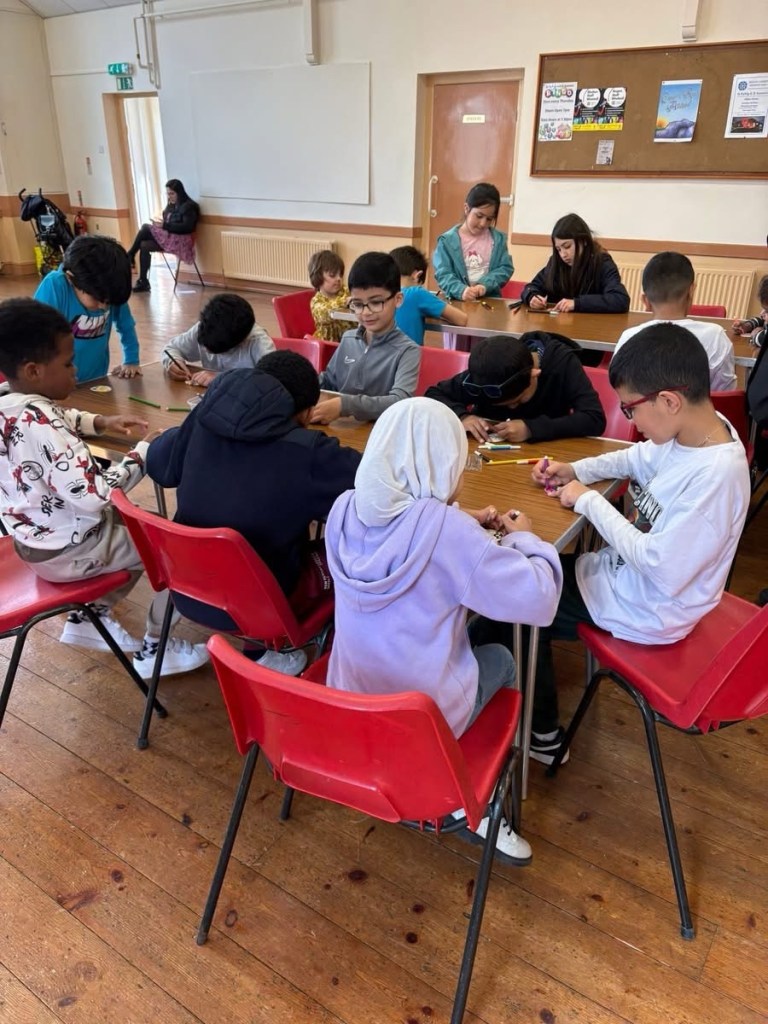
We had a lovely first Thrive at Five youth club tonight at St Paul’s.
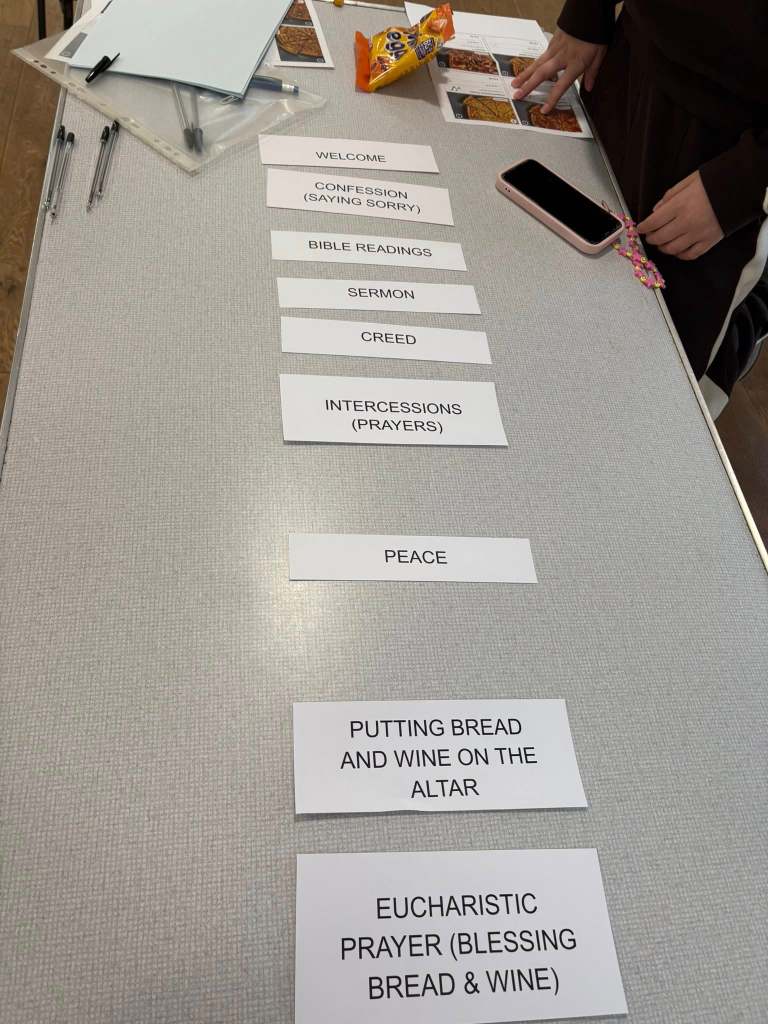
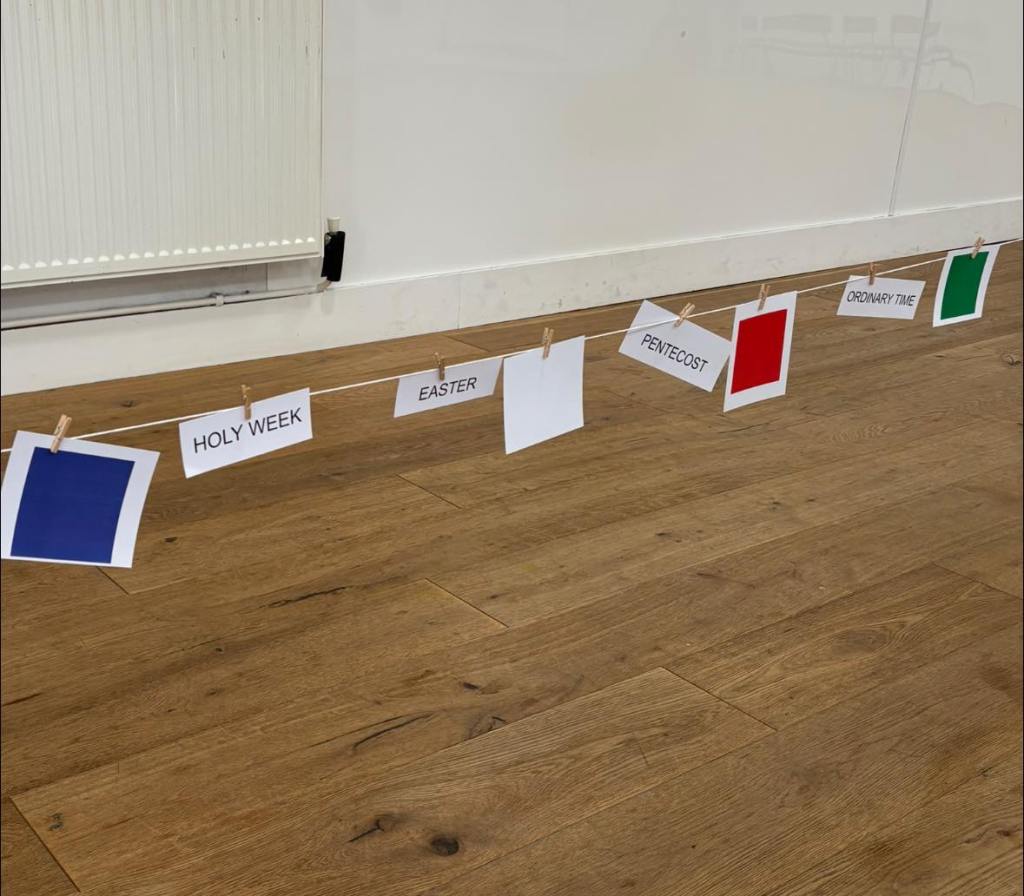
We thought about what the church means to us…. Why we come, what we do in church, the seasons and the colours.
Then of course we finished with pizza!
We’ve definitely noticed more people coming through our doors and it’s heartening to see our young people learning and growing in the faith of Christ.
Offeren Cymraeg | Welsh Mass
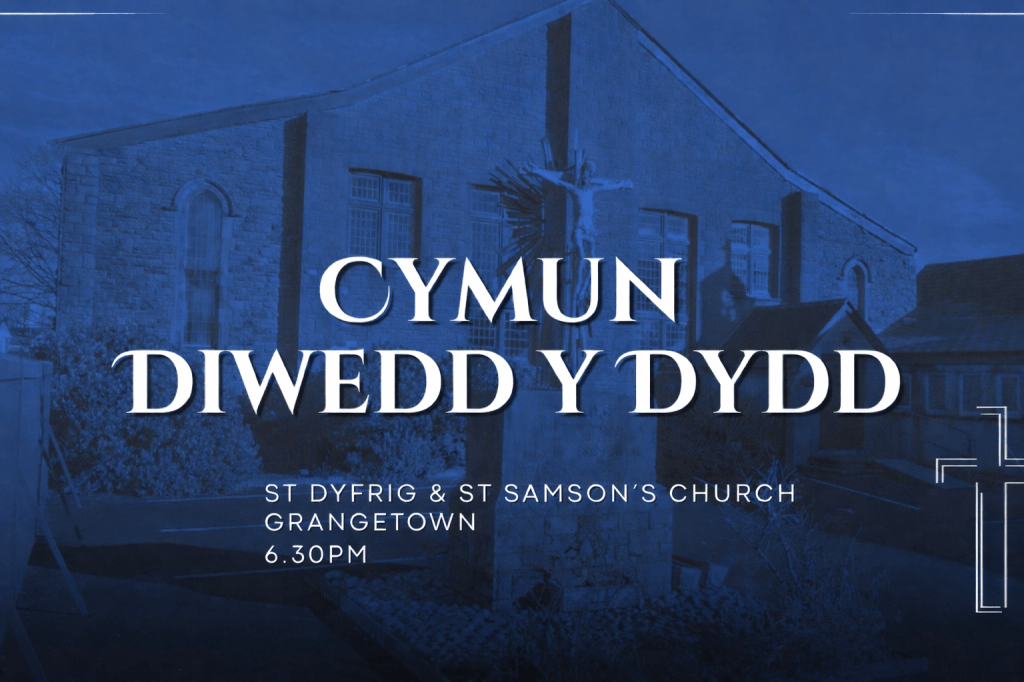
Our monthly Mass in Welsh is taking place this Wednesday, 15 April, at 6.30pm in St Dyfrig & St Samson.
This service is ideal for those who are Welsh learners or more proficient speakers. The order of service and the sermon are provided bilingually, and we are always looking for volunteers to read or lead the intecessions.
Three churches into one!
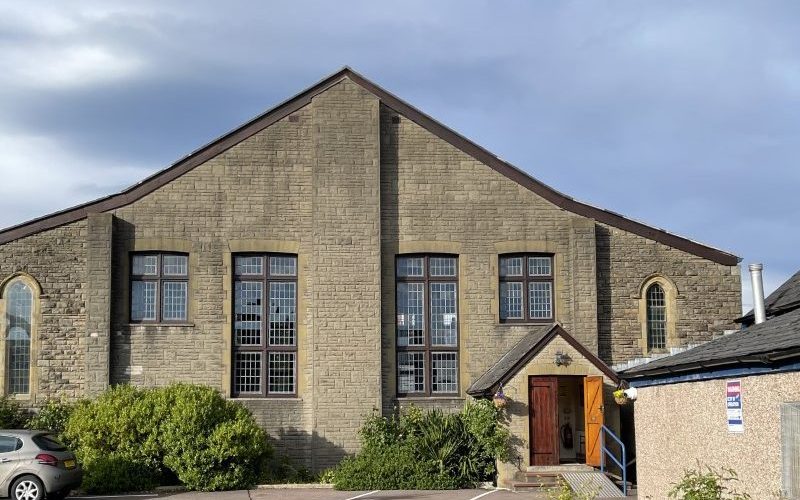
Did you know that St Dyfrig & St Samson is the story of three churches in one?
Fr Richard will be telling this fascinating story in a talk to the Grangetown Local History Society on Thursday 16th April at 6.30pm in the Grange Pavilion. Entry is free and all are welcome to attend.
Men’s Night
Get ready for another men’s night on Wednesday 29 April from 7pm at The Prince of Wales (Wetherspoon) pub.
Relaxed atmosphere, good company, no pressure!
Alpha comes to South Cardiff
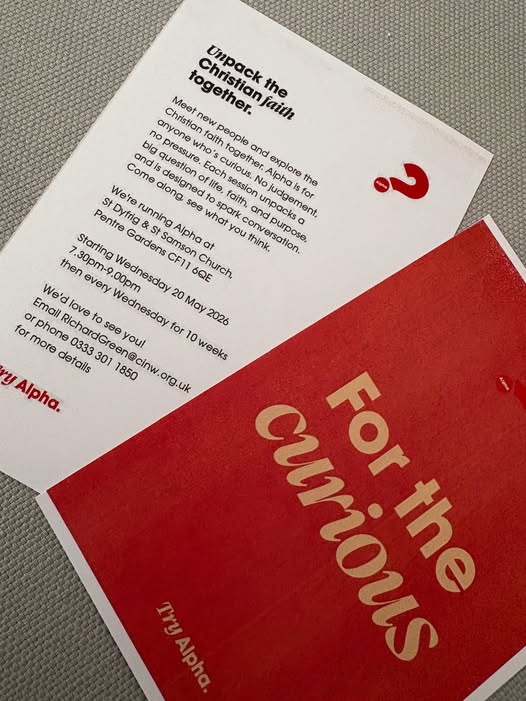
Curious about faith?
Whether you’ve got questions or just want to meet new people for food and conversation, Alpha is for you.
This May, we’re running the Alpha Course, for anyone and everyone looking for a space to eat, meet others, and talk about life’s bigger questions with no pressure.
The course begins on Wednesday 20 May in St Dyfrig & St Samson, and lasts for 10 weeks. The sessions will run from 7.30pm-9.00pm. We’d love to see you!
Not only do we run two Foodbank sessions in St Saviours, we also collect and donate food items.
Recently, thanks to the generosity of our members and a donation of £200 we were able to do a BIG shop! You can make donations in any of our churches.
Grangetown Consultation
St Paul’s and St Dyfrig & St Samson’s churches in Grangetown are working together to understand what really matters to our community.
A short survey (about 5 minutes) is available and will help us learn how we can serve and support our neighbourhood better.
You can fill in the survey anonymously or leave your details so we can contact you to follow up on your ideas. Your data will not be shared with anyone else and will be deleted after 12 months.
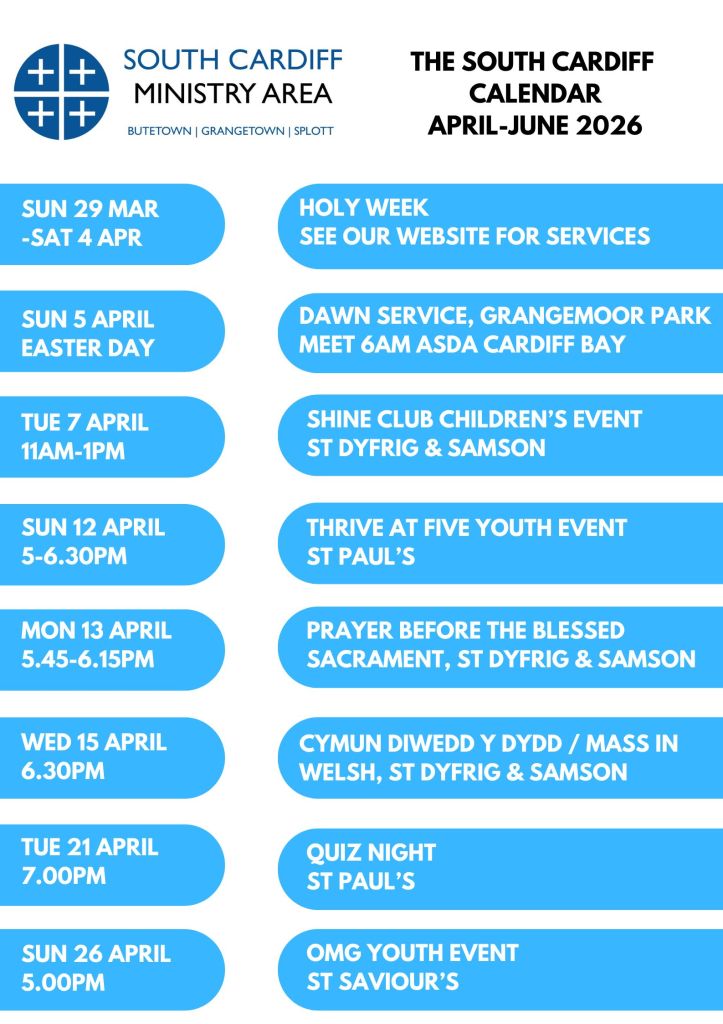
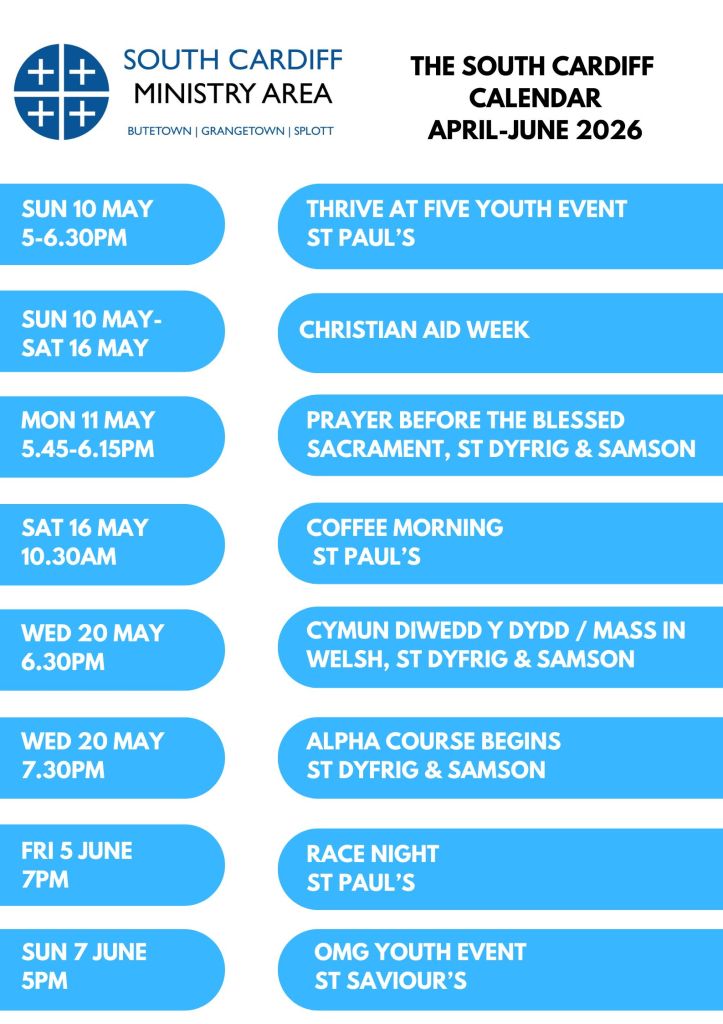
Here is a new-look South Cardiff Calendar, with details of lots of upcoming events and activities across our Ministry Area. Make sure you put everything down in your diary so that you don’t miss anything!
There will be more details about these events in future editions of Connect.
Young people aged 11-18 are invited to join us for the Walsingham Youth Pilgrimage from 3-7 August.
Around 500 young people from all over the UK camp in a field just outside the village of Walsingham. Worship takes place in a large marquee led by the excellent worship band CJM. There are also lots of different activities for young people to take part in during the week.
As part of the Welsh camp, all tents are provided and you will be fully catered for. All you need to bring is a sleeping bag, air bed, clothes and toiletries. For more information, please contact Fr Richard and also take a look at the link below to find out more.
Mass is celebrated each day across our churches. Here’s our pattern of prayer for the week ahead.
Wednesday 15 April | Wednesday of the 2nd week of Eastertide
10.00am: Mass at St Paul's with St Paul's School
11.00am: Mass at St Mary's with St Mary's School

Thursday 16 April | Thursday of the 2nd week of Eastertide
10.00am:  Mass at Ss Dyfrig and Samson

Friday 17 April | Friday of the 2nd week of Eastertide
10.00am: Mass at St Saviour’s

Saturday 18 April | Saturday of the 2nd week of Eastertide
10.50am: Morning Prayer at St Mary's followed by
11.00am: Rosary with prayer for the Ministry Area
11.30am: Mass
12 noon: Sacrament of Reconciliation (Confession)

Sunday 19 April | Third Sunday of Easter
9.30am:  Sung Mass at Ss Dyfrig & Samson
9.30am:  Sung Mass at St Saviour’s
11.00am: Sung Mass at St Paul's
11.00am: Solemn Mass at St Mary's

Monday 20 April | Monday of the 3rd week of Eastertide
6.30pm:  Mass at Ss Dyfrig & Samson

Tuesday 21 April | Tuesday of the 3rd week of Eastertide
6.30pm:  Mass at St Mary’s
You can discover more about our regular pattern of worship through the week at
What kind of community would you create? And what community is the church called to be? Here’s today’s reflection from Mass.
BIBLE READINGS: The readingsfor Tuesday of the Second Week of Easter can be found here
The council estate of Penrhys in the Rhondda was built in the late 1960s to a utopian ideal. Spacious homes with stunning views, its architecture even inspired by Italian villas. It even had its own distinct heating system which served each of the 954 houses, the cost of heating included in the rent. But it proved very expensive following the oil crisis of 1973 which increased the cost of energy and also the rent. The estate became uneconomic for those residents reliant on state benefits. And many who were employed left the estate to have more control of heating costs. It became a prime example of what happens when planners get things wrong. How would you design a community from scratch?
In the Acts of the Apostles, we are given a glimpse into the community life of the church which was growing day by day. Something new was happening and being established under the leadership of the Apsotles. Today’s reading may offer some kind of utopian ideal, when everyone held everything in common and no one was left in need. They shared what they had with one another, and we hear of the inspiring story of Joseph who sells a field and give the proceeds to the apostles. “No one said that any of the things that belonged to him was his own,” goes the story.
Perhaps this kind of ideal Christian community is only modelled today in Monastic communities, and yet the values which underpin them remain the same for us. We are called to be generous with our time and talents, to give realistically and sacrificially, and to care for those in need. We can perhaps take the words of JFK and turn them to our own situation. “Ask not what the church can do for you, but what you can do for the church.”
Mass today is at S Mary’s at 630pm
DAY BY DAY
If you’d like more resources for daily prayer then check out our DAY BY DAY pages.
In today’s reflection from Mass, we explore the need to ask questions so that our faith may grow in understanding.
BIBLE READINGS: The readingsfor Monday of the Second Week of Easter can be found here
Have you ever been in meeting or a training session and not quite understood something but didn’t have the courage to ask a question—in case it makes you appear vague or even stupid? Perhaps, there has been an occasion when you’ve asked that question, and you’ve felt a sigh of relief in the room as you realise that you’re not the only one who didn’t quite grasp the point.
When Nicodemus seeks out Jesus, he is alone and under cover of darkness. He doesn’t want to be seen with Jesus and yet he believes that there is something significant about him. He says, ‘Rabbi, we know that you are a teacher come from God, for no one can do these signs that you do unless God is with him,” but he needs to find out more. So hidden from the sight of others, he approaches Jesus with questions—which Jesus answers, and which then create further questions. He doesn’t quite understand what Jesus means by being born again. “How can a man be born when he is old?” he asks.
Our life of faith is full of questions. Quite often, the children of the church are far better at asking questions about faith than many adults. When we ask questions, it doesn’t mean that we are refusing to believe, but that we want to believe more. It doesn’t mean that we don’t know anything, but that we want to have an even fuller understanding. St Anselm talked about having “faith which seeks understanding.” Like Nicodemus, we can be not just inquisitive but have a deeper desire to glimpse the mystery of God in Christ. So next time you don’t quite understand something, don’t forget to ask!
Mass today is at S Dyfrig and S Church at 630pm
DAY BY DAY
If you’d like more resources for daily prayer then check out our DAY BY DAY pages.
Today’s Mass readings show the difference which is made to people when they encounter and spend time with the risen Jesus. Fr Richard reflects on what this means for us.
Have you ever noticed a visible difference in someone after they’ve been somewhere or had some experience? Perhaps they’ve had a really good holiday and come back rejuvenated, positively glowing. Or the person has been to an inspiring conference and returns brimming with ideas and enthusiasm. Maybe they’ve met someone new and fallen in love, and you can just see the difference in them.
Today’s first reading follows on from yesterday’s passage, where Peter and John had been arrested after healing a lame man in the Temple. Brought before the elders and scribes, Peter gave a bold and defiant speech about what God had done in Jesus. Today we are told that those same elders recognise two things. First, they know that Peter and John are uneducated, so where does their eloquence come from? The answer comes in the next sentence: “… they recognised that they had been with Jesus”. This is what made the difference to Peter and John. They had spent time with Jesus, listened to him, and followed him, and were now filled with his Spirit.
In the Gospel, we are reminded of various encounters with the risen Jesus: Mary Magdalene at the tomb, the two on the road to Emmaus, and the eleven in the upper room. Despite these repeated meetings, doubt still lingers. Jesus rebukes the eleven for this, but still has faith in them, and sends them out to proclaim the Gospel to the world.
Our effectiveness as witnesses of Jesus’ resurrection will not depend on the strength of our learning or the eloquence of our speech. Instead, others will take notice when they realise there is something different about us, a difference borne of spending time with Jesus. This will not make us perfect. Like the disciples, we will still have doubts, uncertainties and failings. And yet Jesus can work with this; indeed it seems that he prefers those who struggle, since they are more relatable. But the power of Jesus’ presence can work through our imperfections and enable us to be his faithful witnesses to the ends of the earth.
Mass today is in St Mary’s at 11.30am (Morning Prayer and Rosary at 11am).
If you’d like more resources for daily prayer, check out our Day By Day pages.
Sometimes places can have associations of failure and pain. The story of Simon Peter in today’s Gospel shows how the risen Jesus can transform these places into ones of hope and renewal.
In 2011 Queen Elizabeth II paid a state visit to Ireland, the first by a British monarch in 100 years. At a dinner in Dublin Castle she impressed many by opening her speech in the Irish language. For centuries Dublin Castle had been the hated symbol of British rule in Ireland. Now, here was the very symbol of the British state transforming that place from one of bitterness and pain to one of hope and reconciliation. The Castle’s legacy was not erased or forgotten, but changed.
In today’s Gospel, the risen Jesus gathers his disciples around a charcoal fire on the beach and cooks them breakfast. Among this group was Simon Peter, who had just jumped from the fishing boat into the water. The setting on the lakeside takes us back to the night of Jesus’ trial. Simon Peter stood near a different charcoal fire, warming himself outside the High Priest’s house. It was there that he denied knowing Jesus, the greatest betrayal. Jesus takes what had been a place of shame and failure for Peter, and now uses it to feed him and the other disciples. Again, it is a case of a memory transformed not erased. In the next section of John’s Gospel Jesus goes further, and says to Peter three times “feed my sheep”, thus commissioning him for leadership in the church. This sense of a place being transformed from failure to hope is at the heart of Easter. As Peter says in his testimony before the elders and scribes “Jesus is the stone that was rejected by you, the builders, which has become the cornerstone”. The Cross, that symbol of and disaster, is now the sign of God’s victory over sin and evil.
Perhaps we have places which remind us of past failures, times we have sinned, or betrayed our Lord. Jesus does not condemn us to be trapped in those places with the legacy of our mistakes. He who transformed Calvary, and transformed the charcoal fire for Peter, can take our sins and failings, and transform us as he feeds us in the Eucharist. Then, like with Peter, he enables us to boldly proclaim his message and serve him.
Mass today is in St Saviour’s at 10am.
If you’d like more resources for daily prayer then check out our Day By Day pages.
Life can be confusing and frightening. The risen Jesus gently leads us to understanding, peace and faith, as he did with the first disciples. Fr Richard reflects on today’s readings from Mass.
Have you ever woken up and wondered where you are? Perhaps it’s the first night of a holiday and you’re in a strange bed and unfamiliar room. You come to, and for a few moments you’re completely confused and bewildered. It’s a bizarre or even slightly scary sensation. Then you switch on the light, or take a moment to wake up properly, and gradually everything becomes clear.
This journey from fear and confusion to realisation and understanding is one that we see a lot in the Easter stories, and it’s happening in our readings today. The disciples have been told a couple of times that Jesus has risen from the dead. When he suddenly appears in their midst in today’s Gospel, however, they react with disbelief and terror, thinking that they are seeing a ghost. Jesus reacts beautifully to their situation. First he invites them to touch him, and even goes to the lengths of eating some fish to prove he’s real. It’s only after Jesus has calmed their fears that he proceeds to help them understand the significance of his death and resurrection, and what they must do next. The crowd in Jerusalem are equally as astounded at the healing they have just seen Peter and John perform. Peter notices this, and rather than leave the people in this state of confusion, he gently leads them to greater knowledge. Once he has explained the significance of what happened to Jesus, he then tells the people what this means for them – that they must repent.
Many times in life we will be like the disciples in that upper room, or the crowd in Jerusalem. We can often feel disorientated, confused, uncertain, and fearful. And yet our readings today show us that God can work with that. He doesn’t expect us to understand everything or have all the answers in order to be his followers. Instead, the risen Jesus comes to us in gentleness and love with his greeting of peace. He invites us to see and touch his wounds. He gently guides us to greater knowledge and then, and only then, does he send us out as his servants to bring his peace and love to a confused and fearful world.
Mass today is in St Dyfrig & St Samson, Grangetown, at 10am.
If you’d like more resources for daily prayer, then check out our Day By Day pages.
Connecting you to the churches of South Cardiff Ministry Area across Butetown, Grangetown and Splott. Our vision is to be a creative and resourceful community which is welcoming, faithful and just!
What a Holy Week!
We had a wonderful Holy Week, and are now rejoicing in the Easter Season. You may have seen some of our posts on social media with lots of pics and videos.
Thank you to everyone who helped to make Holy Week so special. There is always so much work to do, and we grateful to all who got involved in any way. Er
St Saviour’s Easter Raffle
Tickets are now available at St Saviours for our Easter raffle which will be drawn on Sunday 12 April. All proceeds to St Saviours Church!
Shine Club
We had a great time at our Shine Club on Tuesday in St Dyfrig & St Samson!
We explored the Easter story through games, songs, and activities. The morning concluded with a free lunch!
Thrive at Five youth group
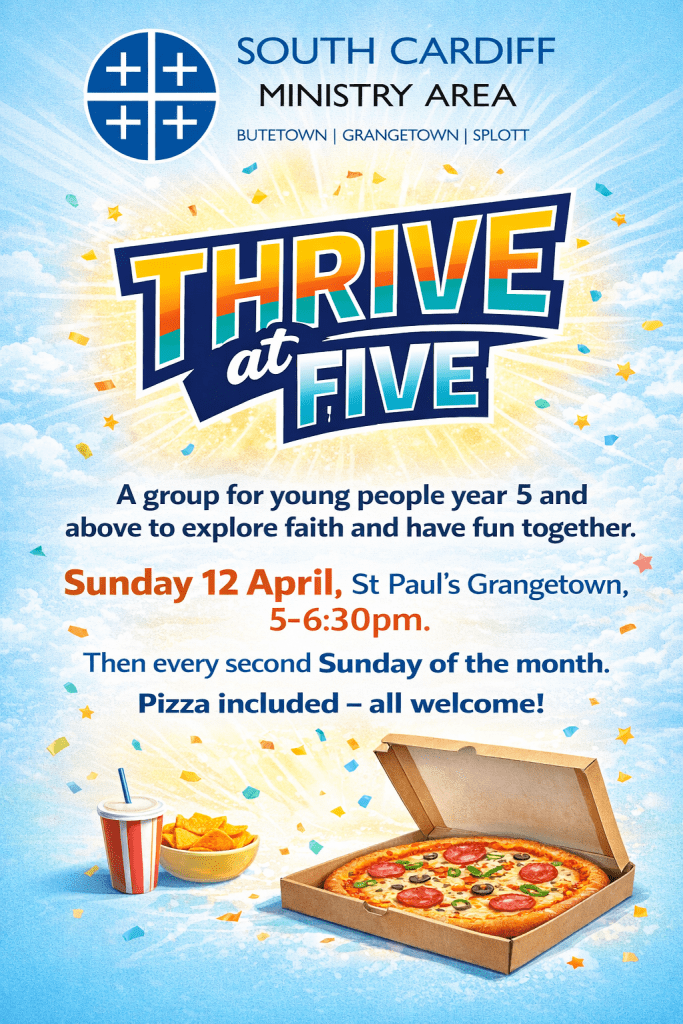
A new group for young people is being launched next week.
Thrive At Five is taking place on Sunday 12 April from 5-6.30pm in St Paul’s Community Hall, and then on the second Sunday of the month going forward.
The group arose out of the recent Confirmation classes that were held, but it is open to any young people in year 5 of school or older. We’ll explore the Christian faith in a fun way and conclude the evening with free pizza. All welcome!
Men’s Night
Get ready for another men’s night on Wednesday 29 April from 7pm at The Prince of Wales (Wetherspoon) pub.
Relaxed atmosphere, good company, no pressure!
Prayer before the Blessed Sacrament
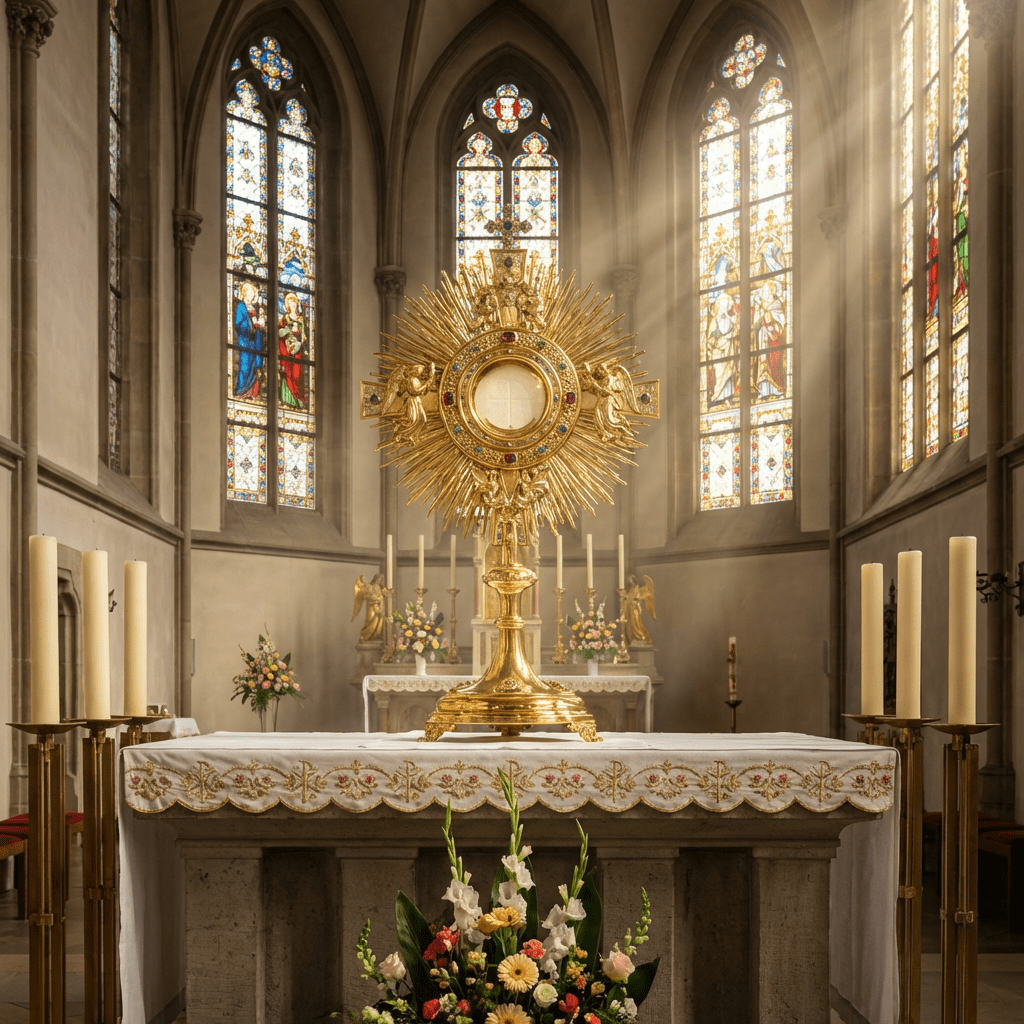
It’s so important to find space for silent prayer in the midst of our busy lives, but it’s also very hard to find that space!
To provide an opportunity for this, a monthly time of prayer before the Blessed Sacrament will begin in April, in St Dyfrig & St Samson’s.
The first occasion will be Monday 13 April, from 5.45pm-6.15pm, followed by the usual 6.30pm mass. It will then take place at this time on the second Monday of every month.
Do come along and join us for some quiet time with Jesus.
Cardiff Foodbank
Not only do we run two Foodbank sessions in St Saviours, we also collect and donate food items.
This week, thanks to the generosity of our members and a donation of £200 we were able to do a BIG shop! You can make donations in any of our churches.
Grangetown Consultation
St Paul’s and St Dyfrig & St Samson’s churches in Grangetown are working together to understand what really matters to our community.
A short survey (about 5 minutes) is available and will help us learn how we can serve and support our neighbourhood better.
You can fill in the survey anonymously or leave your details so we can contact you to follow up on your ideas. Your data will not be shared with anyone else and will be deleted after 12 months.
Our next Mass in the Welsh language is at Ss Dyfrig and Samson Church on Wednesday April 15 at 630pm
Dates for your diary
Here is a new-look South Cardiff Calendar, with details of lots of upcoming events and activities across our Ministry Area. Make sure you put everything down in your diary so that you don’t miss anything!
There will be more details about these events in future editions of Connect.
Young people aged 11-18 are invited to join us for the Walsingham Youth Pilgrimage from 3-7 August.
Around 500 young people from all over the UK camp in a field just outside the village of Walsingham. Worship takes place in a large marquee led by the excellent worship band CJM. There are also lots of different activities for young people to take part in during the week.
As part of the Welsh camp, all tents are provided and you will be fully catered for. All you need to bring is a sleeping bag, air bed, clothes and toiletries. For more information, please contact Fr Richard and also take a look at the link below to find out more.
Mass is celebrated each day across our churches. Here’s our pattern of prayer for the week ahead.
Wednesday 8 April | Easter Wednesday
10.00am: Mass at St Paul's
11.00am: Mass at St Mary's

Thursday 9 April | Easter Thursday
10.00am:  Mass at Ss Dyfrig and Samson

Friday 10 April | Easter Friday
10.00am: Mass at St Saviour’s

Saturday 11 April | Easter Saturday
10.50am: Morning Prayer at St Mary's followed by
11.00am: Rosary with prayer for the Ministry Area
11.30am: Mass
12 noon: Sacrament of Reconciliation (Confession)

Sunday 12 April | Second Sunday of Easter
9.30am:  Sung Mass at Ss Dyfrig & Samson
9.30am:  Sung Mass at St Saviour’s
11.00am: Sung Mass at St Paul's
11.00am: Solemn Mass at St Mary's

Monday 13 April | Monday of the second week of Easter
6.30pm:  Mass at Ss Dyfrig & Samson

Tuesday 14 April | Tuesday of the second week of Easter
6.30pm:  Mass at St Mary’s
You can discover more about our regular pattern of worship through the week at
Like the first disciples, the gift of the Holy Spirit and encountering Jesus in the Eucharist enable us to put our faith into action. Fr Richard reflects on today’s readings from Mass.
Have you ever thought about doing some exercise but never actually got round to it? If so, then you are in good company. In 2023 the British Journal of Sports Medicine published a study on what they termed “the intention-behaviour gap in physical activity”. Of 30,000 people questioned, 33% were “unsuccessful intenders” – they planned to exercise but didn’t follow through. What would make the difference? Perhaps having a friend who was already exercising would be the encouragement they needed – someone who could go with them to the gym, show them the equipment, or even just go out for a walk together.
In our readings today we see people being led from faith in God to action, and we discover what the decisive factor is. In the beautiful Emmaus Road story, the two disciples are on a physical journey from Jerusalem to Emmaus. But they also experience a spiritual journey as well. Originally downcast following Jesus’ death, they meet the risen Lord but don’t recognise him. He opens the Scriptures to them and then reveals himself in the breaking of bread. At that moment the two are prompted to action: they rush back to Jerusalem (a 7-mile trip) to tell others that Jesus is risen. In the reading from Acts, the apostles have recently received the Holy Spirit on the day of Pentecost. Now we see Peter and John acting in the name of Jesus by healing a lame man in the Temple.
Like Peter and John we have received the gift of the Holy Spirit through baptism and Confirmation. Like the two on the Emmaus Road, we encounter the risen Jesus in this and every Eucharist, who opens the Scriptures to us. May these precious gifts, given by God, be the factor which overcomes the “intention-behaviour gap” in our life of faith. Filled with the Holy Spirit, and fed by the Lord himself at the altar, may we go out into the world to act in Jesus’ name, spreading the news of his resurrection and continuing his healing work.
Mass today is in St Paul’s at 10am and St Mary’s at 11am.
If you’d like more resources for daily prayer then check out our Day by Day pages.